Portuguese
  Spanish


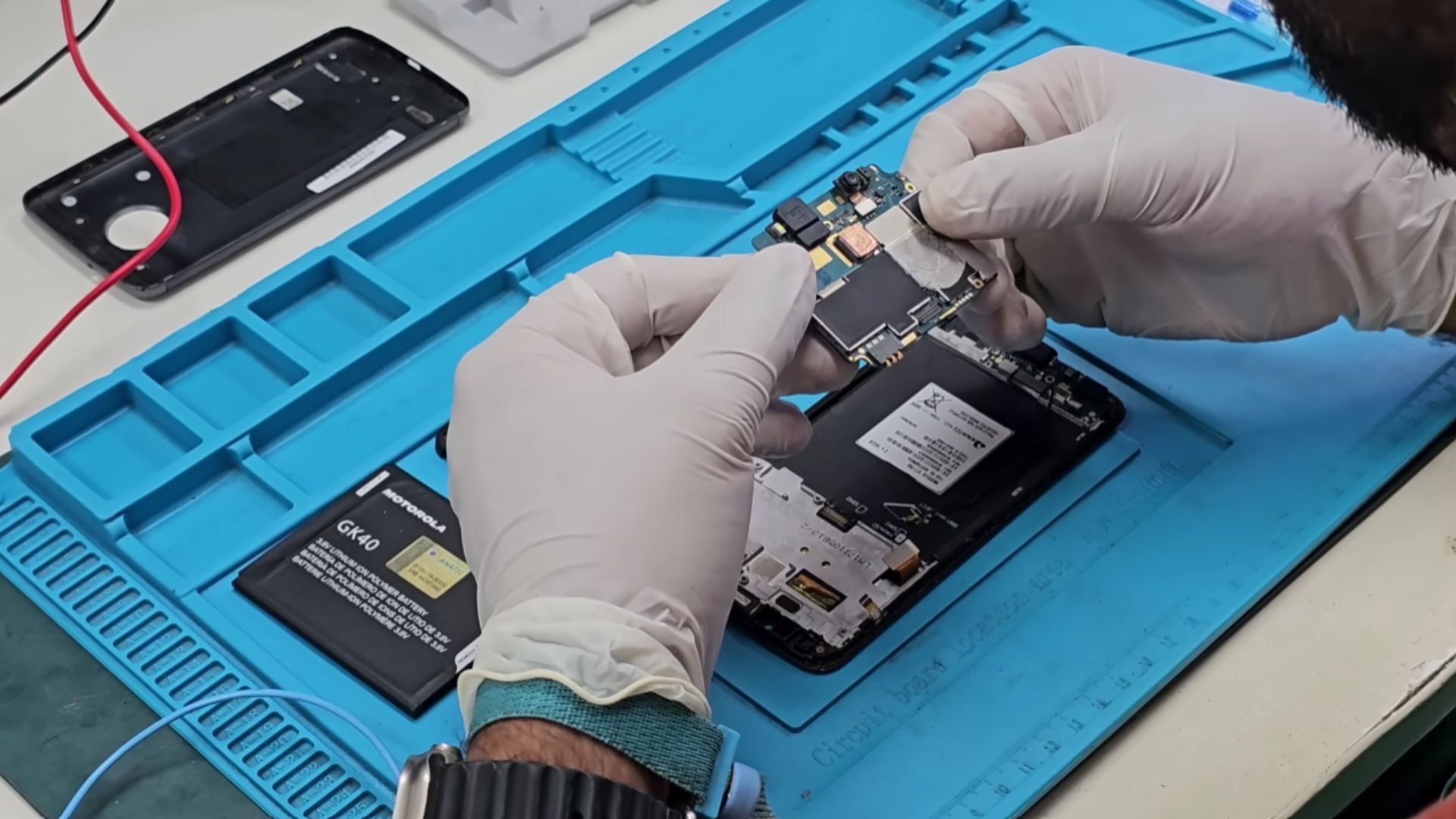

Cell phone repair charges R$ 120 to replace a microphone that costs R$ 2, R$ 130 for the microphone that costs R$ 2, and R$ 100 for the antenna that costs R$ 2. The average time for each service is less than half an hour. The market has more than 5 million broken devices per month in Brazil, and an entrepreneur who found the course bad created his own school and trained 5,000 technicians.
When a cell phone’s charging connector stops working, the component that needs to be replaced costs about R$ 0.50. The cell phone repair to replace this part costs R$ 120. The same logic is repeated throughout the service chain in the sector: R$ 2 antenna replaced for R$ 100, R$ 5 speaker generating a R$ 120 service, R$ 2 microphone charged at R$ 130. In less than half an hour of work, the cell phone repair technician delivers a functioning device to the customer for the equivalent of 20% of the price of a new smartphone, according to businessman and journalist Marcelo Bacarini, who researched more than 5,000 businesses over 40 years of career.
On the other side of the equation, cell phone repair is good for the customer: paying R$ 120 to recover a device that cost R$ 1,500 is saving R$ 1,380. This cost-benefit logic sustains a market where more than 5 million cell phones break per month in Brazil, according to the data presented in the report. And it is in this market that Andreas Oliveira found not one, but two opportunities: first cell phone repair as a service, then the cell phone repair school as a multiplier. When he found the course he took too bad, instead of complaining, he set up his own training. In less than 10 months, the course exploded. More than 5,000 students have already graduated.
The margins of cell phone repair: why the service is worth so much
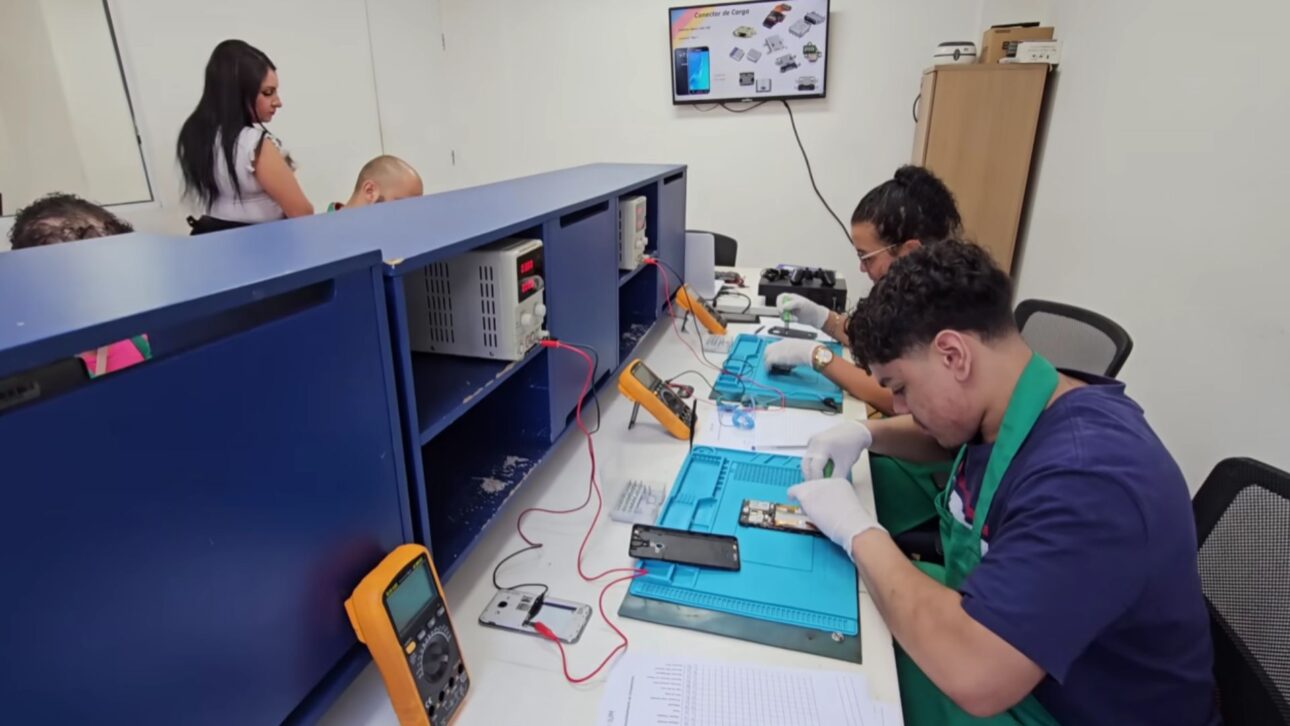
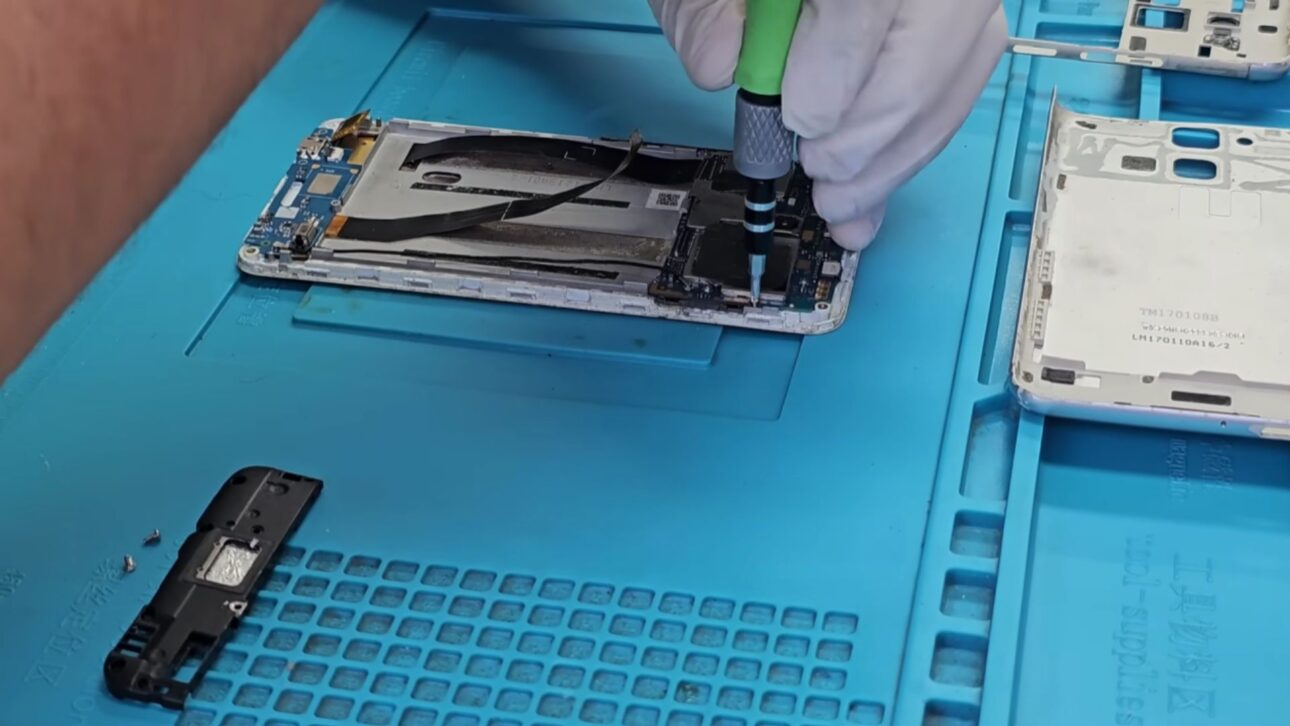
But what the customer pays for is not the part: it’s the correct diagnosis of the problem, the technical knowledge to open the device without damaging it, the specific tools for the operation, the service guarantee, and the responsibility for the result. A microphone that costs R$ 2 in the parts market requires a technician who knows how to identify that it is that component and not another, who knows where it is on the board, who has the tools to reach it, and who can replace it without introducing new problems.
-
Many Unaware: Seniors Entitled to Monthly Income, Free Transport, Medication, and Property Tax Exemption in Brazil

-
Brazil’s BNDES Funded Metro and Steel Plant Projects in Venezuela with Brazilian Support

-
Abandoned Building in Brazil to Become Biotechnology Unit with $10 Million Investment, Bridging Science, Industry, and Public Health
-
Company Offering “Stones to Diamonds” Scheme Sells Ruined Italian Homes to Brazilians for 1 Euro, Disappears with Promised Renovations, Leaving Buyers in Debt to Italian Tax Authorities Until 2028 Without Property





This package of competence and responsibility is what justifies the difference between the cost of the part and the price of cell phone repair. The labor of a good cell phone repair technician is valued precisely because the universe of models, problems, and solutions is enormous and constantly updating. Each new model launched on the market has a different architecture, new components, and new points of failure. The cell phone repair technician needs to study continuously to keep delivering results. On average, cell phone repair represents about 20% of the device’s value, which is both profitable for the technician and advantageous for the customer who saves the other 80%.
5 million broken cell phones per month: the size of the demand
It is an industry. With more than 5 million broken devices per month in Brazil, according to the report data, the demand for repair services is constant, geographically distributed throughout the country, and practically insensitive to economic cycles. People break cell phones in crisis and prosperity, in large and small cities, across all income levels. A plumber who wets the device at work, someone who dropped it on the floor, someone with a cracked screen who wants to recover the device instead of buying a new one.
This volume of demand is what makes cell phone repair one of the most profitable and competitive businesses in Brazil, according to Marcelo Bacarini. Profitable because labor margins are high relative to material costs. Competitive because the entry barrier is relatively low: learning the basics of cell phone repair can be done in a week of intensive training. What separates technicians who have a sustainable business from those who fall by the wayside is something different from technical knowledge. Being a good cell phone repair technician is not enough to be a good cell phone repair entrepreneur, and this is the central point of Andreas Oliveira’s journey.
Andreas Oliveira: from a bad course to a school with 5,000 students
Andreas Oliveira saw an opportunity in cell phone repair and decided to take a course to learn the technique. The course was so bad that he decided to create his own training. In less than 10 months, Andreas’s cell phone repair school exploded. More than 5,000 students graduated, according to the report. The story illustrates what Bacarini calls the basic principle of entrepreneurship: problem is opportunity. Andreas found a problem on the way to entering the cell phone repair market and turned that same problem into a parallel business that multiplied his impact capacity.
After training students in cell phone repair, Andreas goes further: he provides the school’s space and machinery for free so that students can start practicing their first real repairs and set up their first technical assistance services. This model of informal incubation transforms the course into an ecosystem: those who learn cell phone repair with Andreas leave with technical skills, access to infrastructure, and a support network of other technicians trained at the same school. When Bacarini asks Andreas which business is better, the school or the cell phone repair technical assistance, the answer is straightforward: both.
The market of distrust: why reputation is the root of the business


Cell phone repair operates in a market of structural distrust. The customer who takes the device for repair doesn’t know exactly what’s inside the phone, doesn’t know the value of each part, can’t verify if the replaced part was the original, and can’t confirm if the problem was really what the technician diagnosed. This information asymmetry between the cell phone repair technician and the customer creates a barrier of insecurity that prevents many people from trusting their device to any service center.
It is precisely in this distrust that lies the opportunity for those who want to stand out in cell phone repair, according to Bacarini’s analysis. Technicians who wear uniforms, have professionally designed websites, offer explicit warranties for cell phone repair services, and build a base of positive reviews from real customers outshine the competition because they eliminate the insecurity barrier. “If you repair someone’s phone and they like it, they’ll return and recommend. If they don’t like it, they’ll speak poorly, and it spreads three times faster”, Bacarini summarizes in the report. And there’s an additional golden tip: when a customer leaves dissatisfied and the technician quickly resolves the issue, that customer becomes an even more intense promoter than the one who was satisfied the first time.
From technician to entrepreneur: the difference that the cell phone repair course needs to teach
The intensive week of cell phone repair training is enough to learn how to replace screens, repair sub-boards, and solve the most common device problems. But knowing how to disassemble and reassemble a smartphone does not teach you how to get your first client, how to price the cell phone repair service, how to charge without losing the client, and how to build the reputation that sustains the business in the long term. These are two completely different skills that need to be developed in parallel.
Andreas Oliveira’s school integrates both dimensions: cell phone repair technique and business strategy. Students learn not only how to open and close a device but also how to set up a service structure that generates trust, how to create incentives for satisfied clients to leave positive reviews, and how to turn a dissatisfied client’s problem into a loyalty opportunity. Cell phone repair is the product, but the business is reputation. Those who understand this difference have an advantage over most technicians who only learn the technical part and enter the market without knowing how to build a solid client base.
Cell phone repair as a gateway to entrepreneurship
One of the characteristics that makes cell phone repair attractive as a business model is the low entry barrier combined with high margins. The initial investment is relatively modest: specific tools, stock parts, and a simple physical space for service. Basic technical learning can be acquired in days. And the market doesn’t stop: cell phones break every day, everywhere, regardless of the economic situation.
For those who want to supplement their income or leave a formal job and start their own business, cell phone repair offers a viable entry curve. The logic of 20% of the device’s value as the average service price works in any market range: a R$ 500 device generates a R$ 100 repair, a R$ 2,000 device generates a R$ 400 repair. The demand for both niches exists simultaneously. In more than 5,000 businesses studied by Marcelo Bacarini over 40 years, cell phone repair appears as one of the most profitable and sought-after for a concrete reason: the demand for 5 million broken devices per month in Brazil has no forecast of decline.
Is a R$ 2 part charged as a R$ 120 service exploitation or is it the fair price for the knowledge, responsibility, and guarantee that cell phone repair delivers? Do you trust technical assistance to repair your device or do you prefer to buy a new one? And is the model of a cell phone repair school that trains technicians and lets them use the infrastructure for free initially a good path to entrepreneurship? Leave your opinion in the comments.