






 Portuguese
  Spanish




Get to Know the Saga of the Maggi Family, Whose Power in the Brazilian Agri-Food Sector Spans from the Field to Congress, Among Records of Soy Production and a Trail of Socio-Environmental Controversies.
At the center of the Brazilian agribusiness, the name Blairo Maggi stands out. Known as the “Soy King”, he embodies a paradox: that of the economic success that transformed Brazil into an agricultural powerhouse and, at the same time, that of the advance into the Amazon that earned him the “Golden Chainsaw” award. His family’s empire, the Amaggi Group, dominates a vast planting area, but its profit history is intertwined with a legacy of political power, environmental degradation, and deep social costs.
From Pioneering Explorer to “Soy King”
The story of the Amaggi Group begins with André Antônio Maggi (1927-2001). Born in Rio Grande do Sul, this pioneering patriarch migrated to Paraná in 1955, where he started his business in agriculture, including soybean cultivation. The significant turning point occurred in the late 1970s, when André bet on the potential of Mato Grosso, acquiring his first farm in the state in 1979. He founded municipalities, built hydroelectric plants, and opened waterways, laying the foundations for an empire.
His son, Blairo Maggi, was the heir who transformed his father’s vision into institutional power. With a degree in Agronomy, Blairo propelled the Amaggi Group into the global arena. His ambition, however, went beyond the farms. He used the economic power of soy to finance a successful political career, being elected Governor of Mato Grosso twice (2003-2010), Senator (2011-2019), and Minister of Agriculture (2016-2019). It was during this period that the title “Soy King” was solidified, reflecting his immense influence in agribusiness and national politics.
-
UK Student Develops Solar Water Purification System Using Fresnel Lens, Wins Global Young Scientists Popular Vote

-
Giant Dredger “No Woman, No Cry” Arrived in Brazil in 2010 to Clear 1.8 Million m³ of Sand and Improve Port Logistics
-
UAE Installs 16 Giant Concrete Coffers in Abu Dhabi Waters to Build 600-Meter Quay for Mega-Yachts and Debut New Technique
-
Flexible PEX Plumbing Revolutionizes Bathrooms and Kitchens, Reducing Hidden Connections and Speeding Up Installations



Mapping Fortune and Land
The Amaggi Group is a privately held multinational with four main business areas: Agriculture (soy, corn, and cotton production), Commodities (global trading), Logistics and Operations (transportation), and Energy (generation in Small Hydroelectric Plants). This conglomerate recorded a revenue of US$ 8.9 billion in 2023, making it one of the largest companies in Brazil.
But does the Maggi family actually plant the equivalent of twice the area of São Paulo? The answer is yes, and the scale is even larger. The municipality of São Paulo has 152,120 hectares. Double that would be approximately 304,240 hectares. In the 2020/2021 crop year, only Amaggi Agro, the group’s production arm, planted 468,200 hectares.
The analysis is unequivocal: Amaggi’s direct planting area is 3.08 times larger than the total area of the city of São Paulo. Therefore, the claim is a conservative portrait of the immense land controlled by the soy empire.
Deforestation, Conflicts, and the “Poison of Soy”
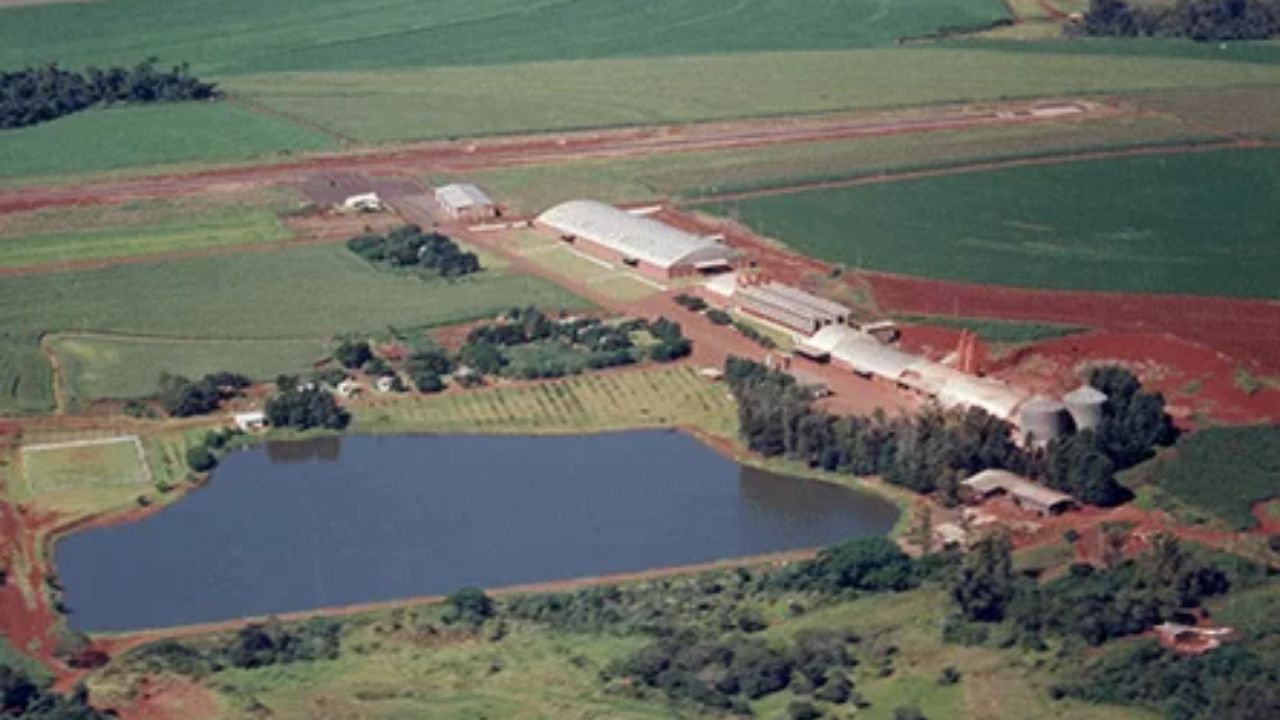
The success of the Amaggi Group is overshadowed by a severe socio-environmental cost. During Blairo Maggi’s first term as governor, Mato Grosso led deforestation in the Amazon, which earned him the “Golden Chainsaw” award from Greenpeace in 2005. Although the company joined the Soy Moratorium in 2006, studies indicate a “leakage” effect: the protection of the Amazon pushed the expansion of soy and cattle ranching into the Cerrado, accelerating the destruction of this other biome.
Conflicts also mark this trajectory. In the Juruena River basin, the construction of Small Hydroelectric Plants (PCHs) by Amaggi threatens the existence of the Enawenê-Nawé indigenous people. The dams affect fish migration, which is the basis of their diet and sacred rituals. In 2023, a peaceful protest by indigenous people was violently repressed by security personnel linked to the companies.
Furthermore, the soy production model generates a public health crisis. Mato Grosso is the largest consumer of pesticides in Brazil. Scientific studies indicate an alarming correlation between exposure to these toxins and the increase in cancer cases, congenital malformations, and miscarriages in cities surrounded by crops.
How Agriculture Shapes the Laws of Brazil


The Maggi empire is sustained by a powerful influence machine in Brasília, centered on the Agriculture Parliamentary Front (FPA), the ruralist caucus. Giants like Amaggi finance associations that, in turn, support the Pensar Agro Institute (IPA), the “think tank” that drafts the bills advocated by ruralists in Congress.
Blairo Maggi was a central figure in this structure. A clear example of his lobbying is the pressure for the construction of Ferrogrão, a railway that would connect Mato Grosso to ports in Pará, drastically reducing logistics costs for the group. Moreover, the caucus works to loosen environmental legislation and halt the demarcation of indigenous lands, removing barriers to the continuous expansion of the agricultural frontier.


O PT ajudou ele e seus primos a serem os Reis da soja no Brasil.
O rei da soja era o Sr. Olacir de Morais com as fazendas Itamaraty 1 e 2. Também tem muita história no MT e no MS.
Equivocada e mal embasada sua visão sobre a agricultura brasileira, sobre a frente parlamentar da agricultura, sobre os Maggi não sei e não posso argumentar.