Portuguese
  Spanish


According to Xataka, NASA plans for 2028 the Moonfall mission, which will take 4 robotic drones to the Moon to map the south pole, detect underground water, measure radiation, and support the Artemis program in choosing safe areas for human landings and a future permanent lunar base outside Earth.
The Moon has returned to the center of the space race, but before astronauts set foot on the most coveted areas of the lunar south pole, NASA wants to send machines. According to a text by Xataka signed by Eva R. de Luis, the Moonfall mission is planned for 2028 and is expected to take four robotic drones to a still little-explored region.
The goal is to do the work that precedes human presence: map the terrain, look for signs of underground water, measure radiation, and identify safe areas for future Artemis program missions. In practice, the robots should arrive first to indicate where astronauts can land later.
Four drones are expected to explore the lunar south pole
The Moonfall mission plans to send four robotic drones to the south pole of the Moon, a region considered strategic for human exploration. According to Xataka, it will be the first time that vehicles of this type are expected to fly over and land in this lunar area.
-
Sixth-grader in Miami wins Lemelson Young Inventor Prize for creating water-absorbing concrete using discarded oyster shells and charcoal.

-
Brazilian Researchers Develop Portable, Painless, Radiation-Free Breast Cancer Tracker Using Microwaves, Costing Around $200 and Potentially Replacing $240,000 Mammograms
-
Beer as a Vaccine? Scientist Develops Experimental Method with Live Yeasts, Tests Own Brew, and Publishes Results on Zenodo

-
Brazilian Researchers Develop ‘Rapha’ Device Using Natural Latex and LED Light to Heal Diabetic Foot Ulcers and Prevent 50,000 Annual Amputations


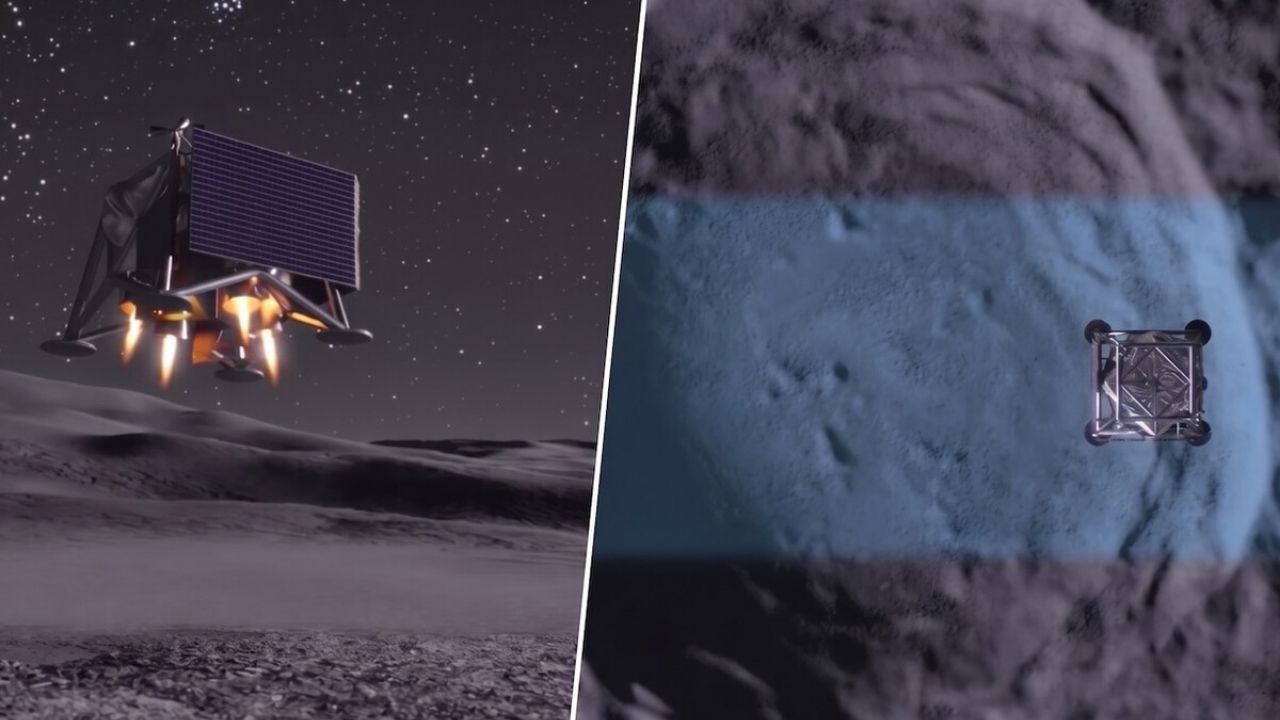
Each drone will weigh about 250 kg, be 1.2 meters tall, and 2.1 meters in diameter. The mission was designed to expand knowledge about the terrain and help NASA choose safer landing zones for astronauts of the Artemis program.
The search for water is a central part of the mission
The south pole of the Moon attracts so much attention because it harbors permanently shadowed craters, where there is confirmed presence of water ice, according to Xataka. This resource is seen as essential for a human base, as it can be used to obtain drinking water, oxygen, and fuel.
Without this type of local resource, keeping people on the Moon would become much more expensive and complex. The alternative would be to transport everything from Earth, which would limit human permanence and increase the cost of future missions.
Robots will have instruments to map terrain and radiation
The drones of the Moonfall mission will not just be transportation vehicles. Each unit is expected to carry an imaging system to map the terrain, a neutron spectrometer to detect underground water, a radiation spectrometer, and a laser retroreflector.
The retroreflector will allow ground control to locate the equipment precisely. Meanwhile, the scientific instruments will help understand the risks and opportunities of the lunar environment. The mission combines navigation, science, and logistical preparation for future human operations.
Mission should operate during one lunar day
According to Xataka, the drones should operate during a complete lunar day, a period equivalent to up to 14 Earth days. After that, the instruments may still continue functioning for several months.
The challenge is to survive in an extreme environment. During the lunar night, the temperature can drop to -130 °C, according to the text. Therefore, the resilience of the equipment will be as important as the ability to land and collect data.
Firefly Aerospace was chosen to take the drones
The Texas-based company Firefly Aerospace was chosen to build the spacecraft that will take the drones to the Moon. According to Xataka, the company already has a history of collaboration with NASA on lunar missions.
The spacecraft is called Elytra and is expected to make a 45-day journey from Earth to lunar orbit. Upon arrival, it should slow down and release the four drones about 50 km above the Moon’s south pole.
Elytra should release the drones in different areas
After separating from the Elytra spacecraft, each drone should autonomously land in a different area. The strategy aims to expand territory coverage and increase the amount of data obtained about the lunar south pole.
This distribution is important because the region has not yet been mapped with sufficient precision to plan human landings safely. By spreading the drones, NASA aims to reduce uncertainties before sending astronauts to a challenging and valuable area.
Artemis Program Depends on Terrain Data
The Artemis program aims to return astronauts to the Moon and establish a more stable human presence on the natural satellite. According to Xataka, NASA is working in parallel with projects like Moonfall to obtain critical data on terrain and resources.
This information can influence the choice of landing sites, circulation, and possible installation of a base. The mission does not erect the lunar base, but it can help define where it would make the most sense from a technical standpoint.
South Pole Becomes a Point of Space Dispute
The Moon’s south pole is not only of interest to NASA. Xataka notes that China also maintains its own lunar program and is observing the same region closely. The dispute involves science, technology, resources, and strategic presence in space.
The Artemis Accords, signed by the United States and other countries, establish principles for lunar exploration but do not function as a binding international treaty. Therefore, the lunar south pole has gained both scientific and geopolitical significance.
Flying on the Moon is Not Like Flying on Earth
Although they are called drones, these robots will not be able to fly like the common drones used on Earth. There is not enough atmosphere on the Moon for conventional rotors to work, so the equipment will need to use rocket propulsion.
This limits the number of possible flights because fuel consumption is high. Additionally, the shadowed craters do not receive sunlight, which makes it difficult to use solar panels in some areas. The mission needs to deal with darkness, extreme cold, and little room for error.
Before the Lunar Base, Come the Machines
The Moonfall mission shows that the human return to the Moon depends on a less visible but essential step: recognizing the terrain before occupying it. The drones must search for water, measure radiation, map risks, and help decide where astronauts can work more safely.
If the data is successful, NASA will have more information to plan a human presence at the lunar south pole. Before any base outside Earth, however, 250 kg machines will test the path in one of the Moon’s most strategic regions.
Do you think NASA should speed up the construction of a lunar base, or does it still need to better understand the risks before sending astronauts to the Moon’s south pole? Leave your opinion in the comments.