






 Portuguese
  Spanish


Thinner than a hair, the smart lenses from XPANCEO combine augmented reality, health sensors, and wireless connectivity into something that fits in the eye
A Dubai-based company is developing something that seems to have come out of a science fiction movie. These are contact lenses, the kind we put in our eyes, that do much more than correct vision.
They measure glucose through tears, monitor eye pressure, see in the dark, have zoom capabilities, and even connect to a mobile phone via NFC.
The company is called XPANCEO, raised $250 million in a single investment round, and is already valued at $1.35 billion.
-
Simple Home Exercise Can Enhance Stability and Balance for Those Over 60

-
Spanish Farmers Turn Surplus Wool into Thermal Pool Umbrellas to Solve Rural Surplus Problem

-
Brazilian Ship Refuels with 30% Renewable Fuel in Rotterdam: Transpetro Tests B30 for the First Time, Aiming to Reduce Maritime Emissions and Showcase a Quiet Transition in Key Global Ports
-
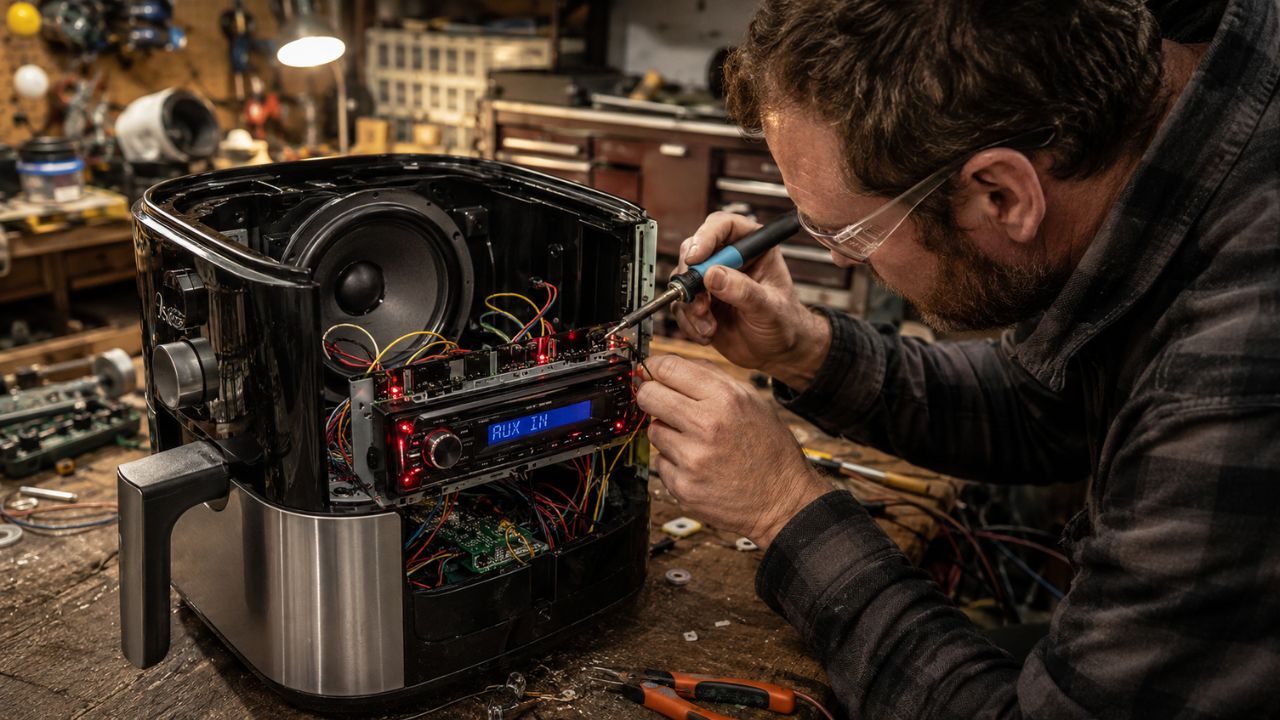
Brazilian Man Ingeniously Transforms Air Fryer into Functional Speaker with Radio and Volume Controls



The plan is to combine all these functions into a single lens by the end of 2026.
What these lenses can do
XPANCEO has already presented six different prototypes of smart lenses at technology events around the world.
Each prototype does something different — but the goal is to combine everything into one lens.
One of them analyzes tears in real-time and detects levels of glucose, cortisol, hormones, and even vitamins B and D, all without pricking the finger.
Another measures the pressure inside the eye with 50% more accuracy than current methods, which is crucial for those with glaucoma.
There is also a prototype with night vision and another with optical zoom, using nanoparticles embedded in the lens.

Thinner than a hair
What impresses most is the size. The lenses are thinner than a human hair and made with flexible materials that adapt to the shape of the eye.
The radiation emitted is comparable to that of a common earphone, according to the company.
The energy comes from a small external device that wirelessly charges the lens, similar to a Bluetooth earphone case.
All the heavy processing happens outside the lens; it only collects data and transmits it to the mobile phone or charging device.

A $250 million round — the largest in wearable history
XPANCEO closed a Series A investment round of $250 million, the largest ever made in the world in augmented reality and wearables.
With this, the company achieved unicorn status, valued at $1.35 billion.
It is the 12th unicorn from the United Arab Emirates.
The investment was led by the Asian fund Opportunity Venture, the same one that participated in the previous round of $40 million.
When will it be available for purchase
The company aims to unify all prototypes into a single commercial lens by the end of 2026.
But experts warn that the path from prototype to consumer product is often long.
Health regulatory approvals, large-scale clinical trials, and mass manufacturing are steps that can take years.

Can a lens really replace a smartphone?
XPANCEO’s promise is ambitious: to replace smartphones, smartwatches, and even augmented reality glasses with something invisible in the eye.
Whether this will happen or not, it is still too early to say.
But the fact that a contact lens can already measure glucose through tears and transmit data wirelessly shows that the future of wearable technology may be closer than we think.


