






 Portuguese
  Spanish


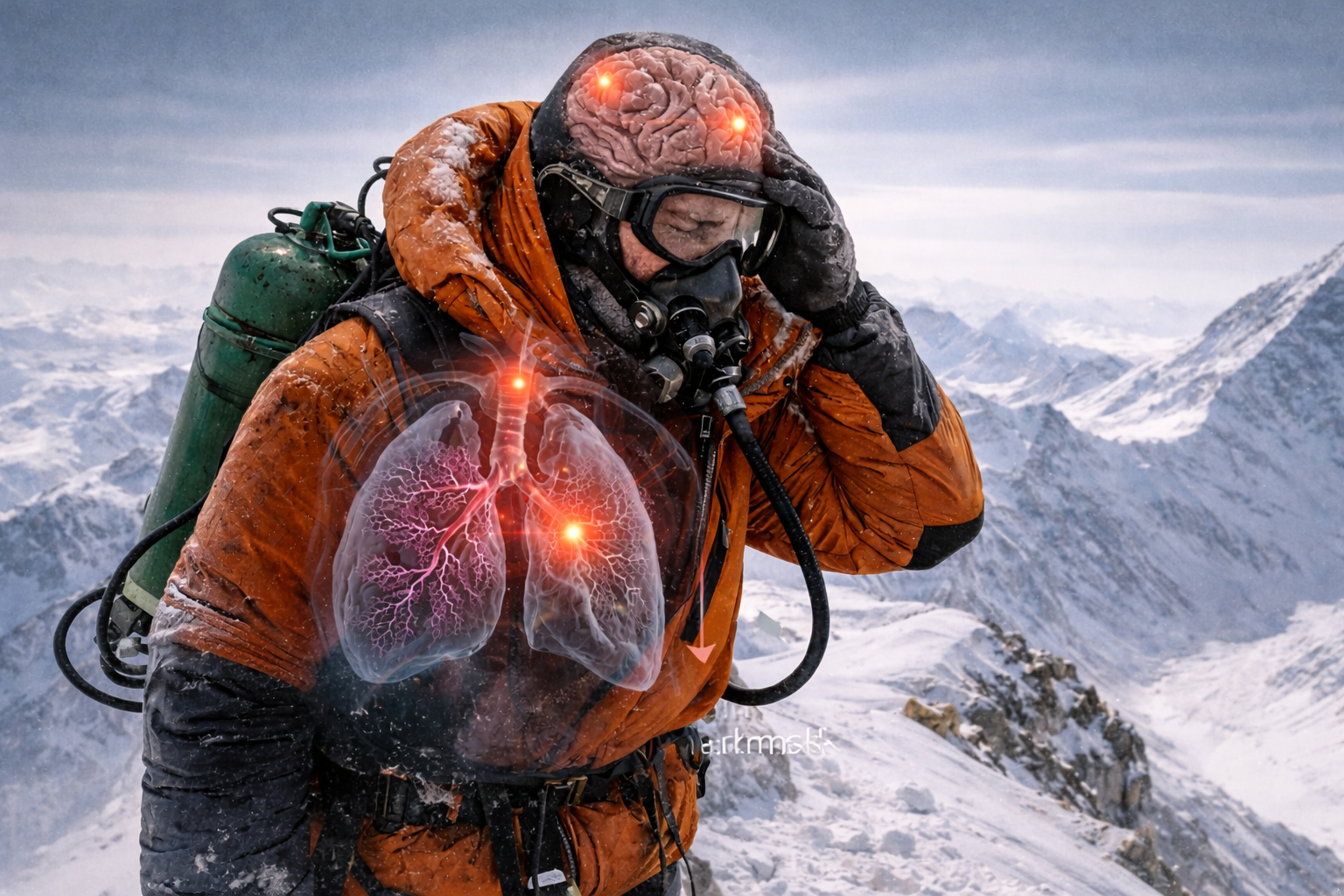


Study reveals that Everest climbers may suffer brain atrophy even without symptoms after breathing only 30% of sea level oxygen.
According to Scientific American, which analyzed the results of an MRI study with climbers who attempted Everest, only one of the thirteen participants returned with a brain image considered normal. The other twelve showed cortical atrophy or enlargement of the Virchow-Robin spaces, a structural change usually associated with aging and rarely observed in young, healthy adults.
None of them had presented severe symptoms of altitude sickness during the expedition. None knew they had suffered brain damage.
Everest reaches 8,848 meters and exposes the human body to the so-called death zone above 8,000 meters
The Everest has an altitude of 8,848 meters and its summit is located within the so-called “death zone,” an area above 8,000 meters where atmospheric pressure drops to less than one-third of the value at sea level.
-
Former Atacadão Employee Turns Online Cake-Baking Lessons into a Confectionery Brand with Factory, Store, Delivery, and Nearly $400,000 in Revenue

-
Brazilian Startup Sells Nearly 9 Million Surprise Bags of Near-Expiry Food, Prevents Thousands of Tons of Waste, Aiming for $42 Million Revenue by 2026
-
How to Prevent Brown Recluse Spider Bites: Common Hiding Spots and Free Tips to Reduce Risks

-
Natto: The Unusual Japanese Superfood Gaining Popularity on Social Media and Driving Record Exports





This means that each breath provides the body with approximately 30% of the oxygen available under normal conditions. Blood oxygen saturation, which normally varies between 95% and 100%, can drop to levels between 50% and 60%, a level considered critical in a hospital environment.
The concept of the death zone was formulated in 1953 by Swiss physician Édouard Wyss-Dunant, describing a condition in which the human body can no longer acclimatize, entering a progressive decline.
Growth of tourism on Everest increases climbers’ exposure to extreme neurological risks
Since the first ascent by Edmund Hillary and Tenzing Norgay in 1953, Everest has accumulated over 13,700 summit arrivals by about 7,500 different people, according to the Himalayan Database.
Since the 2000s, there has been a significant expansion of high-altitude tourism. Between 2000 and 2025, more people have climbed above base camp than in all previous decades combined.
In 2025, approximately 850 climbers reached the summit, many of them with little experience in extreme altitudes, increasing the risk of exposure to critical physiological conditions.
Scientific study shows cerebral atrophy in climbers even without apparent clinical symptoms
In 2006, neurologist Nicolás Fayed and his team from University of Zaragoza published in the American Journal of Medicine a study involving 35 climbers subjected to magnetic resonance imaging after expeditions.

The results of the Everest expedition were particularly relevant. Of the thirteen participants analyzed, only one showed normal brain structure. The others exhibited changes such as diffuse cortical atrophy and widening of perivascular spaces.
These changes indicate that structural damage can occur even in the absence of noticeable symptoms during the climb.
Changes in Virchow-Robin spaces indicate impact on cerebral circulation and the brain drainage system
Virchow-Robin spaces are microscopic channels associated with cerebral blood vessels and the brain’s drainage system.
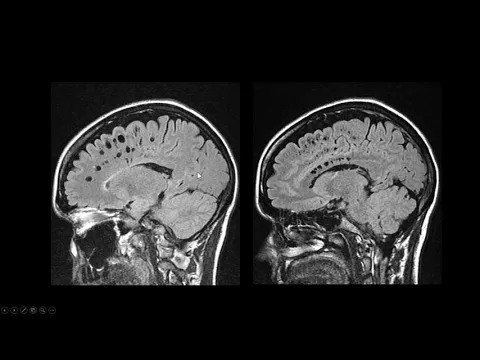

The widening of these structures suggests changes in cerebral circulation or cerebrospinal fluid pressure, indicating that exposure to extreme altitude may compromise the brain’s internal balance.
In young and healthy individuals, this type of change is uncommon, reinforcing the physiological impact of prolonged hypoxia.
Amateur climbers present higher risk of neurological symptoms after exposure to extreme altitude
The study also identified differences between professional and amateur climbers. While professionals showed a higher degree of atrophy without evident symptoms, amateurs demonstrated more noticeable clinical manifestations, including memory loss, cognitive slowing, and language difficulties.
This difference suggests that progressive acclimatization may reduce immediate symptoms, but does not necessarily prevent structural damage in the brain.
Severe hypoxia compromises brain function and activates mechanisms of cellular damage
The human brain consumes about 20% of the body’s oxygen, being highly dependent on continuous supply.
At the extreme altitude of Everest, the reduction of oxygen causes cerebral vasodilation, increased intracranial pressure, and, in more severe cases, fluid leakage into brain tissue.
This process can lead to altitude cerebral edema, as well as trigger mechanisms such as oxidative stress and damage to white matter, responsible for communication between regions of the brain.
Loss of white and gray matter indicates reduction in neural connectivity after expeditions
Additional studies, such as the one by Di Paola et al. published in 2008 in the European Journal of Neurology, identified a reduction of white and gray matter in specific areas of the brain of climbers.
The affected regions include areas responsible for motor control and sensory integration, indicating possible impairment of neural connectivity. Even without immediate cognitive deficits, these changes represent significant structural loss.
Climbers who participate in multiple expeditions are subject to a cumulative effect of exposure to hypoxia and pressure variations.
This accumulation may increase the risk of neurological changes over time, even if there are no evident symptoms after each individual expedition. Medicine still lacks sufficient data to fully quantify this long-term risk.
Popularization of Everest increases the risk of silent brain damage on a global scale
The growing accessibility to Everest has transformed the mountain into a high-risk tourist destination. With more climbers attempting to reach the summit each season, the number of people exposed to the death zone without adequate preparation also increases.
This raises concerns about a possible increase in silent neurological damage on a global scale, often undiagnosed.
Scientific evidence indicates that structural changes can occur even without immediate symptoms. In light of this, a central question arises: does the brain that returns from an expedition to Everest maintain its original integrity or carry permanent marks from extreme exposure?
In your view, are the neurological risks of altitude being underestimated or have they not yet been fully understood by science?







