Portuguese
  Spanish


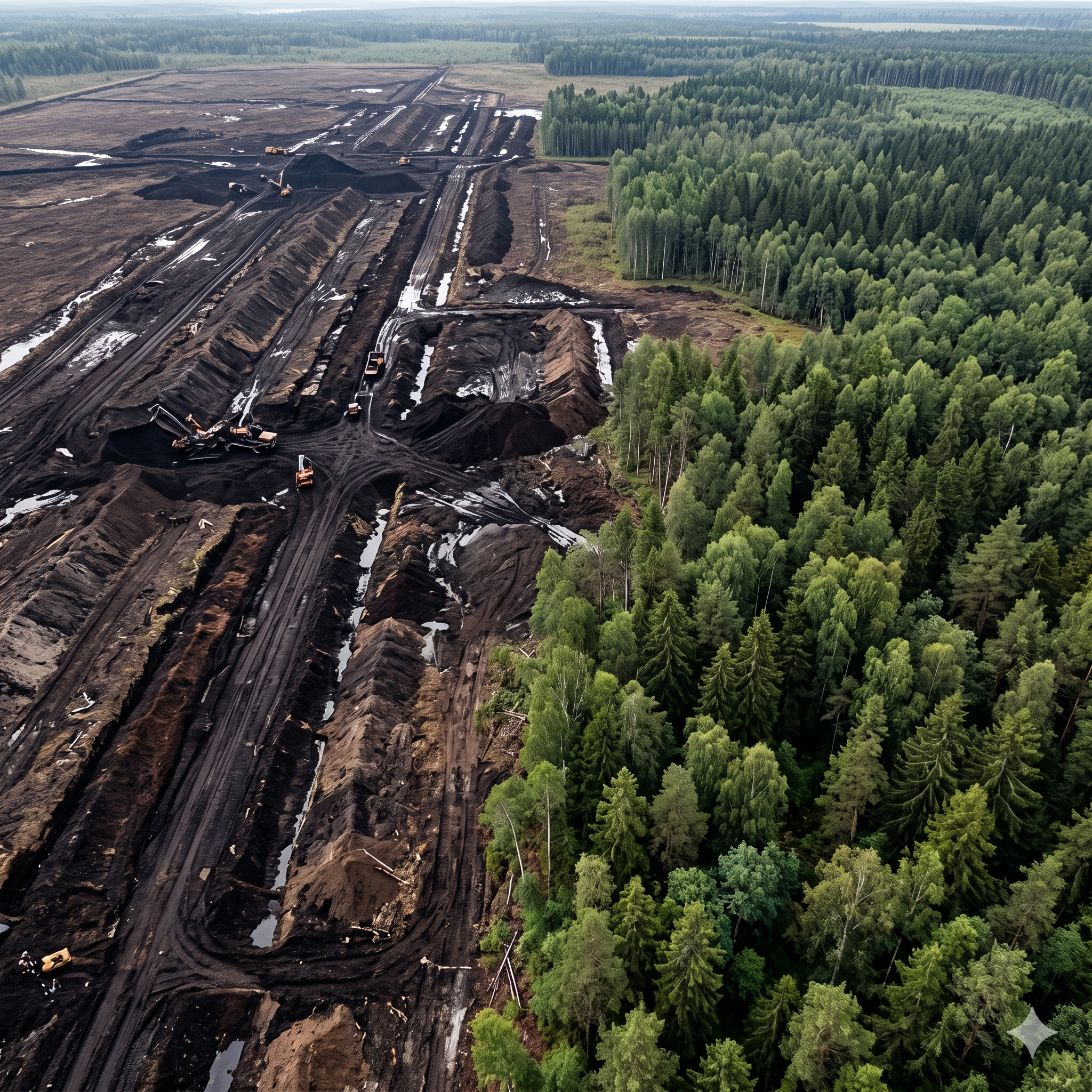

Peats occupy 3% of the Earth, but store more carbon than forests and can become a massive source of CO₂ if degraded.
In February 2025, in a report published on February 13 by The Guardian, a warning that had been reinforced by international assessments gained renewed attention: peatlands, now considered one of the largest natural carbon stocks on the planet, can turn into a gigantic source of emissions if they continue to be drained, burned, or degraded.
These ecosystems cover only about 3% of the Earth’s surface, but concentrate around 30% of the organic carbon in the soil and, according to references from the FAO and the United Nations Environment Programme, store more carbon than all the forests in the world combined. Therefore, peatlands have taken on an increasingly strategic position in the debate about the future of the global climate.
The critical point of the warning is not just the volume of carbon stored, but the risk of rapid release of this stock if these environments are drained, burned, or degraded.
-
Researchers Turn Discarded Mango Pits into Hydrogel That Absorbs 400% of Its Weight in Water, Offering Agricultural Solution for Droughts and Waste Reuse

-
Flower strips in Brazilian farms become pest control strategy, attracting predator insects and reducing the need for chemical pesticides.

-
Yara acquires Texas ammonia plant for $1.3 billion, boosting global fertilizer competition with 1.3 million tons annual capacity
-
At 35, Lawyer Leaves Corporate Career to Turn 1-Hectare Farm into Organic Supplier for Schools in Southern Brazil


What are peats and why do they accumulate so much carbon over thousands of years
Peats are ecosystems formed in water-saturated areas, where the decomposition of organic matter occurs extremely slowly.
In these conditions, plant remains accumulate over thousands of years, forming what is called peat, a material rich in carbon. This process creates true natural carbon deposits, which remain stored as long as the environment remains moist and stable.


The key to this storage lies in the lack of oxygen. In flooded environments, decomposition is limited, preventing carbon from being released in the form of carbon dioxide.
This makes peatlands one of the most efficient systems for carbon capture and storage on the planet.
Amount of stored carbon exceeds forests and positions peats as a central piece in climatic balance
Scientific studies indicate that peatlands store approximately 600 billion tons of carbon, a value higher than the total present in the biomass of all terrestrial forests.
This number positions these ecosystems as one of the largest “vaults” of carbon on Earth. The strategic importance of peatlands lies precisely in their ability to keep carbon out of the atmosphere for extremely long periods, reducing the impact on global warming.
However, this same characteristic represents a potential risk.
When degraded, peats release carbon accumulated over thousands of years in a short time
The balance of peatlands directly depends on the constant presence of water. When these environments are drained for agriculture, exploitation, or urban expansion, the soil comes into contact with oxygen.
This process activates the decomposition of the accumulated organic matter, releasing carbon in the form of CO₂. What took thousands of years to be stored can be released in decades or even years.
Moreover, dry peatlands become highly flammable.
Fires in peatlands are particularly problematic because they can burn below the surface, continuously releasing large amounts of carbon.
Fires in peatlands already show real impact on global emissions
Recent events demonstrate the potential impact of these ecosystems. Fires in peatlands in Indonesia, for example, have already been responsible for carbon emissions comparable to those of entire countries during certain periods.
These episodes show that the degradation of peatlands is not a future hypothesis, but a process already underway.
The release of carbon occurs not only during fires but also continuously in drained areas.
Only a fraction of the world’s peats is protected
Despite their importance, a significant portion of peatlands lacks adequate protection. Studies indicate that only about 17% of these ecosystems are within protected areas.
This means that most of these carbon reserves are exposed to human activities, such as agriculture, mining, and urban expansion. This low level of protection increases the risk of large-scale degradation.

Peatlands are distributed across different regions of the planet, including:
- Boreal regions, such as Canada and Russia
- Tropical areas, such as Indonesia and the Amazon
- Temperate zones in Europe
This global distribution means that the impact of their degradation is not local, but planetary. Furthermore, different regions present specific challenges, from climate change to economic pressure.
Peatlands also influence water, biodiversity, and ecosystem stability
In addition to their climatic role, peatlands perform important environmental functions. They help regulate the water cycle, acting as natural sponges that store and gradually release water.
They are also habitats for diverse species of plants and animals. The degradation of these ecosystems affects not only carbon, but the entire local environmental balance.
Global warming adds an additional risk factor. Increased temperatures and changes in rainfall patterns can dry out peatlands, making them more vulnerable to degradation.
This creates a feedback loop: climate change degrades peatlands, which release carbon, intensifying warming. This type of interaction is considered one of the most complex risks in environmental systems.
Peatlands represent one of the biggest invisible risks to the climate system
Unlike forests or glaciers, peatlands are not easily visible as critical elements of the climate. They do not appear in iconic images nor do they receive the same public attention.
However, their importance is comparable or even superior in terms of climatic impact. This invisibility contributes to the lack of specific protection policies.

If peatlands transition from carbon reservoirs to carbon sources, the impact could be significant. The release of hundreds of billions of tons of carbon would have a direct effect on the concentration of greenhouse gases.
This can accelerate climate change, affecting temperature, extreme events, and natural systems. Furthermore, the process can be difficult to reverse.
Do you believe the world is prepared to protect one of the largest carbon reservoirs that almost no one sees?
The case of peatlands raises a central question about the future of the climate. One of the planet’s largest carbon stocks remains in little-known and poorly protected environments, but with the potential to impact the global climate.
The transformation of these ecosystems into a source of emissions is not inevitable, but depends on decisions about land use, conservation, and environmental management.
The question that remains is direct: to what extent is the world prepared to protect an invisible resource that could define the pace of climate change in the coming decades.