Portuguese
  Spanish


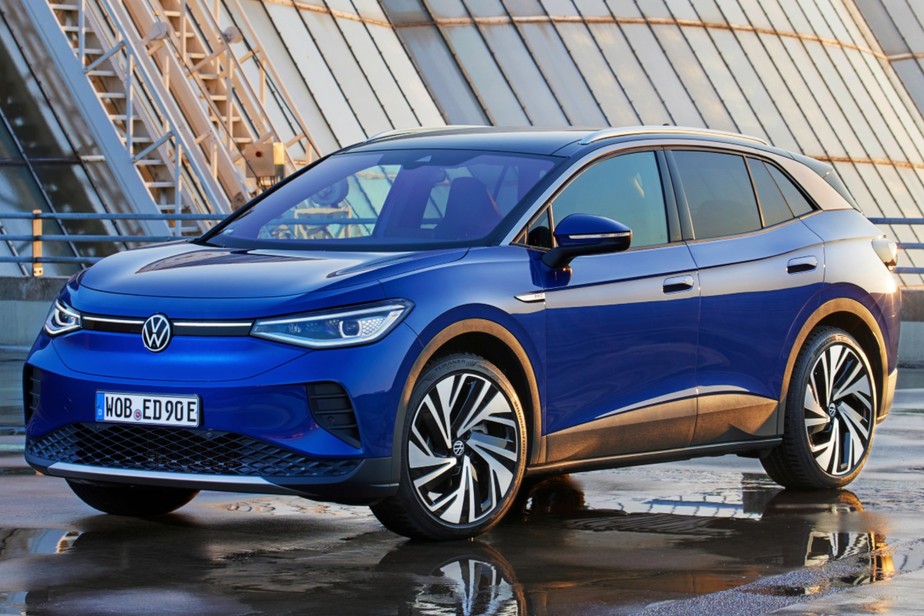

Volkswagen Bets On Electric Vehicles And Nearly Doubles Sales, With A 97% Increase
The German group Volkswagen published data confirming it has doubled sales of fully electric vehicles worldwide last year. Although it grew in all sectors, the sale of electric vehicles rose by nearly 100%
Along with 106,000 PHEVs – Plug-in Hybrid Electric Vehicles, the company delivered more than 369,000 electric cars, 73% more than in 2020. The ratio of battery electric vehicles (BEVs) and hybrid vehicles reached 7.5% of total sales, which was only 4% in 2020.
Currently, in Europe, electric vehicles account for 19.3% of Volkswagen’s deliveries, up from 12.6% in 2020. Only in its home country, Germany, one in four cars sold by Volkswagen was electric.
-
End of an era in Brazil: beloved sedan by Brazilians is discontinued despite having a 2.0 engine with 151 hp, CVT transmission, 466-liter trunk, and up to 650 km of range.

-
New Law Proposal in Brazil Could Heavily Penalize Drivers: Dangerous Overtaking May Become a Serious Offense with Fines Increased Tenfold and a 12-Month License Suspension; Update on 2026 Progress

-
Electric Revolution: Watts W125 Motorcycle Offers 160 km Range, 90 km/h Speed, and Affordable Price Starting at $3,000
-
General Motors Replaces Over a Thousand Workers with 50 Cobots at Electric Vehicle Plant, UAW Union Criticizes Move Amid Industry’s Automation Push


Volkswagen delivered a total of 77,100 BEVs in China, representing a 437% increase, including more than 70,000 cars from the ID family.
ID.4 Is The Most Prominent Model
The best-selling car among the 263,000 BEVs, with 119,650 units, was the battery electric model ID.4. Next is the ID.3 (around 76,000), the e-up! (approximately 41,500), and nearly 18,000 units of the ID.6, a category offered exclusively in the Chinese market by Volkswagen.
In Europe, the ID.4 topped BEV sales rankings in Denmark, Finland, Ireland, and Sweden. In the United States, nearly 17,000 units of the same fully electric model were sold.
Global Market
Volkswagen recorded a total of 4.897 million vehicle sales worldwide across all propulsion systems, which represented a decline of approximately 8.1% compared to the previous year.
According to the company, the semiconductor supply shortage resulted in production limitations during the year.
Klaus Zellmer, a member of Volkswagen’s sales and marketing board, stated in a released note: “Volkswagen achieved satisfactory sales under extremely challenging conditions. However, the massive effects on production caused by the semiconductor situation could not be fully compensated over the year. Nonetheless, our record waitlist of 543,000 vehicles just in Europe – 95,000 of them IDs – clearly shows that demand for Volkswagen vehicles remains very high.”
Volkswagen expects that at least the first half of this year will remain quite unstable and challenging due to continuing semiconductor supply constraints.
SUV Market
SUVs, or sport utility vehicles, now account for more than 40% of all car deliveries from Volkswagen. In the United States, the company achieved three-quarters of its revenue from SUV sales, reaching its highest vehicle sales figure in the country since 2013.