Portuguese
  Spanish


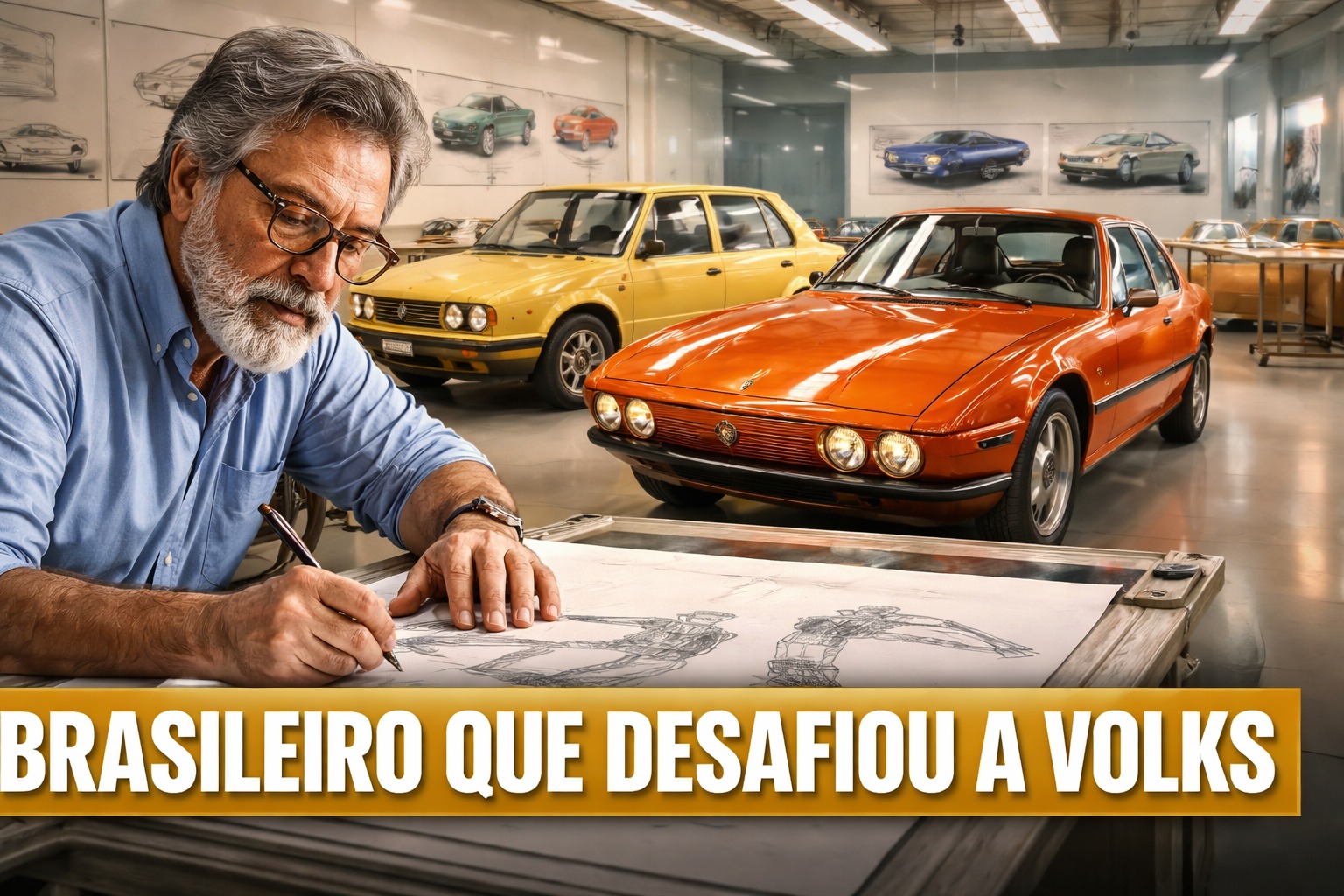


From Childhood Drawing Cars to Prominence at Willys-Overland, Volkswagen and Autolatina, the Trajectory of Piancastelli Reveals Creativity, Boldness and Lasting Influence on Contemporary and Historical Brazilian Automotive Design
The Volkswagen Brasília occupies a special place in the Brazilian collective memory. Present in garages, roads, and family stories, the model has crossed generations. What many drivers never imagined is that an essential part of its identity was born from the hands of a little-celebrated professional outside specialized circles: Márcio Lima Piancastelli.
Born in Belo Horizonte on September 7, 1936, Piancastelli built his career during one of the most transformative periods of the national automotive industry.
Between the 1960s and 1990s, he participated in decisive projects and left marks on companies such as Willys-Overland, Volkswagen, and later, Autolatina.
-
Rolls-Royce Turns Heads with 30-Inch Floating Wheels, 6.6-Liter V12 Engine, and 563 Horsepower

-
2019 Kia Sportage EX: A Spacious and Cost-Effective SUV with 2.0 Flex Engine and Panoramic Roof
-
Fiat Strada Becomes Top Seller in June, Surpassing Onix, Polo, Hilux, and T-Cross with 107 HP Engine and 732 km Range.

-
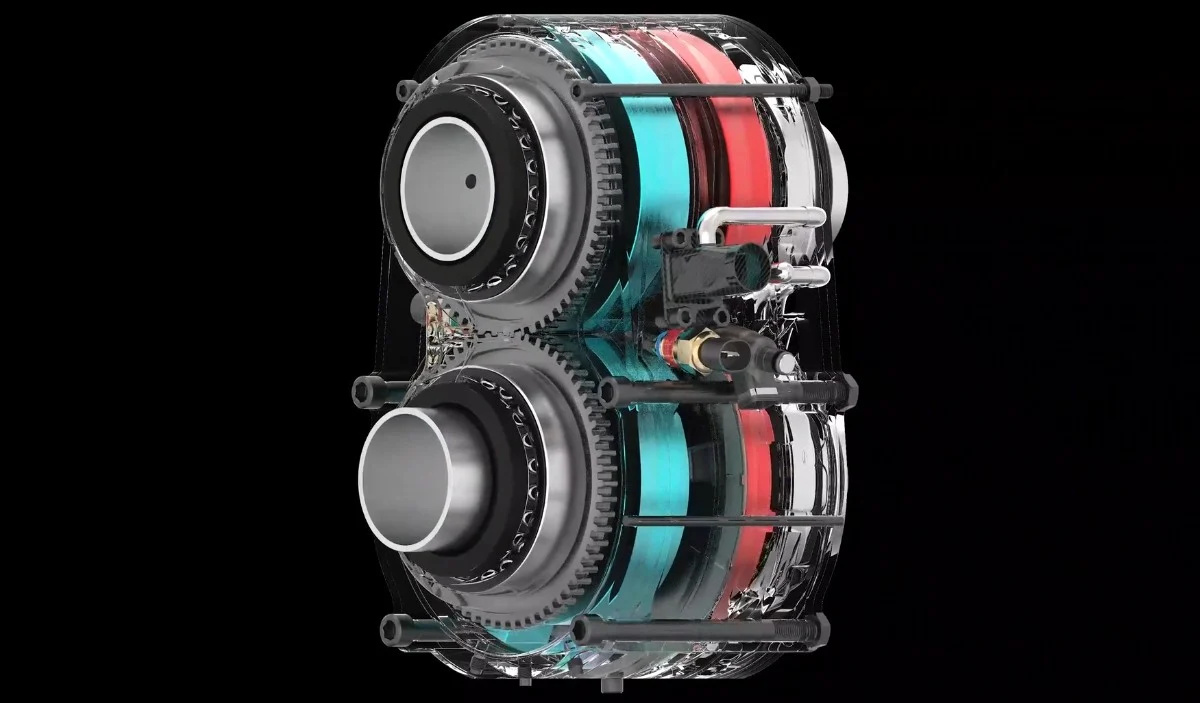
Suitcase-sized hydrogen engine spins at 25,000 rpm, nearly doubling the efficiency of conventional cars and replacing exhaust smoke with water vapor


His trajectory unfolded in an environment where local creativity coexisted with rigid guidelines coming from foreign headquarters.

Márcio Piancastelli: A Talent That Started in Childhood
From a very young age, Piancastelli showed a fascination for drawing. As a child, he preferred to sketch cars and imaginary landscapes during classes.
The family initially saw architecture as a natural path, but 1962 would become the turning point.
Without informing his father, Márcio entered the Lúcio Meira Automotive Drawing Competition, considered the first and most relevant automotive design contest held in Brazil.
To participate, he created a project for a car named Itapuã. He produced detailed technical drawings and, almost clandestinely, built a wooden model using the woodworking shop of the family’s company.
The material was sent to São Paulo surrounded by uncertainties. Months later, the surprise: journalists knocked on his door announcing that the young man had secured second place.
Among the judges was Luigi Segre, then head of the Italian studio Carrozzeria Ghia. Impressed with the work, Segre offered Piancastelli an internship in Turin.
In 1963, Márcio moved to Italy and spent about a year immersed in the epicenter of global automotive design, collaborating on proposals for Ford, Jaguar, Renault, Borgward, and Lamborghini.

Return to Brazil and Professional Consolidation
With the economic crisis that hit Italy, Piancastelli returned to Brazil at the end of 1964. He soon joined Willys-Overland, located in São Bernardo do Campo.
The automaker had one of the most advanced design studios in the country, an ideal setting for the designer’s maturation.
There, Márcio helped structure one of the first Brazilian automotive design studios and participated in creating vehicles specifically designed for the national market.
In 1967, he was invited to join Volkswagen do Brasil. Although he led a creative team, the management’s expectation was clear: adapt projects coming from Germany, not create from scratch.
Even so, Piancastelli and his team found discreet ways to innovate. Designs and concepts were developed behind the scenes as a strategy to preserve a certain creative autonomy.
According to Alessandra Iha Piancastelli Lóss, the designer’s daughter, in an interview with the website Autoentusiastas, her father often drew while listening to classical music.
This habit, she reported, assisted in visualizing proportions, shapes, and color combinations, a personal method that accompanied important moments of his career.

Brasília, SP2 and Gol: Brazilian Signature of Márcio Piancastelli
Even under limitations, Márcio Piancastelli participated in some of the most emblematic projects of Volkswagen in Brazil.
The Brasília was born to respond to frequent criticisms of the Beetle. The proposal was to offer more space and functionality to Brazilian families while maintaining the known mechanical base.
Piancastelli adopted straight lines, a large glazed area, and a feeling of internal space. Over the years, the model would become his favorite. The designer had six or seven units, reflecting his emotional bond with the car.
Another remarkable chapter involved the SP2. Created to prove that the Brazilian Volkswagen could produce a sporty model with personality, the project was developed artisanally, without clay.
Plaster, wires, and scale models shaped the vehicle. In the final phase, management demanded a longer front, adding ten centimeters to the design.
Dissatisfied, Márcio and the team returned to the studio the night before the presentation and redesignd the front without formal authorization. The model was approved the next day.
Although the original concept of the Gol was defined in Germany, the Brazilian team, led by Piancastelli, played a fundamental role in adapting it to the local market.
He also participated in creating variants such as Parati, Voyage, and Saveiro. In the 1980s, he led the Color & Trim department, being responsible for versions like Gol GT, GTS, and GTI.
Throughout his career, Márcio also acted as a link between Germans and Americans during Autolatina, collaborated on shared projects between Volkswagen and Ford, and remained creative even after retirement.
Márcio Piancastelli passed away in June 2015 at the age of 78. His legacy, silent for many, remains alive on the streets, in memories, and in Brazilian automotive design.
With information from Xataka.