





 Portuguese
  English
  Spanish
  4 min of reading
  0 comments


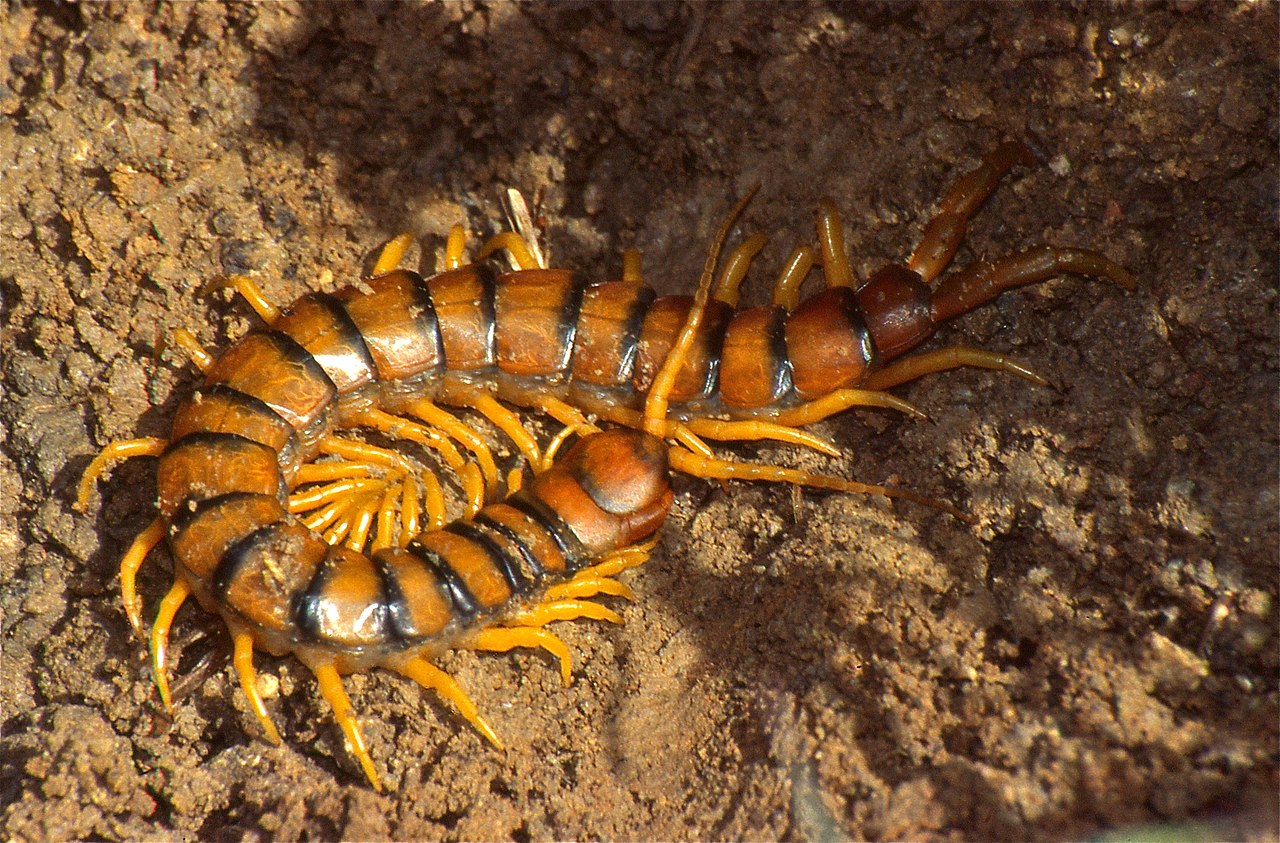
Giant Centipede Hunts Vertebrates, Uses Neurotoxic Venom and Has Caused Human Accidents, Intriguing Scientists with Its Unusual Aggressiveness.
The tropical forests of Southeast Asia hide a predator that doesn’t seem real at first glance. Reminding more of a prehistoric creature than a modern arthropod, the Scolopendra subspinipes, popularly known as the giant centipede or Vietnam centipede, has become one of the most intriguing cases of invertebrate predators capable of taking down birds, frogs, lizards, and even small rodents. For biologists, its behavior combines three elements that usually do not appear together: gigantism, active aggressiveness, and neurotoxic venom.
Giant Centipede: A Predator That Attacks Vertebrates
When we talk about centipedes, popular imagination generally thinks of arthropods that feed on insects.
However, the giant centipede of Southeast Asia completely breaks this expectation. With a size that can exceed 20 centimeters, segmented body, and sharp jaws that resemble fangs, it is considered a top predator among terrestrial invertebrates in the region.
-
Nicknamed Pemba, a humanoid robot from Unitree braved the extreme cold and altitude to reach the summit of the Chimborazo volcano at over 6,000 meters, with an eye on Everest, even though it had to be carried by the team on the steepest parts of the ascent.

-
Government authorizes and state acquires first machine guns in history: Israeli weapons used in more than 60 countries arrive with a record package of R$ 338 million, 3,200 weapons, 1,245 vehicles, and armored vehicles for special operations.
-
Brazilian Northeast reaches a new level with the country’s largest water project: 477 km of canals, tunnels, and stations bring water to 12 million people in 390 municipalities across four states.
-
Ally of China and Brazil in the BRICS, India makes a strategic decision on rare earths and targets a sector dominated by Beijing, which controls up to 90% of the global processing of 17 essential minerals for electric cars, chips, and AI.




Reports and field studies have documented the capture of frogs, toads, nestling birds, small snakes, lizards, and even mice, primarily exploiting speed advantage and the ability to climb trunks and bushes to reach unsuspecting prey.
Neurotoxic Venom and Attack Method
The attack begins with the mechanical restraint of the prey using the body and specialized legs, called forcipules, structures unique to centipedes capable of injecting venom.
This venom contains neurotoxic and cardiotoxic toxins that paralyze the nervous system in a matter of moments. In small vertebrates, the effect can be fatal.
In humans, although it rarely causes death, medical and zoological literature describes cases of extreme pain, edema, fever, vomiting, tachycardia, and local lesions that can last for days. In 2014, a case involving a Filipino child gained media attention and was analyzed by specialists in toxicology, reinforcing the alert for the clinical potential of the species.
Opportunistic Predator and Nocturnal Behavior
The giant centipede does not rely on vision to hunt. As a typically nocturnal animal, it uses tactile and chemical sensors along its body to detect heat, movement, and vibrations in the environment. This allows it to explore leaf litter, fallen trunks, nests, and tree cavities with enormous efficiency.
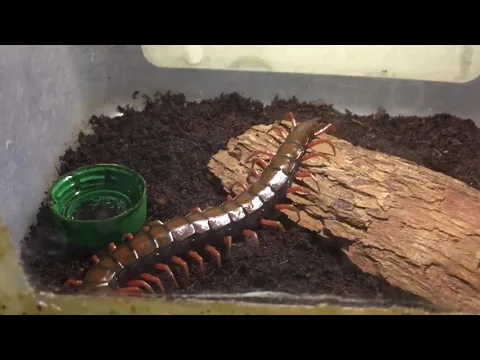
One of the most impressive behaviors documented by researchers is the ease with which the species takes down nestling birds.
Climbing up the tree to the nest, it attacks quickly before the adults can react, consuming the still-warm animal. In rural areas of Thailand and the Philippines, this phenomenon has been known among farmers for decades.
Aggressiveness Beyond Expected and Accidents with Humans
Unlike many invertebrates that flee at the slightest sign of danger, the Scolopendra subspinipes adopts an aggressive defensive behavior.
When cornered, it tries to attack rather than flee. This explains why both locals and researchers suffer accidents when handling logs, boxes, piles of bricks, or wet areas where it shelters.
Reported cases involve bites on agricultural operators, forestry workers, military trainees, and rural residents, especially during rainy seasons when the centipede leaves the ground and seeks shelter in dry places.
Geographical Distribution and Expansion in Urban Areas
The animal is native to Southeast Asia, but confirmed records indicate its presence in:
Sudan, Thailand, Vietnam, Philippines, Malaysia, Indonesia, southern China, and parts of Oceania.
Commercial movements and transportation of plant materials have facilitated its expansion into urban areas, leading to its appearance in backyards, storage spaces, and gardens. In large tropical cities, it finds an abundance of cockroaches and small vertebrates, favoring its establishment.
Urban biologists highlight that the centipede fills a niche often overlooked: that of a nocturnal predator of small vertebrates. This niche is rare among arthropods, making it an ecologically unique species.
Ecological Importance and Ongoing Scientific Research
Despite popular fear, the centipede plays an important role in controlling species that often become human pests, such as cockroaches and juvenile rodents. However, its aggressive behavior and potent venom have sparked interest in biomedical research.
Recent studies are investigating biochemical components of its venom for:
• possible analgesia
• use in neuroscience
• creation of high-efficiency bioinsecticides
Neurotoxins capable of paralyzing small vertebrates in seconds represent a living laboratory for pharmacology.
Why It Disturbs Biologists and Local Communities
The combination of size, potent venom, a diet based on vertebrates, and documented attacks on humans places the Scolopendra subspinipes in a rather uncommon ecological category.
For specialists, it is an example of how tropical zoological diversity can challenge conventional definitions of predator.
The fact that an arthropod can take down birds and frogs, climb trees, attack quickly, and survive in urban environments creates an aura of discomfort and fascination. In regions where the population coexists with the animal, respect is the norm.
In the end, the giant centipede of Southeast Asia helps to reveal a simple truth: the natural world still harbors efficient, little-known, and biologically extreme predators capable of redefining what we think about strength and venom in the animal kingdom.







-

-

-

4 people reacted to this.