





 Portuguese
  English
  Spanish
  2 min of reading
  0 comments


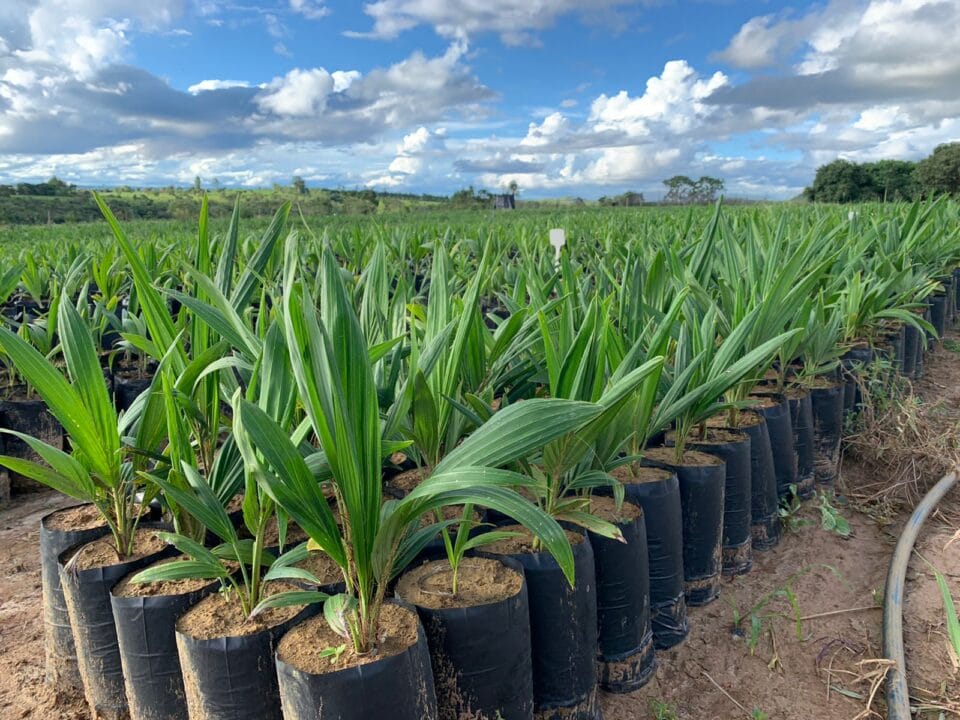
A Revolutionary Partnership Aims to Produce 1 Billion Liters of Renewable Diesel Per Year.
Acelen, a giant in the energy sector, embarks on the first phase of its mission to revolutionize the renewable fuels segment. Focused on the macaúba, a Brazilian plant with impressive energy value, the company has partnered with MulticanaPlus, a leader in R&D of plant micropropagation and cloning of selected macaúba plants.
The Future of Plant Cloning and the Role of Macaúba
The goal is clear: to develop genetically uniform clones of high-quality plants. This means replicating valuable traits such as resilience to stress and high production potential. This process is key to ensuring uniformity in plantations and preserving vital characteristics, driving the progress of macaúba cultivation.
-
The United States purchased for $125 million a ship that Shell used for drilling oil in the Arctic, spent another $25 million refurbishing it, and renamed it Storis because the largest economy on the planet can no longer build an icebreaker on its own.

-
Carnivorous dinosaur in China left footprints at just 1 km/h and surprised researchers in the field with more than 5,000 tracks preserved for over 100 million years.

-
A 400-meter colossus powered by natural gas has just set sail from Shanghai to Europe, carrying over 24,000 containers. It is the world’s largest dual-fuel container ship and can cross the planet without refueling even once.

-
The largest highway concession company in Brazil already belongs to an Italian group, and now the railway sector may be next to receive billions in investments from Italy amid the progress of the Mercosur and European Union agreement.




The innovation in micropropagation of macaúba is a global pioneer, marking a significant advancement in sustainable agriculture. Marcelo Cordaro, Vice President of New Business at Acelen, emphasizes: “Macaúba, besides being a native plant, stands out for its high oil yield per hectare, surpassing many other crops in water and nutritional efficiency, and it’s also essential for the conservation and revitalization of our biome.”
He continues: “Our approach is based on the best agricultural and ecological practices, which optimizes carbon absorption and minimizes CO2 emissions from seed to final fuel. And with the expertise of MulticanaPlus, we are ensuring a cutting-edge protocol.”
A Commitment to Sustainability and Progress
The bold biorefinery project, part of the PAC and revealed in August, promises to reposition Brazil at the forefront of the energy transition. With an estimated investment of R$ 12 billion over the next decade, Acelen plans to cultivate macaúba and palm oil on a vast area of 200,000 hectares. The focus is on degraded areas, with the vision of producing renewable diesel and sustainable aviation kerosene, creating approximately 90,000 jobs and supporting numerous local farmers.
Diving into the complex world of palm cloning, Alewijn Broere, General Director of MulticanaPlus, comments: “Mastering this technique is a challenge. But with our track record of success in cloning, especially with açaí palms, we are confident that we can support Acelen in this ambitious renewable diesel project using cloned macaúba. Our expertise combined with cutting-edge technology is at the core of our business.”
The micropropagation technique for macaúba seedlings is a springboard for a faster and more sustainable production, aiming not only to increase efficiency but also to protect our valuable ecosystem.
Source: bruno.cirillo@fsb




Be the first to react!