






 Portuguese
  Spanish


Design Trend And Practicality Redefine Brazilian Bathrooms, With Solutions That Combine Accessibility, Minimalist Aesthetics, And Integration Of Spaces. The Italian Shower And Alternatives Like Shadow Walls Stand Out In Interior Projects.
The bathroom has ceased to be a supporting role and has started to guide interior design projects in the country.
In this movement, the Italian shower has taken the place of the traditional glass shower enclosure by eliminating visual barriers and leveling the floor of the environment.
The proposal enhances the feeling of space, promotes integration, and simplifies maintenance routines without sacrificing contemporary design.
-
13-Year-Old Raises Funds to Build Well, Transforming Lives in Cambodian Community Lacking Clean Water

-
Man with Metal Detector Finds Medieval Silver Seal in England, Uncovers 2,000-Year-Old Roman Gem with ‘Richard’s Secret’

-
Thailand Converts 8 Tons of PET Bottles into 3,500 School Backpacks, Showcasing Circular Economy with Over 40 Factories Involved

-
Mysterious Bats Spotted in Paris’s Père Lachaise Cemetery, Drawing Tourists to the “Vampire Cemetery”




What Is The Italian Shower
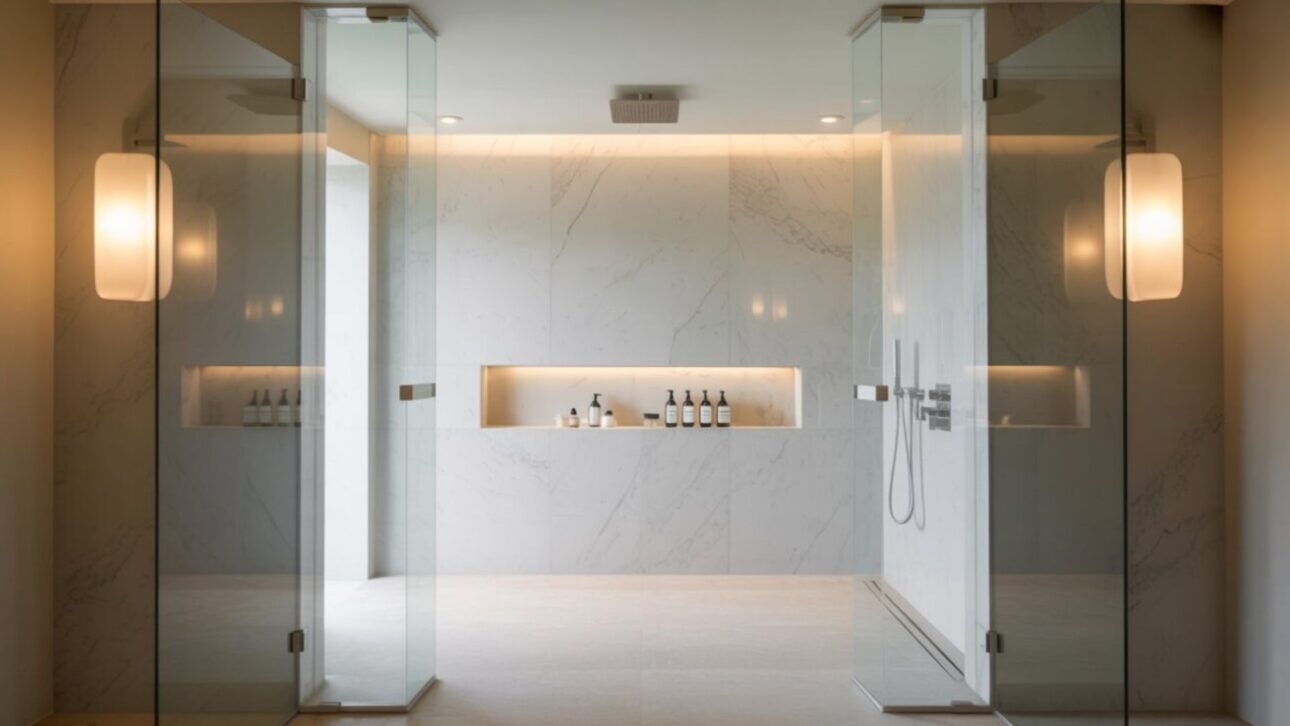
The solution known as Italian shower is characterized by the continuity of the bathroom floor extending into the shower area, without raised bases, tracks, curtains, or panels.
The design is continuous from floor to ceiling, maintaining a clean visual line and reinforcing the minimalist aesthetic.
When stepping directly on the same covering as the rest of the space, the user perceives the area as a whole, with fewer elements competing for attention.
Instead of enclosing the area with doors, the concept relies on the absence of barriers or on discreet elements that do not interrupt circulation.
The outcome is a brighter environment with simplified lines, suitable for proposals that seek lightness and visual unity.
Practicality In Daily Life
Although the aesthetic appeal is evident, practicality is often cited as the main reason for choice.
Without doors, handles, or tracks, cleaning tends to be more straightforward, with fewer areas subject to residue accumulation.
Access also becomes simpler, as there are no uneven surfaces or thresholds that hinder passage.
For users with reduced mobility, the absence of physical barriers promotes autonomy in their bathing routines.
Free circulation facilitates the entry of wheelchairs or the use of supports when included in the design. The configuration, therefore, aligns with accessibility principles without compromising the room’s design.
Trend Established In Homes
Architecture and design professionals observe the adoption of the Italian shower in residential projects as a lasting update, rather than just a passing trend.
The solution has been integrated into bathrooms of different sizes, including renovations that aim to simplify layouts and eliminate visually heavy elements.
In addition to the effect of spaciousness, the proposal contributes to the appreciation of the property by presenting a bathroom that aligns with contemporary styles.
The perception of continuity between spaces, in turn, reinforces the feeling of organization and fluid circulation.
Shadow Walls: Discreet Barrier Against Splashing
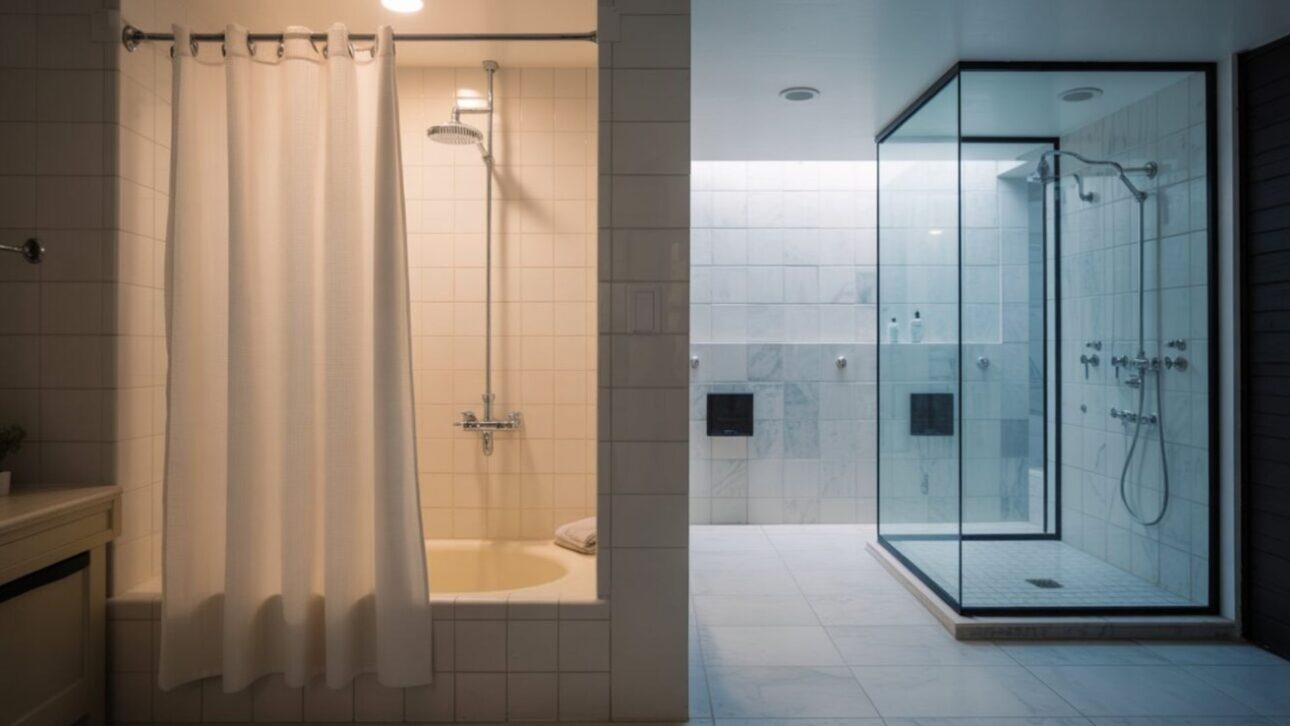
Another trending strategy is the adoption of shadow walls, small dividers typically at waist height that replace the complete closure of the shower enclosure.
These walls function as a barrier against splashing, without blocking light and without creating the typical compartmentalization effect seen with glass up to the ceiling.
As there are no large transparent surfaces, soap marks, condensation, and the need to polish or defog panels are reduced.
The solution preserves the idea of integration and maintains the reading of the environment while providing a subtle physical limit to the wet area.
In compact bathrooms, this approach helps organize the space without losing the feeling of spaciousness.
Decorative Separators Without Construction
For those seeking even more practicality, non-permanent decorative separators emerge as an alternative.
They are visual support elements that serve a similar function to low walls, creating a discreet limit for water.
Since they do not require structural intervention, they can be easily installed and removed, adapting to changes in use or layout.
The temporary nature, however, often implies lower durability compared to fixed solutions.
The choice usually tends to be guided by the intended use and the need for flexibility in the environment.
Integration, Cleaning And Simplified Maintenance
Regardless of the adopted resource, the common thread is the integration of the bathroom with a focus on daily use.
More open environments facilitate ventilation and light entry, aiding in drying after bathing and odor control.
With fewer crevices and fittings, cleaning becomes less time-consuming and more straightforward.
The continuous design also supports choices of coverings that unify the visual set, something valued in minimalist proposals.
This coherence helps highlight textures and materials without seals or dividers imposing themselves as a central element.
How Design Impacts The Experience
Bathing in an open area changes how the space is occupied. Circulation is freer, and the reading of the environment approaches that of a home spa, without the typical compartmentalization of traditional enclosures.
For many users, this translates into a more comfortable experience, where functionality is balanced with aesthetics.
By reducing the number of elements, the design directs attention to key points such as the choice of fixtures, floor layout, and lighting.
These aspects gain prominence because they do not compete for attention with doors or profiles.
When To Opt For Low Walls
The so-called shadow walls are especially useful when the goal is to contain splashes while preserving the passage of natural light.
In windows close to the shower area, obstructions that could compromise lighting throughout the day are avoided.
In daily use, the partial barrier creates a sufficient limit to contain water without creating a feeling of “box” in the environment.
In renovations, the solution can align with distinct styles, from contemporary to rustic, depending on the chosen material. The essential factor is that the divider fulfills its function without breaking the unity of the space.
Flexibility For Different Routines
The set of solutions — Italian shower, shadow walls, and decorative separators — allows for calibrating the level of openness according to the resident’s profile.
Those who prioritize accessibility tend to benefit from the absence of steps and the width of passage.
Meanwhile, those seeking simpler maintenance find advantages in reducing fittings and glass surfaces.
With this flexibility, the bathroom becomes more responsive to the household’s routines, whether in compact dimensions or large suites.
The focus is on user comfort and practicality, without compromising a contemporary design.
More Valued And Integrated Bathrooms
The combination of continuous design, ease of cleaning, and unobstructed circulation helps explain why bathrooms have been gaining status in projects.
The environment, once viewed solely through the functional lens, now participates in the identity of the home.
The integration solutions show that it is possible to reconcile aesthetics and daily use without resorting to heavy enclosures.
By transforming the shower area, the Italian shower consolidates itself as a benchmark in design and usability, while shadow walls provide an efficient middle ground to contain splashes without interrupting light.
In parallel, decorative separators broaden the options for those needing quick and non-structural adaptations.
Which of these approaches best reflects the bathroom you envision for your home: the total openness of the Italian shower, the subtle barrier of shadow walls, or the flexibility of decorative separators?






Nao esqueca do rodo e do pano de chao ! Depois do banho secamos o banheiro e ai to.amos um novo banho poia ja suamos demais !!!! Reportagem confusa ! Se vai abaixar a barreira de vidrocomo ele fica em pe sem ferragem? Sera que vamos passar por um momento mistico !!!??? Alem disso vamos tomar banho sentado no chao para evitar os respingos fora da area de sombra !
E a agua que vai correr por todo o banheiro por nao ter uma soleira divisoria . Pode explicar ou eh materia patrocinada ???