Portuguese
  Spanish


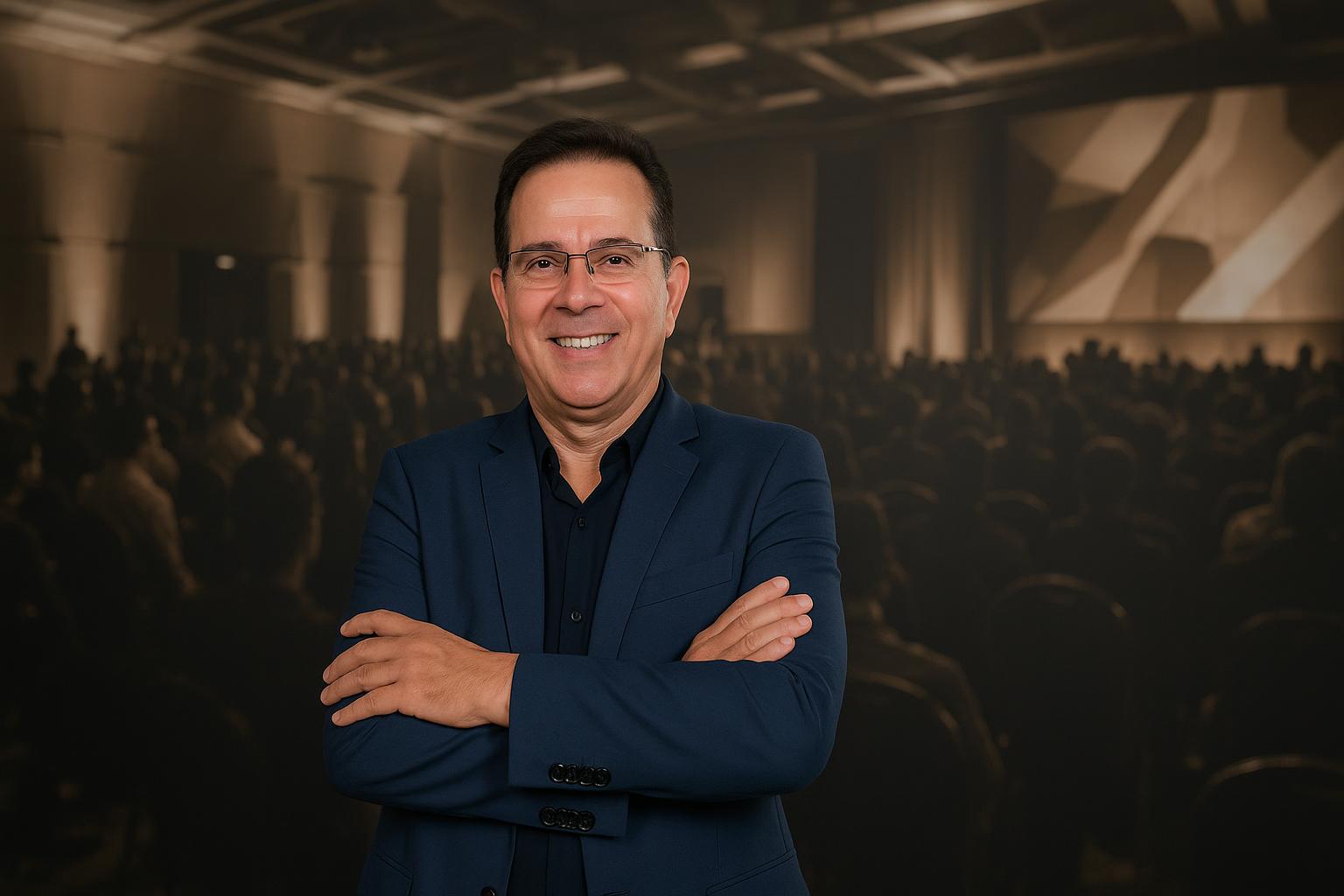

From a childhood without electricity in the interior of Santa Catarina to leading a company with 67,000 clients, Rui Gonçalves helped transform AltoQi into a reference in digital engineering and now aims for R$ 110 million in revenue.
Rui Gonçalves went from a childhood without electricity in the interior of Santa Catarina to becoming one of the most well-known names in engineering software in the country. Today, leading AltoQi, he sees the company reaching 67,000 clients and projecting R$ 110 million in revenue by 2026, in a direct bet on the digitalization of civil construction.
Rui’s journey helps explain why the company grew so strongly in a sector still marked by improvisation and low automation. Founded in Florianópolis 36 years ago, AltoQi now operates in more than 15 countries, has over 300 employees, and has just received strategic investment from ArcelorMittal, through the Açolab Ventures fund.
According to Exame, the company earned R$ 80 million in 2025, with a 30% increase, and wants to accelerate expansion even further in the coming months.
-
Spain Launches World’s Largest Floating Dry Dock: 56-Meter Giant Produces Massive Concrete Structures in A Coruña Using Technology Proven in Brazil

-
AI-powered toys that talk, recognize faces, and collect data face scrutiny from Brazilian government over children’s privacy concerns

-
4,000-Year-Old Child’s Skull Unveils Ancient Burial in 7,500-Year-Old Norwegian Rock Shelter, Impressing Archaeologists

-
Norway Defeats Brazil in World Cup but Invests Billions to Preserve the Amazon, Strengthens Amazon Fund, and Joins Brazil in Leading Global Effort Against Tropical Deforestation


From a house without electricity to the first impulse to study mathematics


Rui was born in Barranco Alto, in the interior of Ilhota, in a house without electricity, without running water, and with an outdoor bathroom. To go to school, he crossed the river in a bateira, a type of wooden boat, and walked about three kilometers to the classroom.
As a young boy, he saw a bridge change the community’s routine. A drainage channel had isolated the region until the military set up a nearby camp, assisted residents, and built a passage. An engineer lieutenant explained that to build a bridge, one needed to study mathematics. The phrase marked the boy and paved the way for the career that would follow.
Later, the family sold the land and moved to Itajaí. His mother sewed to support the household, and Rui started working at 13 as an office boy and waiter while studying in public school.
The software was born from a simple question: why do this by hand?
The path to AltoQi began when Rui entered Computer Science, chosen for a practical reason: the course lasted four years, had part-time classes, and would allow him to work to support himself in Florianópolis. He was the only one from the bus group to secure a spot.
In the penultimate semester, upon seeing an engineering colleague manually calculating structures, he asked the question that would change his life: “Isn’t there a program to do this?”. There was, but it was expensive and inaccessible. The answer was to create his own product.
The company started in a cramped apartment in the center of the Santa Catarina capital and even operated in an improvised attic above a computer store, with a low ceiling and the partners hitting their heads when standing up.
In 1990, Rui formalized a partnership with José Carlos Pereira and Ricardo Eberhardt. The first had a Chevy 500, essential for selling technology throughout the state’s interior. The second was the “high IQ” of the group and became the company’s name. Together, they launched ProViga and later other software for the construction industry.
From an 11-hour calculation to Eberick, a national reference
The leap came when the team decided to integrate the systems and invest in a broader platform. With support from Finep and CNPq grants, the development took four years. The first real test was a four-story building in Tubarão, in southern Santa Catarina, and the calculation took 11 hours on a Pentium 100 computer.
It was slow, but it represented an important change of course. The software was named Eberick, inspired by Ricardo Eberhardt’s nickname and surname, and became one of the most well-known structural calculation programs in reinforced concrete in Brazil.
Later on, the company launched Builder, aimed at building installations and aligned with BIM, a model that allows virtual planning of the construction before physical execution. The logic became the foundation of the company’s new phase.
The 67 thousand clients and the bet on digitizing the entire construction
Today, AltoQi wants to be more than a software provider. The company now presents itself as a digital ecosystem for the construction industry, connecting design, budgeting, planning, purchasing, and construction management in an integrated environment.
The movement gained momentum starting in 2020, with the arrival of CEO Felipe Althoff, who began structuring the expansion. Among the clients are major Brazilian construction companies and public institutions like the Army, Air Force, and engineering universities. The Visus platform, launched less than three years ago, already gathers around a thousand clients.
The company’s message is straightforward: making mistakes on the computer costs much less than making mistakes on the construction site. The bet is that the construction industry will start working with more predictability, less improvisation, and greater efficiency, in a sector that still resists digitalization.
With strategic investment from ArcelorMittal and growing revenue, AltoQi enters a new phase carrying an unusual story: that of a boy who witnessed the arrival of electricity in his childhood and, decades later, helped to digitize an important part of Brazilian engineering. If you follow technology, business, and civil construction, it’s worth keeping a close eye on the next steps of this expansion.