






 Portuguese
  Spanish


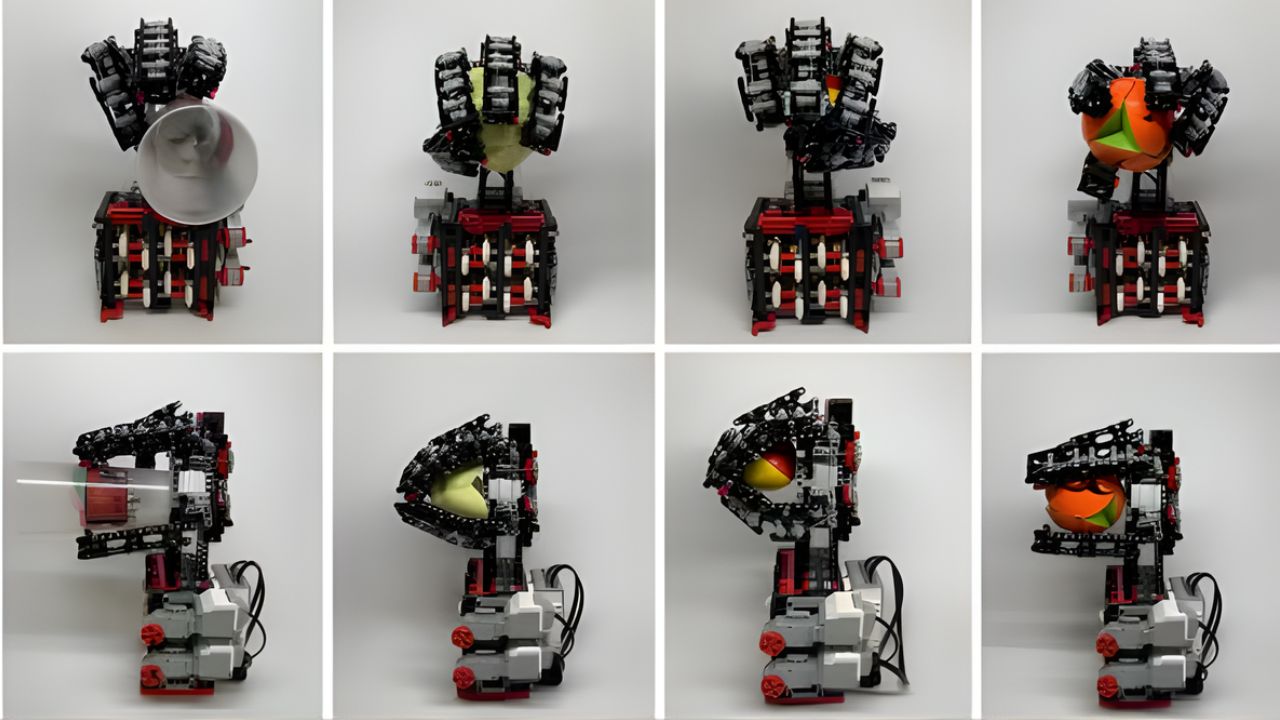


Teen Creates Functional Robotic Hand Using LEGO MINDSTORMS, Simplifying Advanced Robotics Concepts for Youth. Discover How the Educational Project Combines Creativity and Accessible Technology.
A 16-year-old British teenager, Jared Leporo, developed a functional robotic hand using the LEGO MINDSTORMS kit. The project was inspired by the SoftHand-A model, a 3D-printed anthropomorphic robotic hand, but with an accessible, hands-on approach.
In an interview with Popular Science, Jared revealed that his goal was to create a project that simplified the complex mechanisms of robotics, making them more accessible for young people and beginners.
The prototype he built uses only LEGO pieces and was designed to be educational, allowing others to explore robotics more intuitively and with common materials, without the need for expensive or sophisticated equipment.
-
In the Caucasus Mountains, a Community Preserves a Language So Rare Few Outsiders Can Understand It

-
Slovakia’s Ice Cave Holds Over 110,000 m³ of Frozen Wonders, Boasts Walls Up to 27 Meters Thick, and Was Among the First Electrified Caves Globally

-
Street Cleaner Accidentally Receives $200,000 Transfer, Returns Unexpected Fortune to Rightful Owner
-
Australian Space Agency Investigates Six Mysterious Metal Spheres Found on Queensland Beach, Isolating Area Over Possible Space Debris Risk





Building the Robotic Hand: Challenges and Innovations
With the help of his father, Nathan Leporo — an expert in complex robotic projects —, Jared started digitally developing the hand model.
The prototype features two motors and four fingers, each with two tendons.
The biggest challenge of the project was the routing of the tendons around the rotary bearings in the fingers, a crucial feature to allow flexible joint movement, enabling the fingers to stretch or bend naturally when the tendons are pulled.
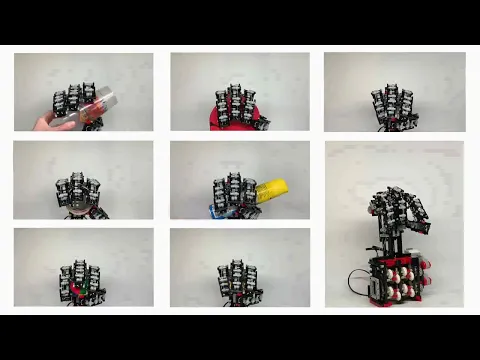

The final result was a functional robotic hand, capable of gripping objects with an impressive level of adaptability, using simple mechanisms based on LEGO.
Additionally, the hand’s structure does not use springs, unlike the original SoftHand-A version, making it simpler and easier to replicate.
Difference from the Original Model and Performance Testing
Although the LEGO MINDSTORMS project is a simplified version of the SoftHand-A, performance was evaluated in various aspects, such as response time, load capacity, and closing force.
The tests showed that the LEGO version had lower results than the 3D-printed SoftHand-A, but the differences were not significant.
The main conclusion of the authors was that, even with the simplicity of the materials, the LEGO robotic hand still presents great educational potential.
“My generation and future generations are the future of robotics, so it’s essential that we take an interest in this area. Creating something like a robotic hand with our own hands is an excellent way to learn about robotics,” Jared stated in an interview, highlighting the educational impact of the project.
Education and Inspiration: An Accessible Project for All Ages
Jared Leporo’s project was created not only to demonstrate technical skills but also to inspire and teach children and teenagers about the principles of modern robotics.
The fact that it is possible to build the hand with common LEGO pieces opens up a vast field for educators and students interested in learning more about robotics and engineering without the need for specialized equipment.
The prototype showed how creativity and the use of accessible resources can provide a meaningful learning experience and even open doors for future projects in the field.
This type of initiative has the power to motivate young people to dive deeper into the world of technology, showing that with simple materials and a bit of imagination, it is possible to create innovative solutions.
With information from Galileu Magazine


