Portuguese
  Spanish


The rift is the Turkana Rift, between Ethiopia and Mozambique, where two plates are moving apart at 4.7 millimeters per year. Researchers from Columbia University mapped the crust beneath East Africa using earthquake data, but warn that the new ocean will still take millions of years to form.
Scientists have identified that Africa is splitting into two parts faster than previously thought, in a crack zone called the Turkana Rift, between Ethiopia and Mozambique, where the crust in the center of the rift is only 13 kilometers thick in some sections. The discovery is from researchers at Columbia University, in the United States, who state that the continent has reached the critical breaking point and may, in the future, give rise to a new ocean.
According to information released in June by the portal IG, the caveat, however, is essential to understand the scale of the phenomenon. According to the study’s findings, the Earth’s outer layer in the region is thinning at a faster rate than expected, which increases the chance of an ocean forming there. Even so, the change will continue to be very slow, as the Turkana Rift began to form about 45 million years ago and will still take millions of years to reach the next stage.
The crust of only 13 km in the center of the rift
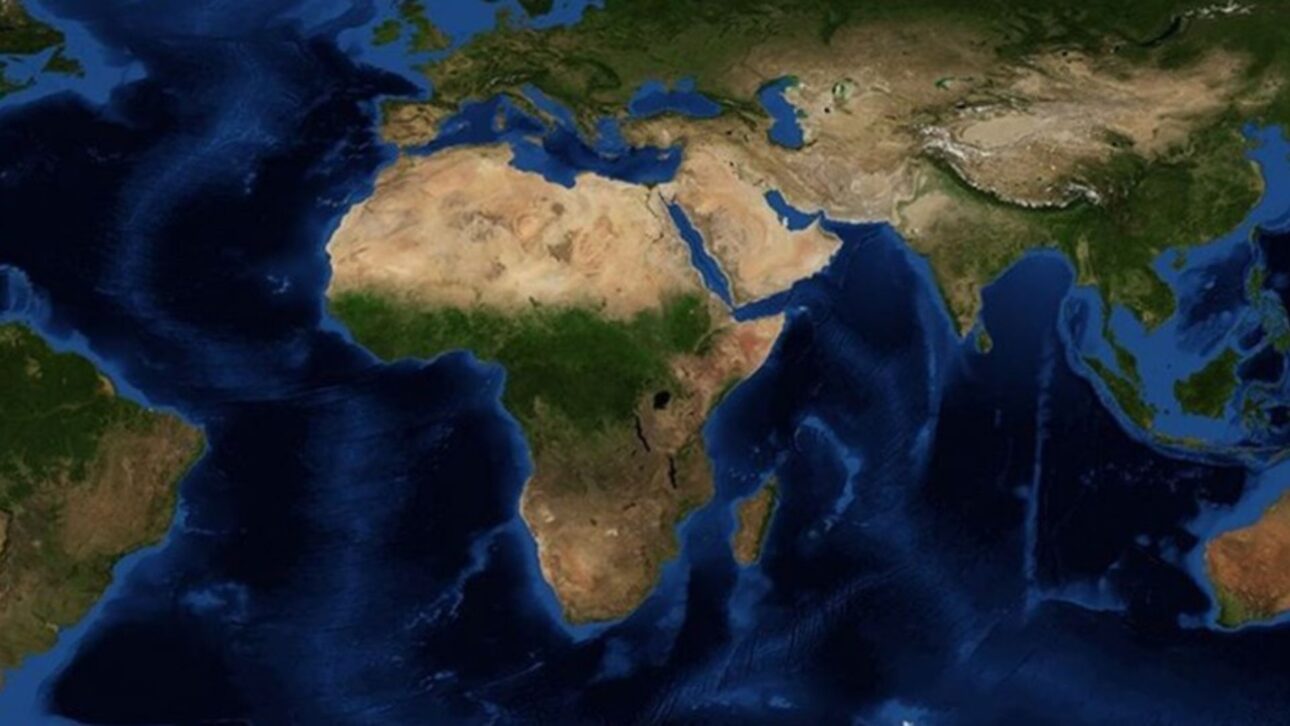
Geological rifts cut across East Africa indicating the slow separation of tectonic plates
The number that caught scientists’ attention is the thickness of the crust. To understand the process, researchers analyzed earthquake data and created a map of the underground part of the Rift. The results showed that, in the center of the rift, the Earth’s crust is only 13 kilometers thick in some sections, while in other areas it exceeds 35 kilometers. “The crust is thinner than anyone imagined,” summarized Christian Rowan, a doctoral student at Columbia University.
-
She heard for decades that space was not a place for women, became a pioneer in aviation, was part of the Mercury 13, and at 82, finally traveled with Jeff Bezos before dying at 87.

-
Scientists investigate microplastics in the airways of patients with sleep apnea and reveal a new focus for research on environmental pollution, human exposure, and possible impacts on breathing quality.
-
For the first time, scientists have seen the ocean floor open up in real-time—plates moving apart by two meters in a few days and 160 million cubic meters of lava emerging on the seafloor.
-
Iraq floats and sinks under an arm of the Euphrates 10 giant concrete boxes of 46,000 tons and 125 meters each to assemble a 2.4 km submerged tunnel and open a new land route between Asia and Europe.




This thinning is the result of a movement that has been happening for a long time. The Turkana Rift is part of a large area where two tectonic plates have been slowly moving apart for millions of years, today at a speed of about 4.7 millimeters per year. As the plates separate, the layer that forms the continent is stretched, becomes thinner, cracks appear, and some areas sink, in a process that the study shows is more advanced than previously thought in eastern Africa.
The Critical Breaking Point
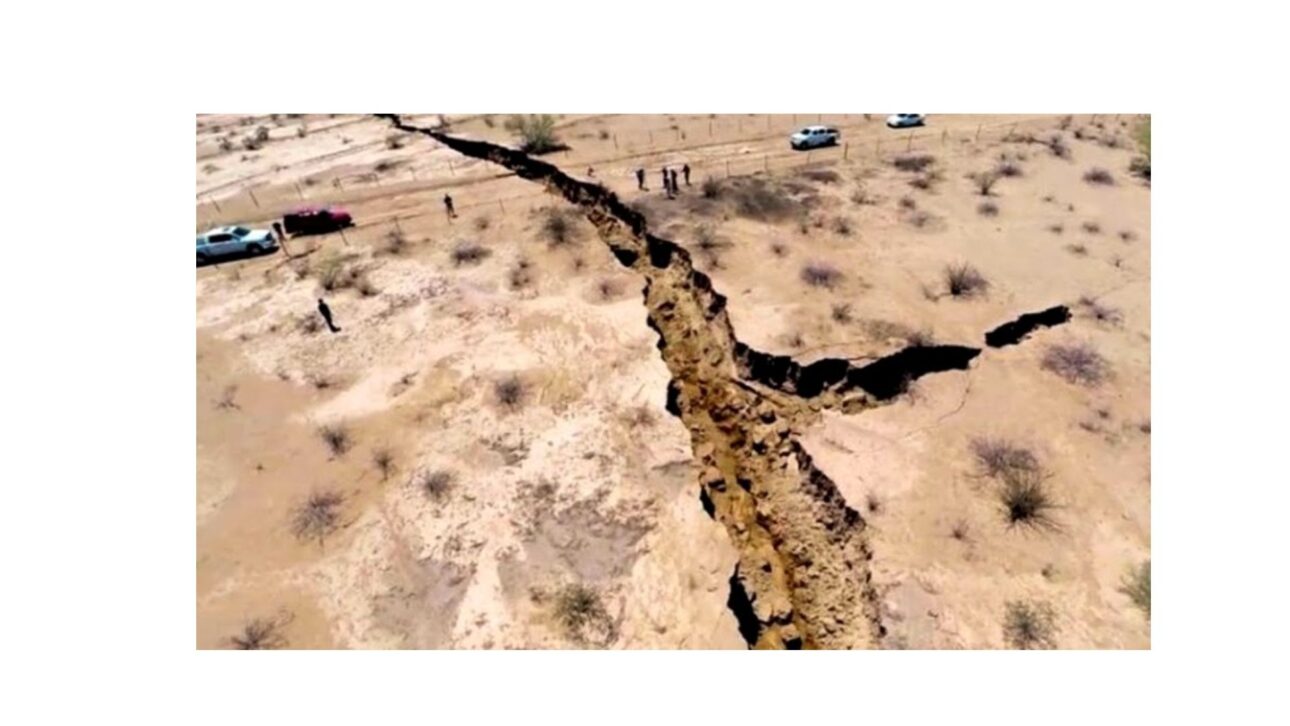
Fissure in Africa grows and may give rise to a new ocean
The thinning has brought the region to a point that scientists consider decisive. “We have reached that critical breaking point of the crust,” said Anne Bécel, a geophysicist at Columbia University, explaining why the area is more prone to separation. The stretching of the plates also facilitates the rise of magma from the Earth’s interior, which helps to explain the intense volcanic activity in the region.
The thinner the crust, the greater the tendency to rupture. As the plates diverge and the layer is reduced beyond a certain point, the continent becomes more likely to break along the fissure. This scenario leads the Columbia University team to conclude that eastern Africa has advanced further in the separation process than previously believed.
Why the New Ocean Will Still Take Millions of Years
Despite the discovery, none of this will happen overnight. The scientists themselves emphasized that the change will continue at a very slow pace. The Turkana Rift began to form about 45 million years ago and will still take millions of years to reach its next stage of evolution, which dismisses any idea of an imminent break in Africa.
The predicted outcome is a new ocean, in a geological time horizon. In the future, this part of the continent could transform into a new area of seafloor and, when that happens, seawater could advance into the fissure, forming a new ocean. The point of the research is that this thinning is happening faster than science predicted, not that the separation is a matter of little time.
The Turkana Rift and the Greatest Treasure of Human Fossils
The same geological process helps to explain a unique richness of the region. The study clarifies why the Turkana area gathers one of the largest quantities of human ancestor fossils ever found. The Rift has already revealed more than 1,200 hominid fossils, up to four million years old, equivalent to about one-third of all such discoveries made in Africa.
The connection between the rift and the fossils lies in the sinking of the terrain. Researchers believe that the intense activity of volcanoes and the thinning of the crust caused the sinking of the ground about four million years ago. This created areas where sand, mud, and other materials accumulated over time, forming an ideal environment for bones and fragments of ancient ancestors to withstand for millions of years.
Researchers from Columbia University, who mapped the Turkana Rift with earthquake data, concluded that Africa is splitting faster than science predicted, with the crust at the center of the rift only 13 kilometers thick, compared to more than 35 kilometers in other areas, while two tectonic plates are moving apart at about 4.7 millimeters per year, bringing the region to the critical breaking point.
The process, however, is on a geological time scale: the rift began to form about 45 million years ago, and the new ocean is still millions of years away. The same thinning of the crust helps explain why Turkana holds more than 1,200 hominid fossils, about one-third of the continent’s finds, preserved by the sinking of the terrain.
And you, do you find it fascinating to imagine a continent slowly splitting until a new ocean opens, or does the scale of millions of years make it difficult to visualize? What catches your attention the most in this discovery about Africa? Share your opinion and exchange ideas with other readers about science and geology, with respect for different views.