






 Portuguese
  Spanish





Engineers from MIT Developed a System That Uses Solar Energy to Desalinate Brackish Groundwater, Offering a Sustainable and Accessible Solution for Underserved Communities. Capable of Producing Up to 5,000 Liters of Drinking Water Per Day, the Technology Eliminates the Need for Batteries and Adjusts Automatically to Solar Variations, Becoming a Viable Alternative for Arid Regions.
Imagine Living in a World Where Access to Drinking Water Is No Longer a Concern for Millions of People Facing Severe Droughts and Limited Water Resources.
This Dream Seems to Be Closer to Reality, Thanks to an Innovation That Combines Advanced Technology and Renewable Energies.
Researchers from the Renowned Massachusetts Institute of Technology (MIT) Developed a System That Could Revolutionize Drinking Water Supply, Using Solar Energy to Desalinate Brackish Groundwater.
-
Bruno Guimarães, 28, Misses Crucial Penalty Against Norway in World Cup After Replacing Vinicius Jr.

-
Pennsylvania Mine Creates Ice in Summer Heat and Melts in Winter, Turning a Mountain Crevice into a Reverse Natural Refrigerator

-
China Accelerates Global Expansion of Robotics: From Smart Vacuums to Industrial and Humanoid Machines, Millions Exported to Over 150 Markets
-
Inspired by a school lesson on Africa’s water crisis, a young boy raised money through chores to fund a well that transformed a Ugandan community.




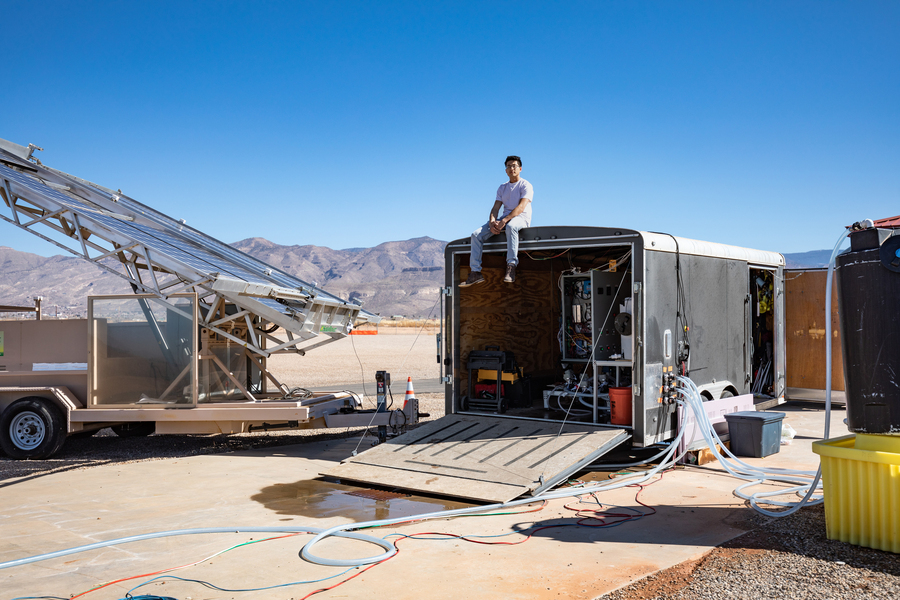
According to Information Released, the Project Was Tested in Alamogordo, a Historic City in New Mexico, Known for Being the Site of the First Atomic Bomb Test in 1945.
For Six Months, the Engineers Operated an Automated System That Was Able to Produce Up to 5,000 Liters of Drinking Water Daily.
This Amount Is Sufficient to Meet the Needs of a Community of Approximately 3,000 People, Marking a Significant Advancement for Remote and Vulnerable Regions.
The Importance of Groundwater
The Desalination of Brackish Water Stands Out as a Crucial Solution to Addressing the Global Water Crisis.
To Understand the Impact of This Innovative System, It Is Essential to Comprehend the Relevance of Groundwater. This Represents the Largest Reserve of Drinking Water on the Planet, Stored Between Rocks and Sediments.
However, Due to Climate Change and Uncontrolled Exploitation, Many of These Sources Are Becoming Increasingly Saline.
Transforming This Water into a Drinkable Resource Is an Expensive Challenge and, So Far, Unaffordable for Underserved Communities.
According to Studies Published in Nature Water, Brackish Water, Which Is a Mixture of Fresh and Salty Water, Can Be Found in Various Environments, Such as Mangroves and Estuaries.
In Alamogordo, However, the Exploited Groundwaters Were Below the Earth’s Surface, in an Area Far From the Coast.
This Factor Highlights the System’s Potential in Areas Where Access to the Sea Is Nonexistent and Dependence on Local Water Resources Is Essential.
Solar Energy as an Ally
The Great Differentiator of the System Developed by MIT Is Its Ability to Operate Exclusively with Solar Energy, Dispensating the Use of Batteries, Which Significantly Increase Operational Costs.
The Technology Adjusts Automatically to the Rhythm of the Sun, Responding Quickly to Variations in Light, Such as the Appearance of Passing Clouds.
When Light Increases, the System Accelerates the Pumping of Brackish Water to the Electrodialysis Stacks, Where the Desalination Process Occurs.
This Near-Instant Adjustment Reduces Energy Waste and Makes the System Highly Efficient, with Over 94% of the Generated Energy Being Utilized.
Conventional Methods Rely on Constant Energy and Battery Storage to Compensate for Solar Variations, Which Limits Their Application in Remote Areas.
The MIT Prototype Eliminates This Barrier, Becoming a Viable and Low-Cost Solution for Rural Communities Suffering from Water and Electricity Scarcity.
Advancements and Challenges
Although the System Has Already Demonstrated Its Efficiency in Practical Tests, the Engineers Face the Challenge of Scaling It Up to Serve Larger Communities and, Eventually, Entire Cities.
The Team Plans to Launch a Company to Commercialize the Technology, Expanding Its Reach and Global Impact.
This Advancement Positions Brackish Groundwater as a Promising Alternative to Solve the Water Crisis in Arid Regions.
Currently, Millions of People Live in Areas Where Access to Seawater Is Unfeasible, and Desalinating Groundwater Could Be a Practical and Sustainable Solution.
The MIT Project, with Its Combination of Technological Innovation and Respect for Natural Resources, Presents an Hopeful Future for Populations That Face Scarcity Daily.
Are We Witnessing the Beginning of a Revolution in Drinking Water Supply?


O artigo é inócuo, não vi inovação alguma no texto. O sistema de dessalinização mencionado já é usado em larga escala, com muito sucesso.
Retirar as baterias NÃO É INOVAÇÃO, é apenas otimização e adequação.
Vejam esta reportagem, de abril 2024, sobre a instalação da MILÉSIMA unidade de dessalinização, no interior do Ceará.
Ela produz 5.625L/h, 25 vezes mais água doce do que o citado da reportagem.
https://www.ceara.gov.br/2024/04/05/milesimo-sistema-de-dessalinizacao-do-programa-agua-doce-e-instalado-no-ceara/
Um grande problema da dessalinização é o que fazer com os sais retirados da água. Eles criaram alguma nova tecnologia para isto também?
Ah, coloca em potinhos e vende como suplemento alimentar sem autorização da Anvisa.
Bom pra doença da retina, caspa, diabetes, varizes, impotência e dores nas articulações.
Vende só pela Internet. No dia que baixar polícia no depósito, troca o rótulo e segue a vida