






 Portuguese
  Spanish
  3 min of reading
  0 comments


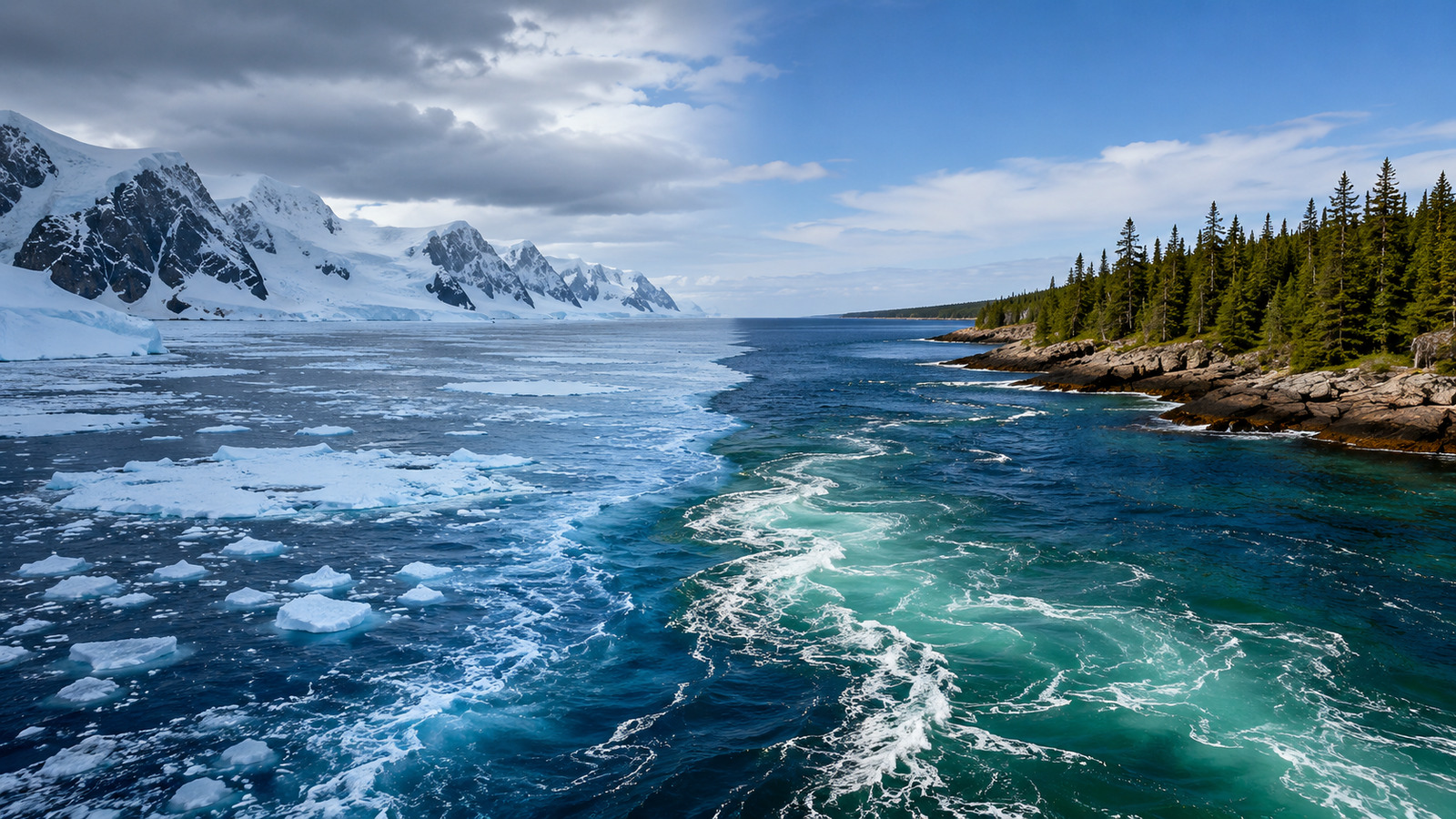
Research published in Nature Communications shows that the Gulf Stream moved northward, raised Canadian waters by up to 5°C, and revealed how the AMOC can reorganize in a few decades
The Gulf Stream shifted hundreds of kilometers north during the Younger Dryas, warming the waters near Nova Scotia by up to 5°C while much of the North Atlantic faced near-glacial cold. The discovery reveals how different parts of ocean circulation can react at different times and directions.
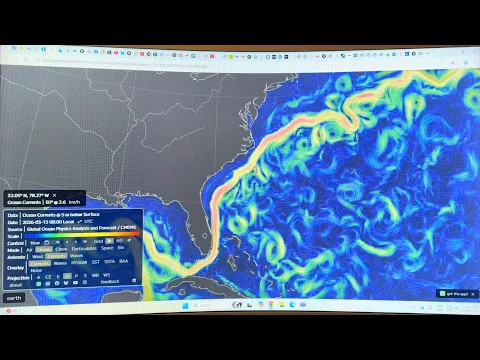

Gulf Stream brought warm waters to Canada
During the Younger Dryas, Greenland recorded a cooling of up to 10°C in a few decades. Glaciers also advanced over Scotland, while sea ice expanded across the North Atlantic.
About 800 kilometers east of New York, however, records indicate an opposite reaction. The waters off Nova Scotia, Canada, became 4°C to 5°C warmer.
-
Apple and Tesla on Alert After Cyberattack on Indian Supplier Exposes Over 200,000 Confidential Files, Industrial Projects, Employee Data, and Potential Trade Secrets on the Dark Web

-
In the Atacama Desert, a Tropical Oasis with Pool and Palm Trees Hosts Astronomers Studying the Universe

-
São Paulo Unveils 500 Electric Buses with $1.3 Billion Investment, Aiming to Cut 20 Million Liters of Diesel Annually and Showcase Clean Mobility

-
Robot Works 900 Hours to Build World’s Tallest 3D-Printed Concrete Tower, 30 Meters High, in Swiss Village of 12 Residents


An investigation published in Nature Communications linked this difference to the shift of the Gulf Stream.
The current moved hundreds of kilometers north, bringing warmer subtropical waters closer to the Canadian Atlantic coast.
Branches of the AMOC reacted differently
The Atlantic Meridional Overturning Circulation, known by the acronym AMOC, redistributes heat from the tropics to higher areas of the Atlantic through surface and deep currents.
The study shows that this system does not necessarily respond as a single mechanism. During the analyzed episode, one of the deep branches, called Lower North Atlantic Deep Water, weakened.
At the same time, another more superficial branch, the Upper North Atlantic Deep Water, increased its intensity by approximately 32%. Instead of a uniform interruption, there was an internal reorganization of the Atlantic circulation.
The researchers reached the results by analyzing sediments taken from the seabed near the Canadian coast.
Microfossils were used as temperature indicators, while particle size helped estimate the intensity of deep currents.
Changes began in the ocean before reaching the atmosphere
The sequence of events was one of the main findings of the research. First, there was a weakening of deep currents, followed by the northward shift of the Gulf Stream.
The strengthening of the upper deep circulation appeared approximately 58 years after the initial change. The atmospheric reorganization was identified even later, about 84 years after the process began.
This time difference shows that the first signs of a transformation may emerge in the ocean and take several decades to clearly appear in the atmosphere.
Episode helps identify signs of future changes
The authors emphasize that the Younger Dryas occurred under different conditions than today. Large ice sheets still covered parts of North America and Europe, while sea levels were considerably lower.
Even so, the physical mechanisms connecting different parts of the Atlantic system remain the same.
Therefore, the episode serves as a natural laboratory to investigate the ocean circulation’s responses to major disturbances.
The study does not claim that the AMOC is on the verge of collapse. However, the results indicate that significant reorganizations can occur within a few decades and produce seemingly contradictory regional effects, with cooling in some areas and warming in others.
This article was prepared based on information from the investigation published in Nature Communications, with data, numbers, and conclusions preserved as per the consulted material.




Be the first to react!