Portuguese
  Spanish


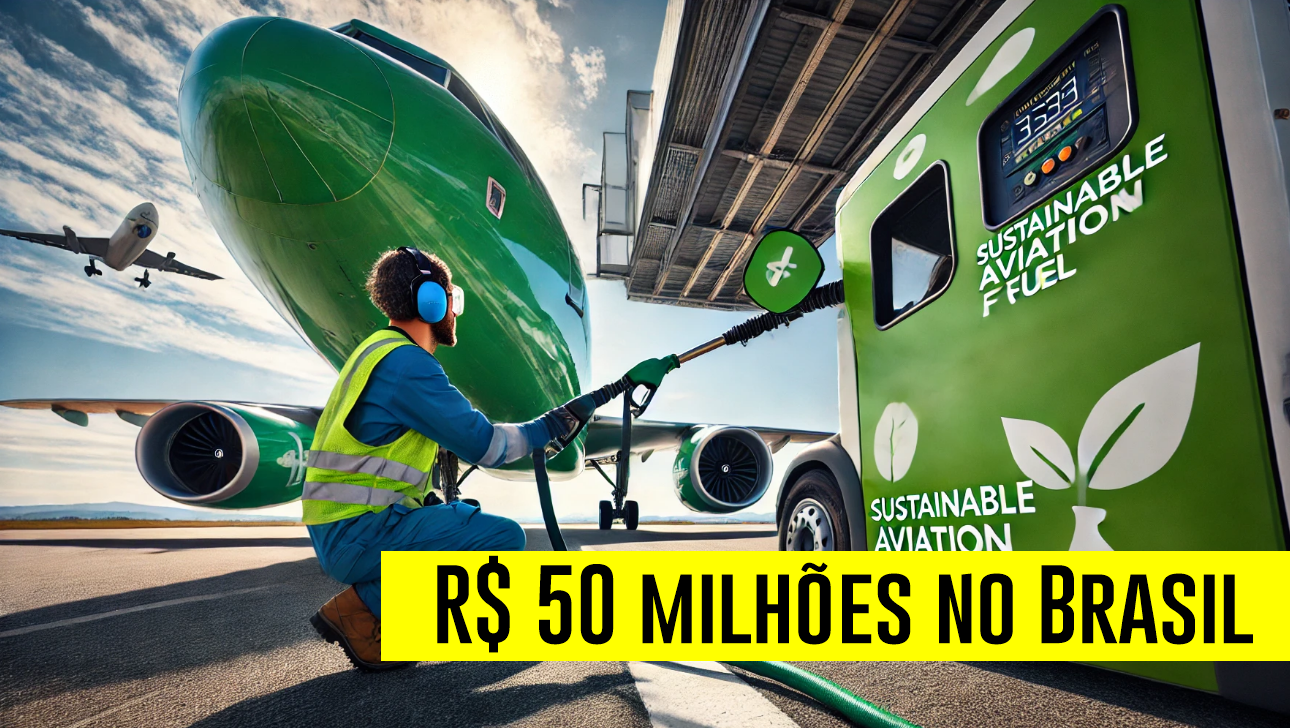

With an Investment of R$ 50 Million, Brazil Positions Itself as One of the Main Centers for Sustainable Aviation Fuel Production, Led by German Investments.
Brazil has taken another step towards decarbonizing the air transport sector. Last month, President Luiz Inácio Lula da Silva (PT) sanctioned the Future Fuel Law, and a landmark agreement was signed between the German Agency for International Cooperation (GIZ) and Geo Biogás & Carbon for the construction of a factory for SAF (Sustainable Aviation Fuel) in São Paulo.
The initiative, which has a total investment of 7.8 million euros (approximately R$ 50 million), aims to promote the production of SAF (Sustainable Aviation Fuel) in Brazil, with a view towards global reach. Of the total amount, 1.5 million euros (R$ 9.5 million) were made available by the German government, which seeks to consolidate SAF as a viable alternative to traditional aviation kerosene.

A Promising Pilot Unit
Located in Narandiba, rural São Paulo, the pilot unit is scheduled to start operations in 2025. The expectation is to produce up to 270,000 liters of SAF per year. GIZ, in partnership with Geo Biogás & Carbon, will lead the project for three years, during which the methodology will be tested and adjusted to enable commercial-scale production.
-
After a Year of Success in Switzerland, Solar Railway Attracts Italy’s Interest for Clean Energy Transformation

-
Robots Clean Solar Panels in Desert Power Plants Without Water, Preventing Energy Losses
-
Brazil’s Offshore Wind Energy Potential Worth $1 Trillion Stalled by Long-Delayed Agreement

-
World’s Largest Engie Solar Plant in Brazil Highlights Billion-Dollar Energy Waste Issue: Company Considers Batteries and Bitcoin Mining to Avoid Wasting Production




According to Markus Francke, director of the H2Brasil project implemented by GIZ, Brazil has unmatched advantages for SAF production.
“To my knowledge, there is no other country that has this combination of renewable energy, enormous potential, and at the same time, the carbon we need for SAF production and other products, such as green methanol,” emphasized Francke.
Why Brazil Attracts Investments in the Sustainable Aviation Fuel Sector?
Brazil presents unique characteristics that make it ideal for the development of sustainable fuels. In addition to having abundant renewable energy sources, the national agroindustry generates significant volumes of organic waste that can be converted into biofuels.
In the case of the Narandiba unit, biogas will be used as the main raw material for SAF production.
This is not the first time that the European country has invested in SAF projects in Brazil. In other locations, such as Natal, Goiânia, and Foz do Iguaçu (PR), GIZ is already supporting similar initiatives, using raw materials such as glycerin and agro-industrial waste.
These efforts reflect the German government’s commitment to testing and implementing sustainable solutions that can be replicated globally.
The Challenges of SAF Production
Although SAF offers a reduction of up to 80% in carbon emissions compared to traditional kerosene, its production still faces significant challenges. Among them are the high costs and insufficient volume to meet the growing demand from the air transport sector.
The recent case involving Azul airline exemplifies the situation well. During the signing ceremony of the Future Fuel Law, there was a plan for an aircraft fueled with SAF to land at Brasília Air Base.
However, the demonstration was not possible due to the lack of fuel in the national market. This episode highlights the long journey that still needs to be taken to align expectations with operational realities.
The Role of Legislation and Future Goals
The new Future Fuel Law establishes an ambitious timeline for the decarbonization of the Brazilian air transport sector. By 2027, airlines must reduce their emissions by 1%, with a progressive target reaching 10% by 2037. This measure aims to encourage the production and use of alternative fuels, such as SAF, and position Brazil at the forefront of sustainable aviation.
Globally, IATA (International Air Transport Association) has set the goal of achieving net-zero carbon emissions by 2050. To achieve this, solutions like SAF will play a crucial role, especially in countries like Brazil, which have the potential to lead the global supply of this resource.
The partnership between Brazil and Germany, symbolized by the factory in Narandiba, is a milestone for the sustainable aviation industry. Despite the challenges, the union of technology, innovation, and natural resources can drive the large-scale production of clean fuels, contributing to a greener air transport sector.