






 Portuguese
  Spanish
  4 min of reading
  0 comments


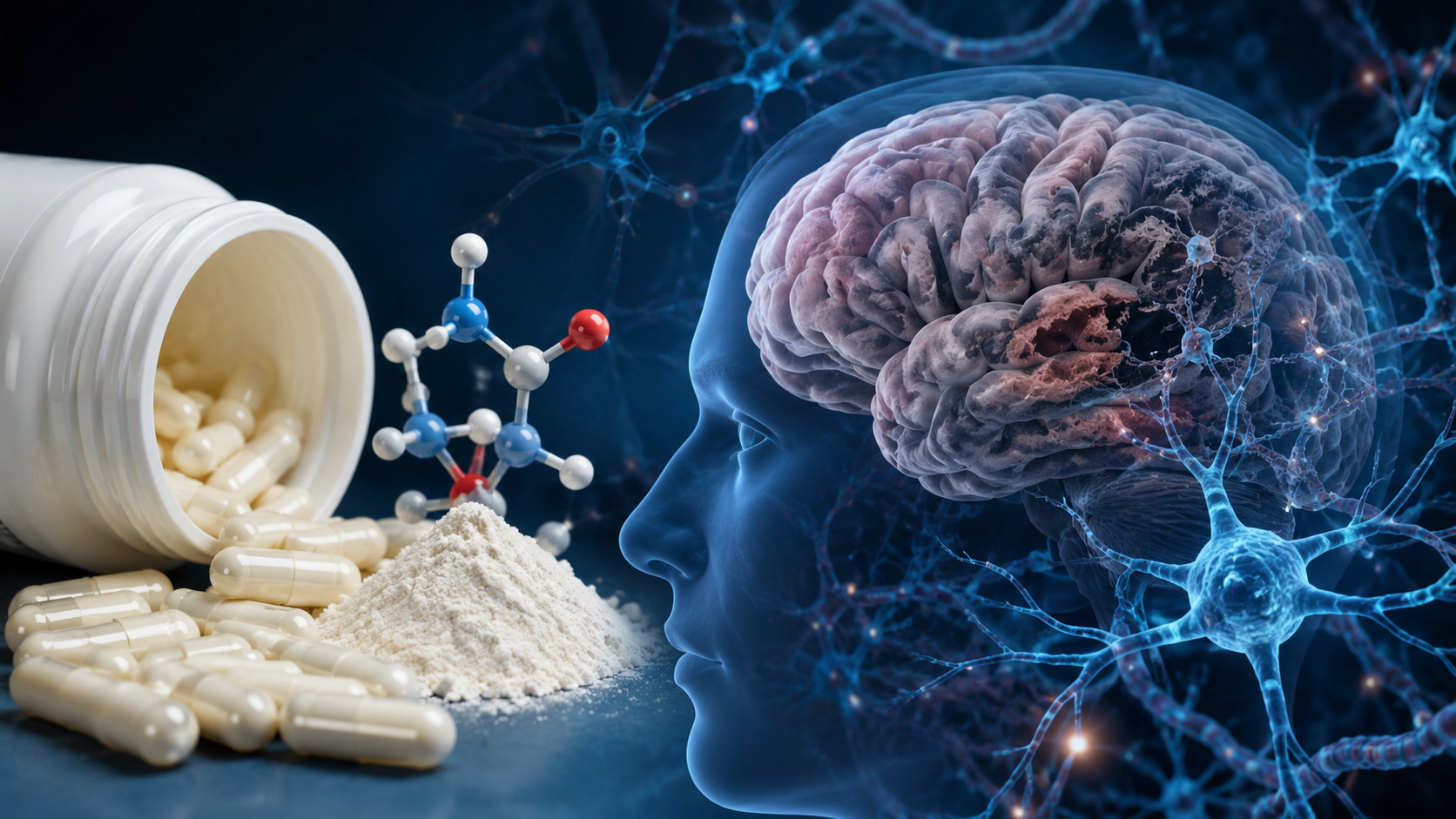
The biological mechanism that researchers investigated
According to the study published in Nature Metabolism and detailed by the University of Florida, glucosamine, a supplement widely used for joint pain, was associated with a faster progression from mild cognitive impairment to dementia and worse survival in patients with established dementia. The authors emphasize from the outset that the research is observational, meaning it identifies a statistical association but does not prove that glucosamine causes Alzheimer’s or dementia.
The main warning of the work is that people with mild cognitive impairment who used glucosamine had about a 25% higher probability of progressing to Alzheimer’s and other related dementias. Among patients who already had dementia, the use of the supplement was also associated with about a 25% increase in the risk of death during the analyzed period. Even so, the researchers themselves highlight that these results need to be confirmed in controlled clinical trials before any definitive conclusion.
The numbers of the study on glucosamine and dementia
The weight of the warning lies in the size of the sample analyzed. According to Nature Metabolism, the researchers examined clinical records of 24,481 patients with Alzheimer’s and related dementias and 41,884 people with mild cognitive impairment.
-
Free digital CNH: more than 372,000 drivers have already saved R$ 51.3 million in São Paulo; state has the cheapest CNH in Brazil

-
End of the worker in mining: Vale foresees 100% automated mines, bets on AI as an ‘irreversible path’, invests $700 million in R&D, and plans to add 150 more autonomous equipment to the fleet.
-
Embrapa develops lab-grown meat in Brazil without sacrificing animals and tests chicken fillets, salmon, caviar, and squid rings; the technique uses living cells, plant proteins, and can reduce the environmental impacts of animal production.

-
Goodbye screwdriver that discharges in 30 minutes: new electric screwdriver from Xiaomi hits the market with a price equivalent to R$ 96 and a giant battery with an estimated duration of 3 to 8 hours.




Within this universe, 1,896 patients with dementia and 2,750 patients with mild cognitive impairment had records of glucosamine use, something close to 8% in each group.


After statistical adjustments for age, sex, and demographic characteristics, the association remained. In patients with dementia, glucosamine use was linked to a 25% increase in mortality risk.
In the group with mild cognitive impairment, glucosamine was associated with a 25% increase in progression to dementia. These adjustments strengthen the statistical signal but do not completely eliminate the possibility of unmeasured factors influencing the result.
The biological mechanism that researchers investigated
The study was not limited to medical records. According to the University of Florida and the article from Nature Metabolism, the team also investigated a possible biological mechanism behind the association.
The scientists identified in Alzheimer’s disease a condition of hyperglycosylation, described as an excess of sugar molecules attached to brain proteins, and pointed to this process as a possible metabolic driver of neurodegeneration.

In experiments with animal models of Alzheimer’s, glucosamine increased this metabolic process and was associated with poorer performance in cognitive tests. When researchers reduced this glycosylation pathway, results improved. This does not automatically prove that the same occurs in humans, but it offers a plausible biological basis for the association seen in clinical data.
Why the fact that the study is observational changes the entire interpretation
This is the most important point of the text. An observational study analyzes what has already happened in real life, but does not randomly assign patients between those who use or do not use a substance. Therefore, it can show association, but it cannot safely demonstrate that one factor was the direct cause of the other.
In practice, people who use glucosamine may have other characteristics that influence the outcome, such as more chronic pain, less mobility, other diseases, higher biological age, or different health routines.
Even with statistical adjustments, there is always the possibility of confounding factors. This is exactly why the authors advocated the need for a double-blind, controlled clinical trial to verify if glucosamine really worsens the progression of the disease.
What the study means for those who take glucosamine
The work does not authorize a simplistic conclusion that everyone should immediately stop using glucosamine. According to the University of Florida, the results are preliminary in the clinical sense and need more rigorous human validation.
The study also did not demonstrate that glucosamine is harmful to all people, nor did it evaluate individuals with normal cognition outside these clinical groups in the same way.
The most responsible reading is that a relevant warning signal has emerged, especially for people with mild cognitive impairment, Alzheimer’s, or other related dementias. In health matters, any decision about stopping or continuing a supplement should be made with a doctor or qualified healthcare professional, based on individual history, symptoms, and the specific risks of each case.
Why this study gained so much attention
Glucosamine is one of the most popular supplements among adults and the elderly, mainly for joint pain and osteoarthritis.
When a product with such widespread use appears associated with worsening in a severe neurodegenerative disease, the topic naturally gains attention. What gave additional strength to this study was the combination of a large volume of clinical data, brain tissue samples, animal models, and a concrete metabolic hypothesis to explain the finding.
Even so, the scientific conclusion is still under construction. The study opened a strong line of investigation, but it has not yet closed the debate. Today, the central data is this: the research found an important association, biologically plausible and clinically relevant, but has not yet proven causality.







Be the first to react!