Portuguese
  Spanish


Lab-grown meat researched by Embrapa uses living cells taken by a small biopsy, plant proteins, and biomimetic structures to create prototypes of chicken, salmon, caviar, and squid rings. The technique, disclosed by Agência Brasil on 06/14/2026, is still experimental and depends on partners for future commercial scale.
The lab-grown meat developed by Embrapa has placed Brazil within a discussion that already moves research centers, startups, and regulatory bodies in several countries: producing foods with appearance and function similar to meat, but without relying on the direct slaughter of animals.
According to a report by Agência Brasil published on June 14, 2026, the experiments involve Embrapa Swine and Poultry, based in Concórdia, Santa Catarina, and the Nanobiotechnology Laboratory of Embrapa Genetic Resources and Biotechnology, Cenargen, in Brasília.
Embrapa tests cultivated meat without sacrificing animals
Embrapa’s research works with a technique based on the multiplication of cells taken from living animals through a small biopsy. These cells are cultivated in a controlled environment, with nutrients, oxygen, glucose, amino acids, and mineral salts.
-
Engineers Develop Fridge-Sized Machine to Produce 95-Octane Synthetic Fuel from Air and Water, Aiming to Sustain Combustion Engines Without Oil

-
Two-Armed Robot Uses AI to Reassemble Destroyed Pompeii Frescoes, Solving an “Impossible” Puzzle
-
New Law in Brazil Requires Breaks for Type 1 Diabetes Management at Work, School, and Public Exams

-
Scientists Confirm “Greening” of Antarctica: Ice on the World’s Coldest Continent Turns Green as Mosses Multiply Over Tenfold in Four Decades


The proposal is to make the cells multiply outside the animal’s body, creating tissue in the laboratory. This process is different from traditional livestock, as it does not require the sacrifice of the animal for the experimental production of cultivated meat.
Chicken, salmon, caviar, and squid rings appear in tests
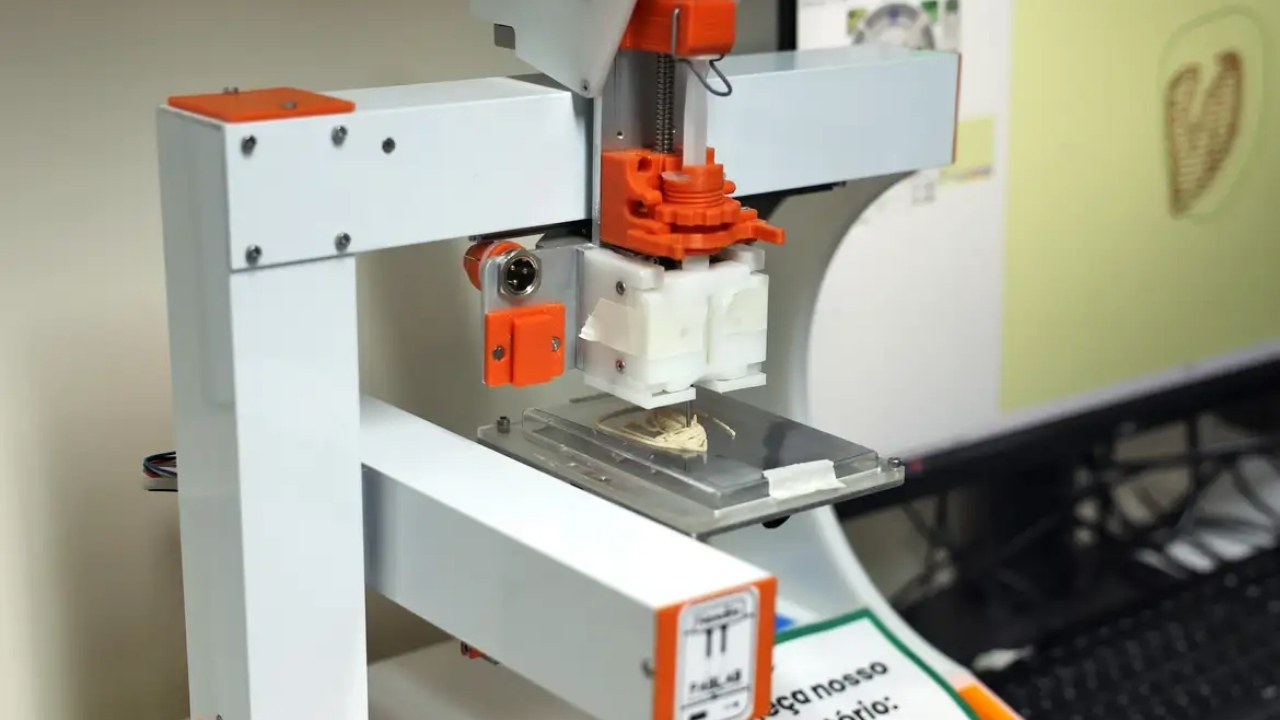
Embrapa Swine and Poultry has already produced prototypes of chicken breast fillets. Meanwhile, the Nanobiotechnology Laboratory in Brasília has developed samples of plant-based printed foods, such as salmon fillet, caviar, and squid rings.
This difference is important. Part of the work involves meat cultivated from animal cells, while another front uses plant proteins and food printing to create edible substitutes. Both lines are part of the same search for alternatives to conventional animal production.
Technique uses living cells and tissue engineering
Lab-grown meat uses knowledge from tissue engineering, an area also applied in regenerative medicine. The idea is to reproduce, in a controlled environment, part of the process of biological tissue formation.
Veterinarian Naiara Milagres Augusto da Silva, an analyst at Cenargen, explained to Agência Brasil that the sample taken from the animal contains muscle cells, fat cells, and connective tissue cells. From this, researchers choose which cells they want to multiply in greater quantity.
Plant proteins help form support structures
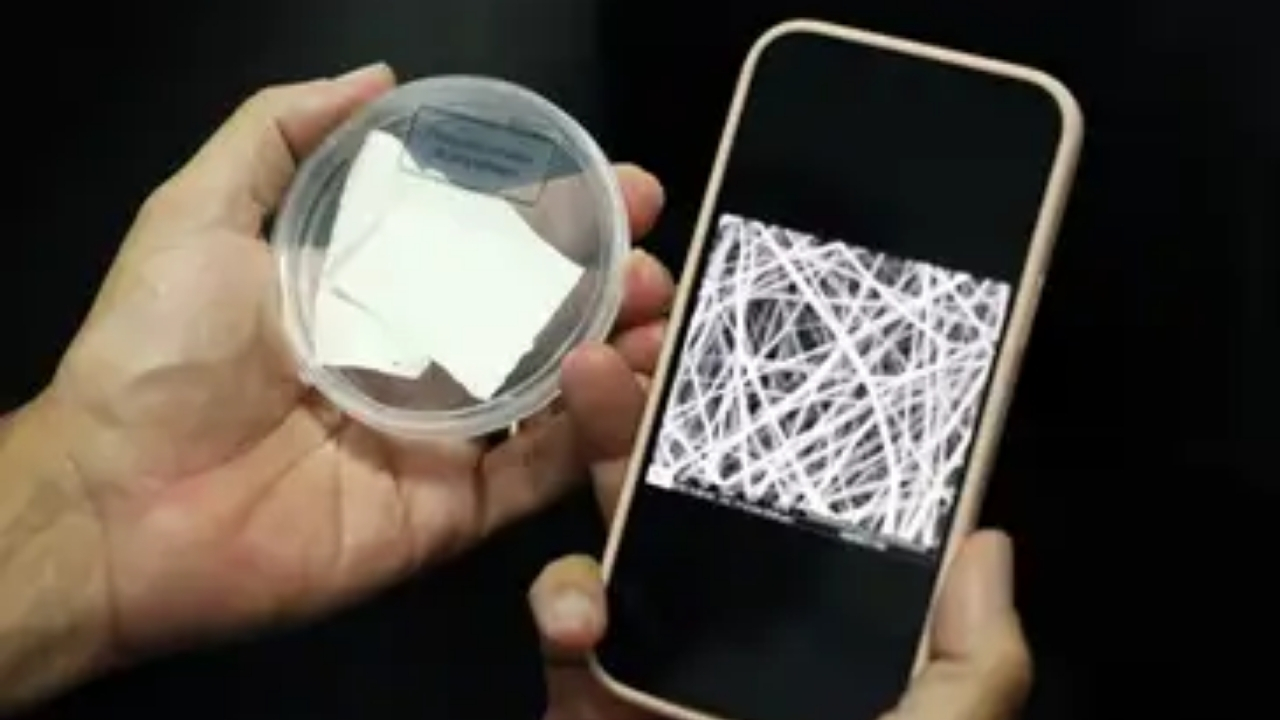
One of the focuses of the Nanobiotechnology Laboratory is to develop biomaterials from plant proteins. These materials function as surfaces where cells can adhere, grow, and organize.
These structures are called supports or scaffolds. They mimic the extracellular matrix of living organisms, aiding in cell orientation, muscle differentiation, and three-dimensional formation of the cultivated tissue.
Biomimetic structures influence texture and firmness
In cultivated meat, it is not enough to make cells grow. For the food to have texture, firmness, water retention, and a chewing sensation, the cells need to organize into structures that resemble natural tissue.
Therefore, Embrapa is also studying spherical microcarriers and fibers on a nanometric scale. To the naked eye, some meshes look like pieces of paper, but under a microscope, they reveal a porous surface where cells can attach and multiply.
Lab-grown meat still depends on validation and scale
Despite scientific advancement, Embrapa’s lab-grown meat is still in the experimental phase. The report itself states that the experiments may gain specialized partners after the completion of technological assets.
This means that the research should not be confused with a ready product on the shelves. The challenge now is to transform prototypes into processes capable of meeting cost, safety, industrial scale, and consumer acceptance requirements.
Edible film can be used for sausages
Another front of the laboratory involves an edible film that can function as a casing for sausages, such as those made with cultivated meat technique. This type of material would replace the casing used in traditional production.
Biologist Luciano Paulino da Silva, a researcher coordinating experiments with cultivated meat at LNANO, told Agência Brasil that the prototype should be finalized in 2027 and presented as a technological asset of Embrapa.
Research aims to reduce environmental impacts
The report from Agência Brasil highlights that the technology promises to reduce environmental impacts associated with animal production. Conventional livestock farming is often linked to environmental pressures such as deforestation and methane emissions.
Lab-grown meat does not eliminate all the challenges of food production but opens an alternative route. If it advances on a large scale, it could reduce dependence on systems that require large areas, numerous herds, and long production chains.
Anvisa has already published a rule for cultivated meat
The National Health Surveillance Agency published, in 2023, Resolution RDC No. 839, considered a regulatory milestone for lab-grown meat in Brazil. The existence of a specific rule indicates that the topic has already entered the field of health regulation.
The source also informs that countries like Singapore, the United States, Israel, and Australia are developing cultivated meat and have regulatory and commercial approvals. This shows that the discussion is not only scientific but also industrial, health-related, and economic.
Brazil tries to occupy space in food technology
Embrapa’s performance places Brazil in a strategic area of food technology. The country already has a strong presence in traditional agricultural production, but now also seeks knowledge in biotechnology, alternative proteins, and cellular systems.
The advancement of lab-grown meat can create opportunities for researchers, agribusinesses, startups, and companies interested in new foods. At the same time, it requires public debate about safety, cost, labeling, cultural acceptance, and real impact on the production chain.
The future of food will still be contested
Embrapa’s research does not mean that traditional meat will be immediately replaced. What it shows is that new technologies are beginning to compete for space in a sector historically linked to the countryside, livestock, and slaughter.
The big question is whether Brazilian consumers will accept foods created with living cells, plant proteins, and laboratory processes. For some, the technology represents environmental innovation. For others, it may still seem distant from the everyday plate.
If lab-grown meat advances in Brazil, would you try a chicken fillet cultivated without slaughter or a salmon made with plant-based ingredients in a food printer? Leave your opinion in the comments.