Portuguese
  Spanish





Study in Advances in Atmospheric Science, Signed by Over 50 Scientists from 31 Institutions, Indicates That Oceans Accumulated in 2025 Extra Thermal Energy of 23 Zettajoules, Above the 16 of 2024, with Warming Highlighted in the Tropical and South Atlantic, Mediterranean, North Indian and Antarctic Oceans on an Unprecedented Scale.
The oceans have always functioned as a gigantic climate buffer, but 2025 made this role sound like an alert. The image of “12 Hiroshima bombs per second” does not describe real explosions, but rather an equivalence of thermal energy that tries to translate, in human language, the size of the stored heat.
The central data comes from a study published on January 9: the largest annual gain since modern measurements began, around 1960. It is also the ninth consecutive year of records, a sequence that, in practice, draws a pattern difficult to treat as chance or passing fluctuation.
What the Comparison with Hiroshima Tries to Translate
The comparison with Hiroshima often shocks because it shortens the distance between abstract numbers and a concrete sense of scale.
-
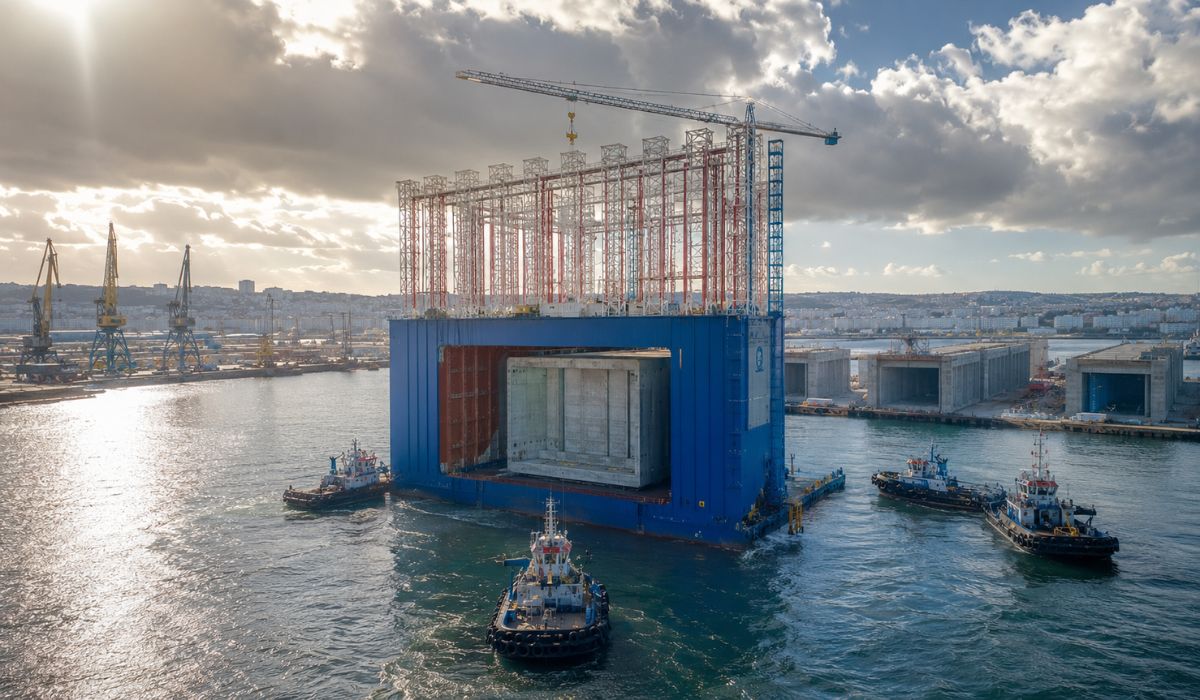
Spain Launches World’s Largest Floating Dry Dock: 56-Meter Giant Produces Massive Concrete Structures in A Coruña Using Technology Proven in Brazil

-
AI-powered toys that talk, recognize faces, and collect data face scrutiny from Brazilian government over children’s privacy concerns

-
4,000-Year-Old Child’s Skull Unveils Ancient Burial in 7,500-Year-Old Norwegian Rock Shelter, Impressing Archaeologists

-
Norway Defeats Brazil in World Cup but Invests Billions to Preserve the Amazon, Strengthens Amazon Fund, and Joins Brazil in Leading Global Effort Against Tropical Deforestation



In the case of the oceans, it serves as a “translator” of energy: it is not a count of events, but a way to represent the rhythm with which the system is accumulating heat.
The study points out that 2025 marked the largest annual gain since around 1960, and this occurs within a trajectory: there are now nine consecutive years in which ocean heat content has broken records.
When records cease to be exceptions and become a sequence, the question that naturally arises is “why now?” and the answer involves the thermal imbalance described by the authors, with the planet retaining more heat than it can release.
The Number Behind the Shock: 23 Zettajoules and the Recent Escalation
The leap of 2025 appears in the additional value of 23 zettajoules of thermal energy, above the 16 zettajoules of 2024. A zettajoule is such a large unit that it often seems distant: one zettajoule equals 1,000,000,000,000,000,000,000 joules.
Instead of trying to “imagine” this, the utility lies in comparing trends and understanding where the curve points.
To estimate ocean heat content in 2025, the authors assessed observational data from the upper 2,000 meters of the ocean, where most of the heat is absorbed.
This detail matters because, by looking beneath the surface, the analysis seeks to capture the storage of energy in the volume of water, and not just the temperature “of the skin” of the sea, which rises and falls more quickly.
Where the Oceans Warmed More and Why It Matters

The warming does not appear uniformly: the hottest areas observed include the Tropical and South Atlantic, the Mediterranean Sea, the North Indian Ocean, and the Antarctic Ocean.
In terms of “where,” this helps to understand that the oceans are not just warmer on average, but exhibit regions of highlighted warming, capable of influencing weather and ocean patterns on larger scales.
When certain regions accumulate more heat, the impact does not remain “trapped” within them. A warmer ocean, according to the study itself, supports an increase in global precipitation and fuels more extreme tropical storms.
It is a chain reaction: more available energy tends to mean more fuel for existing atmospheric systems, raising the potential for intensification and heavy rain.
From Ocean to Atmosphere: Signs of Imbalance and Extreme Events
The authors describe the results as “direct evidence that the climate system is out of thermal balance and accumulating heat”.
The phrase is strong because it does not limit itself to “warmer than before”; it suggests an entire system receiving more energy than it can release, with the oceans acting as the main reservoir of this extra energy.
Within this context, the study links the warmer global temperatures of 2025, likely, to part of the damage from Hurricane Melissa in Jamaica and Cuba and to the heavy monsoon rains in Pakistan, among other climate disasters.
Causality, here, appears cautiously: it is not “one event happens for a single cause,” but the idea that a warmer ocean can increase the likelihood of more severe impacts, by providing a higher energy backdrop for already complex phenomena.
How Scientists Measure Heat: Sea Surface vs. Heat Content
There is more than one way to view the warming of the oceans, and this changes the type of question answered.
A common metric is the annual average sea surface temperature: in 2025, it was the third warmest ever recorded, about 0.5°C above the 1981-2010 average. This measure is useful to track visible and rapid changes, which are reflected in direct contact with the atmosphere.
Another metric is ocean heat content, which estimates the total thermal energy stored.
By observing the upper 2,000 meters, researchers focus on where the ocean absorbs most of the heat. This connects to a key point of the study: the world’s oceans absorb over 90% of the excess heat retained in the atmosphere by greenhouse gas emissions.
In other words, as heat accumulates in the air, the ocean accumulates heat as well, and heat content becomes a robust indicator of long-term climate change.
When the oceans accumulate heat in record sequences, the news is not just “another big number.” It indicates that the planet is operating with a positive energy balance, and that this balance is being stored in the place that can hold energy the longest without “blowing up” immediately: the sea.
However, this apparent “stability” comes at a cost, because the stored heat alters the behavior of the system and can appear as heavier rains, more extreme storms and harder-to-predict weather patterns.
When you think of oceans warming at this rate, which impact seems more realistic for your life in the coming years, more heat and humidity in your daily life, stronger storms, or changes in the pattern of rainfall in your area? And what, in your opinion, should become a priority now to reduce this imbalance?