Portuguese
  Spanish


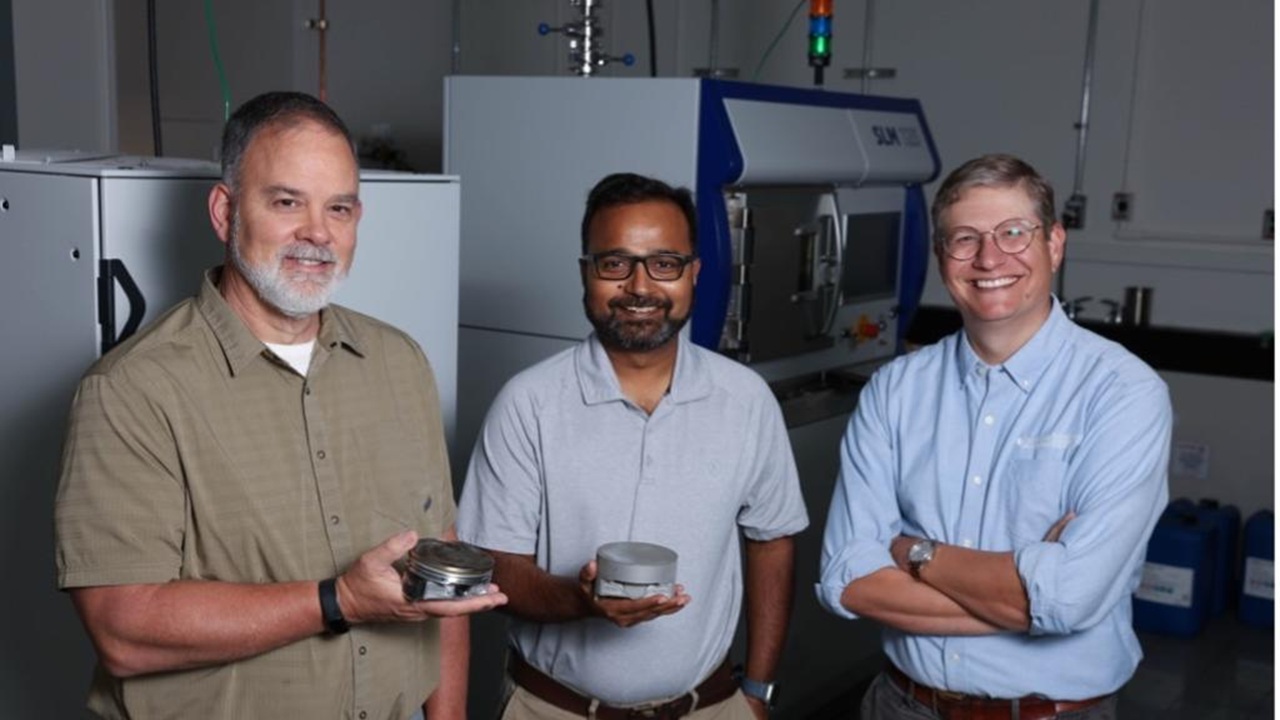

Researchers in the United States have demonstrated aluminum alloys capable of reducing truck engine weight by 15% for high-volume commercial pickups and increasing fuel efficiency by more than 10% in tests with a GM prototype.
The development was conducted by the Oak Ridge National Laboratory, ORNL, affiliated with the United States Department of Energy. The work received funding from the Office of Transportation Technologies in cooperation with General Motors.
The project’s focus was the medium-duty truck engine LMHE, an acronym used for low mass and high efficiency. The prototype needed to meet requirements for strength, durability, performance, and prolonged use.
In the tests, ORNL evaluated two aluminum alloys: the cast ACMZ, also identified as AlCuMnZr, and DuAlumin3D, produced by 3D printing. Together, they helped the engine achieve lower weight without sacrificing strength.
-
A fossil kept for years in a small museum in Montreal concealed 450-million-year-old soft tissue, a discovery that has only happened once before in history.

-
Three teenagers transform cut cardboard into Japanese origami-style packaging that promises to retire styrofoam and bubble wrap, win a $12,500 prize, and target giants like Amazon, FedEx, and Home Depot after a robot motor arrived broken.

-
The large jar blender has a rival: Oster Ultra Power bets on 1,000 W, six stainless steel blades, and two portable cups with leak-proof lids.

-
Tesla injected an additional $250 million into the German factory, doubled the battery cell target, and opened its own production line for startups.



Commercial pickup truck engines, like the Chevrolet Silverado 3500 from GM, need to withstand heavy loads and prolonged operation. The challenge is that very strong metals tend to be dense, hindering fuel efficiency.
Light materials can improve consumption, but many commercial metals struggle to withstand high temperatures and pressures in high-performance engines. This limitation increases the risk of premature failures.
Two materials for heat, pressure, and weight reduction
The ACMZ alloy was used in casting the cylinder heads and block of the LMHE engine. The material was designed to combine high strength, affordable cost, and tolerance to intense heat and stress.
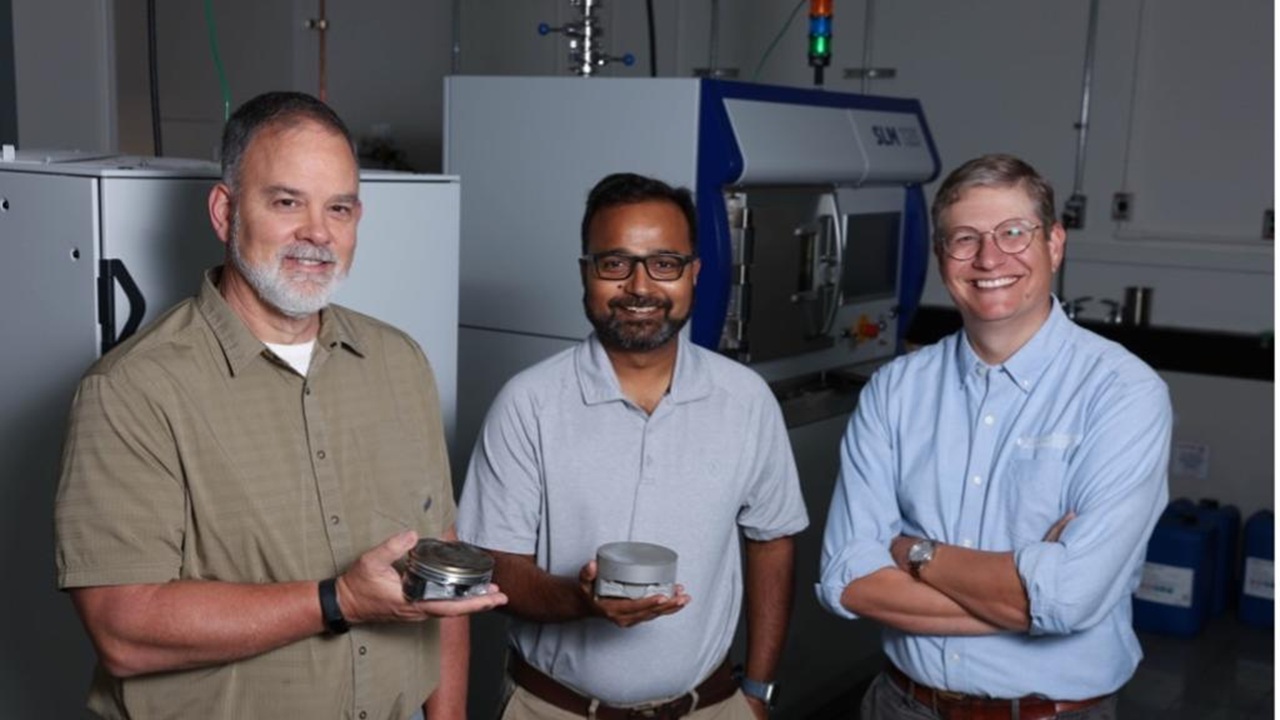
DuAlumin3D was developed for advanced pistons. The printable alloy combines lightness with an outstanding combination of strength and durability at extreme temperatures for a structural aluminum alloy.
The common goal between ORNL and GM was to demonstrate next-generation engines for high-volume trucks that were lighter and more efficient without sacrificing power and performance, stated Allen Haynes of the TTO Powertrain Materials Core Program.
Besides the alloys, the tested engine combined advanced combustion, other materials, and manufacturing processes. This combination allowed the LMHE to undergo rigorous performance and durability tests.
For Amit Shyam, an ORNL researcher who leads the Alloy Design and Behavior Group, the results reflect the work of GM’s design team. He highlighted that reducing weight in the engine means more miles per gallon.
Research brings laboratory and real-world application closer
The project integrated materials science, advanced manufacturing, combustion, and computational modeling. The cooperation brought together American industry, a National Laboratory, universities, and suppliers around commercial engines.
The ORNL accelerated alloy design methodology allows a new material concept to be brought to real prototype applications in 2 to 4 years. Historically, this advancement could require 10 to 15 years.
This reduction in time also decreases costs and risks in the transition from laboratory discoveries to commercial products. For Shyam, the collaboration showed that materials science is ready for field use.
The team led by GM, with ORNL and suppliers, received the R&D 100 Award of 2025 and the DOE 2025 Team Award. The recognition highlighted the potential of lighter and more efficient engines for the national market.
The alloys themselves already had a history of awards. The ACMZ received the R&D 100 in 2017, and the DuAlumin3D was recognized in 2022 for advances in high-performance, high-temperature light metals.
Shyam’s team was supported by Alex Plotkowski and Allen Haynes. The ACMZ was supported by the TTO, while the DuAlumin3D was developed with participation from the TTO and the Office of Advanced Materials and Manufacturing Technologies.
ORNL is managed by UT-Battelle for the DOE Office of Science, the principal funder of basic research in the physical sciences in the United States. The work reinforces the pursuit of lighter engines without loss of durability.
What do you think of this advancement in aluminum alloys for truck engines? Leave your opinion in the comments and tell us if you believe that lighter, heat-resistant materials applied in commercial engines can make a real difference in vehicle consumption and efficiency.
With information from ornl.