






 Portuguese
  Spanish


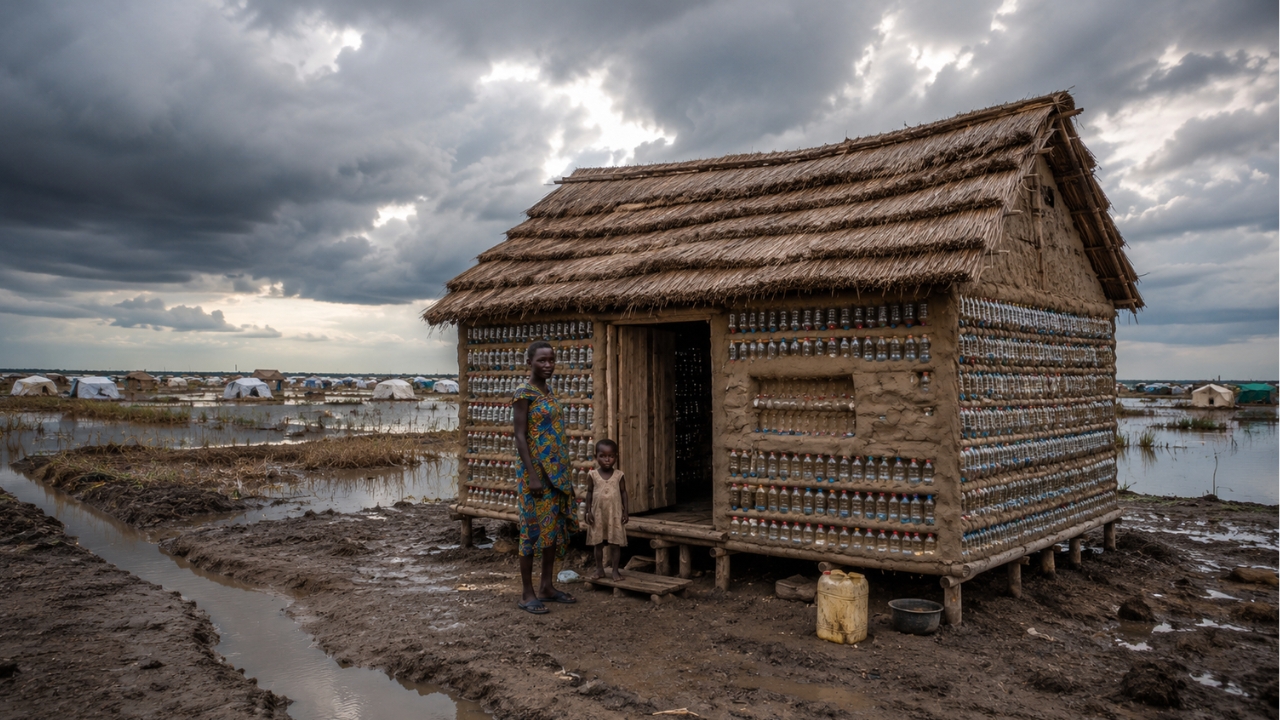

The housing crisis in a vulnerable area of South Sudan received an unusual response: discarded plastic, earth, clay, and simple techniques began to form raised houses, designed to withstand water, termites, and high temperatures.
In an area surrounded by water, mud, and fragile shelters, families who had already lost homes to conflict and floods began to look at discarded plastic bottles in a different way. What once seemed like waste turned into building blocks, protection against the heat, and a concrete attempt to remain standing amidst a crisis that displaces thousands of people.
The initiative takes place in Bentiu, South Sudan, a region pressured by prolonged flooding. According to the IOM, the UN migration agency, more than 130,000 people lived in temporary shelters that were fragile, overcrowded, and exposed to extreme weather events.
The water surrounded the city and changed the way of living
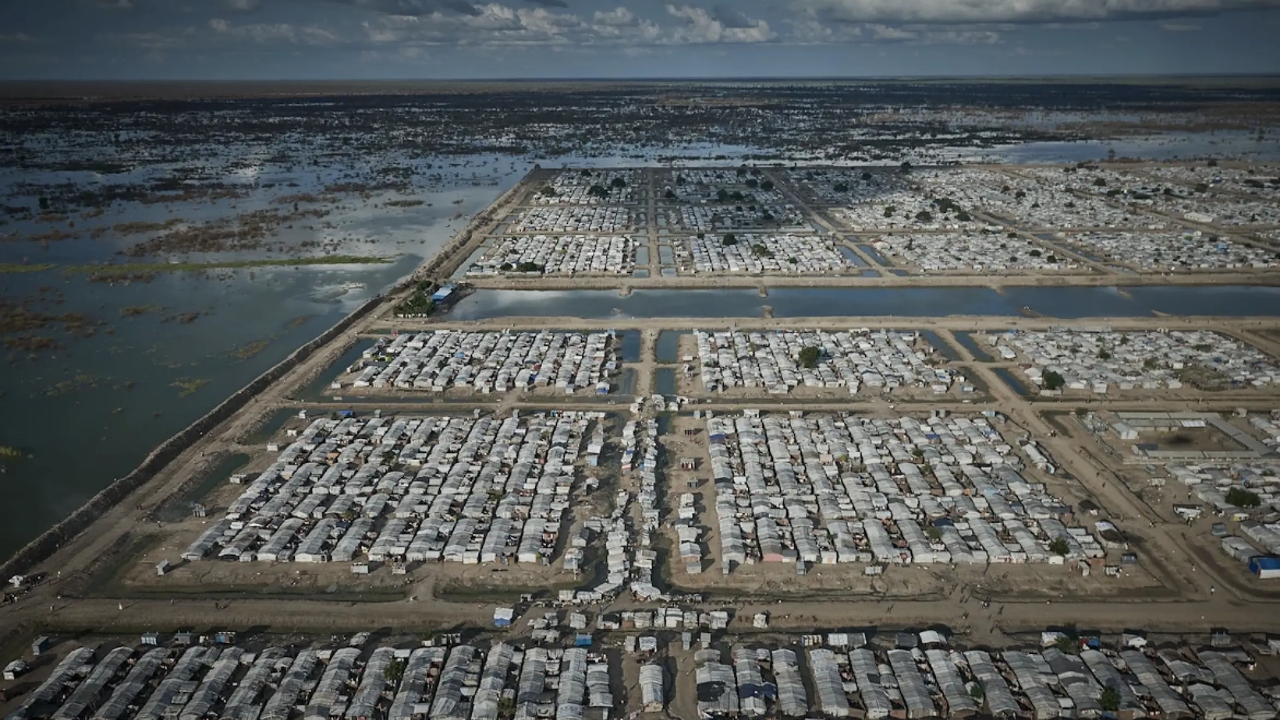
For those living there, the threat is not distant. Floods have affected communities since 2021 and, in many areas, the water has not fully receded. The Guardian, a British newspaper, described Bentiu as a zone under severe risk, with about 300,000 residents threatened by the floods.
-
Mother Who Called Herself a ‘Pinterest Failure’ Learned Wood Furniture Restoration from Videos, Now Earns Around $15,900 Monthly

-
Denmark Constructs World’s Largest Immersed Tunnel to Connect with Germany, Sinking 217-Meter Concrete Sections in the Baltic Sea
-
Low-Cost Concrete Panel House Goes Viral: Investor Reveals Prefabricated Kit Structure for Around $1,500, Assembled in 30 Days, with Plans for Rental and Resale Income

-
Polymeric Mortar Revolutionizes Brazilian Construction with Efficient, Clean Application and Uniform Finish


The impact went from the streets into the homes. Families displaced by civil war and then by floods were trapped in improvised dwellings made with tarps, wood, and vulnerable structures. In a place where rain, heat, and stagnant water mix, shelter ceased to be just a roof.
Abandoned bottles began to replace blocks
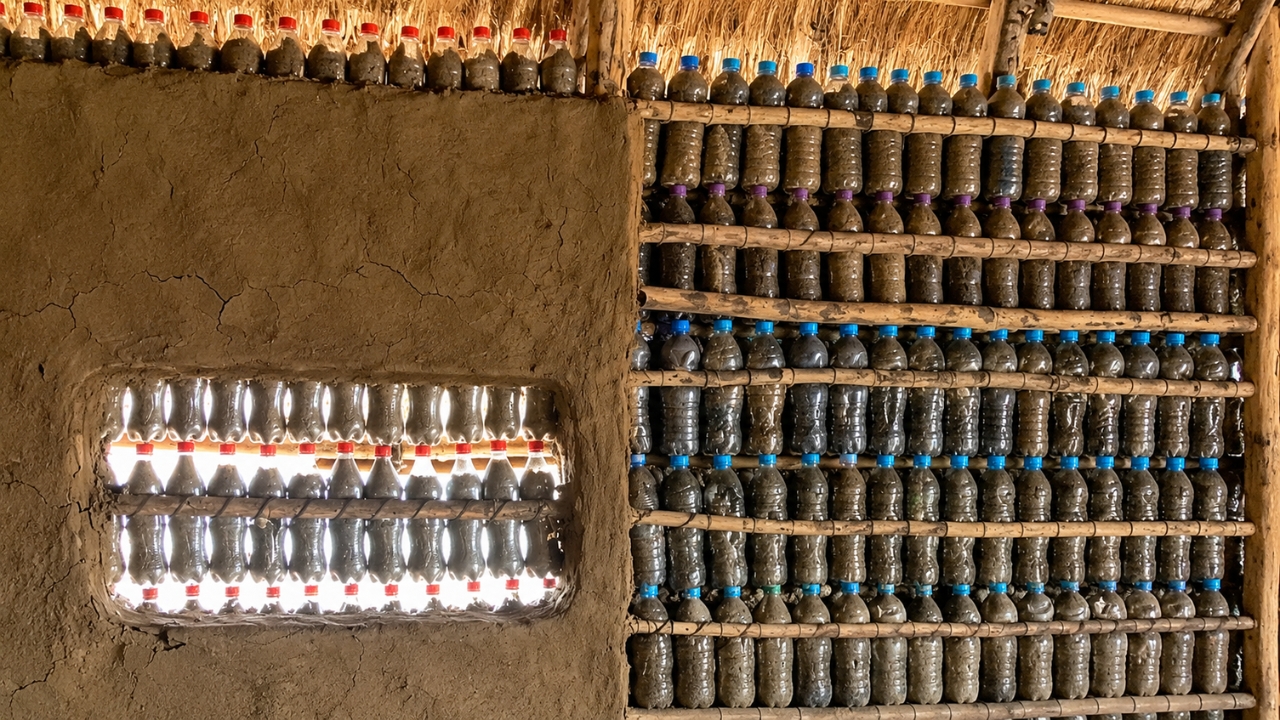
It was in this scenario that residents began gathering thousands of discarded plastic bottles, filling them with sand or compacted earth, and stacking them like blocks. The pieces are fixed with mud or clay, forming firmer walls with better thermal insulation.
The idea does not rely on expensive materials or a distant industrial chain. It is born from what already exists around: plastic waste, sand, earth, bamboo, elephant grass, straw, and vegetation cover. The IOM documented the technique as a climate shelter solution, with support from engineers and practical training.
Among the families involved is Gatluak, a South Sudanese father cited by the organization. He was building a new house with collected bottles, describing the dwelling as cooler, stronger, and more resistant to termites than common temporary structures.
A house designed to withstand the next flood
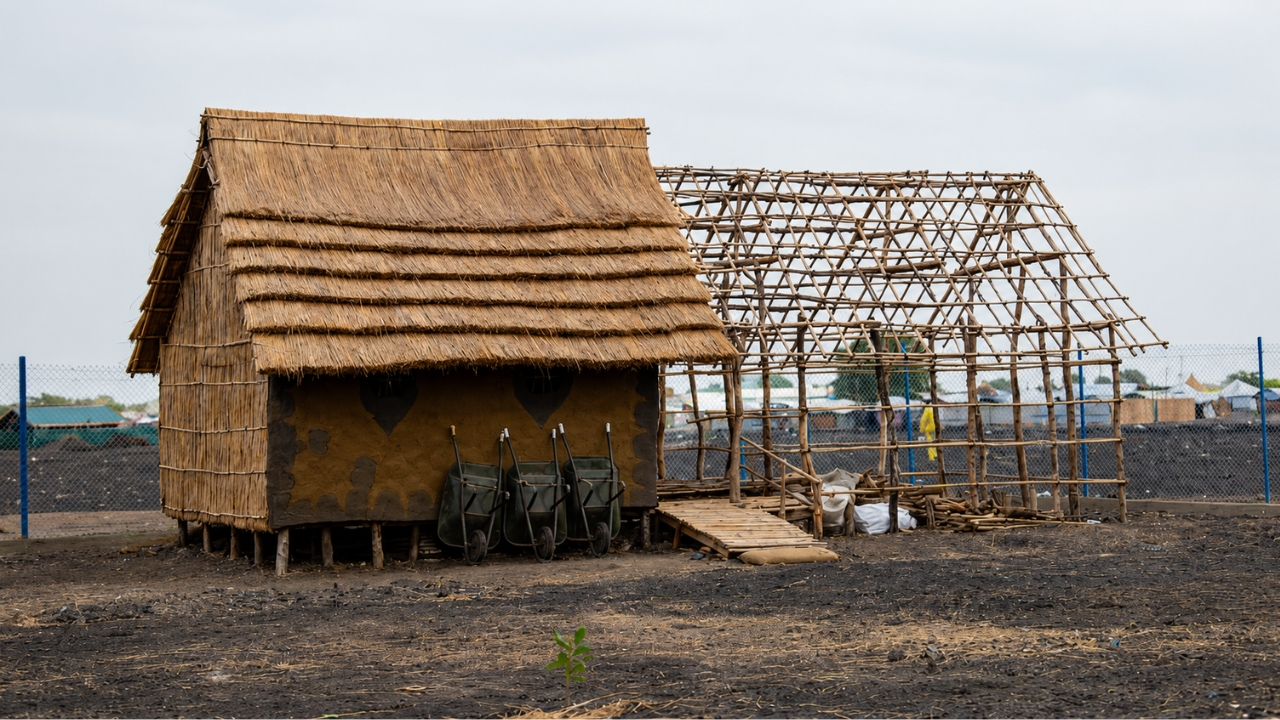
The decisive detail is in the design. The constructions do not only use bottle walls. They can be built on raised foundations, stilts, or mounds of earth, precisely to reduce damage when the water rises again.
The model also allows for gradual expansion. A family starts with a basic structure and, as they acquire resources, increases the space. Instead of relying solely on ready-made donations, residents learn to build with available materials adapted to the local climate.
According to the IOM, the project also reduces pressure on wood, a resource used in many temporary shelters. By transforming discarded plastic into walls, the initiative tackles two problems at once: the lack of safe housing and the accumulation of waste in a region without sufficient recycling infrastructure.
The solution does not erase the crisis, but changes the starting point


Humanitarian organizations like MSF, known internationally as Doctors Without Borders, have already reported the difficult conditions of displaced families in Bentiu, many without the possibility of returning to villages that remain flooded. In this context, a house made of bottles does not solve the climate crisis, war, or poverty on its own.
But it changes part of the response. Instead of treating shelter as something always temporary, the initiative shows that climate adaptation can also arise from a simple wall, made with what was thrown away.


