






 Portuguese
  Spanish


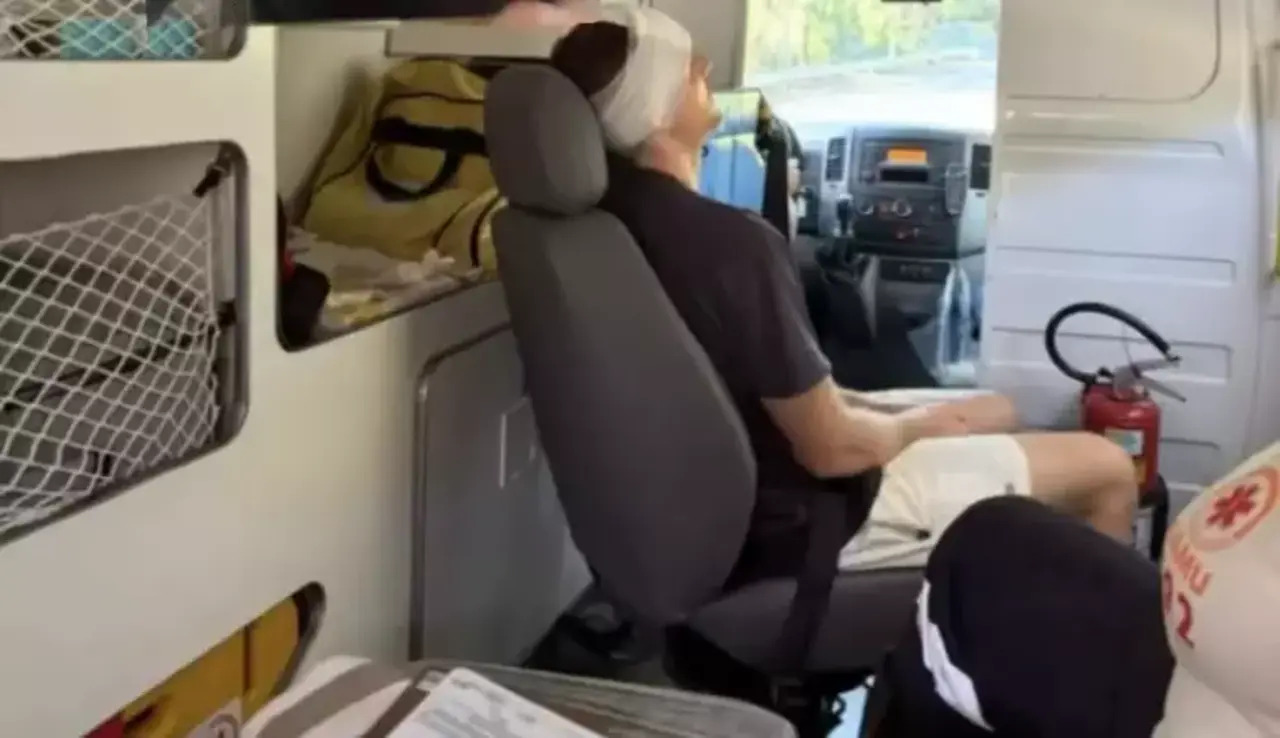


American Journalist Praises SUS After Accident in Paraty and Reports Surprise with Free and Efficient Care During Medical Emergency
During a trip with his family to Paraty, Rio de Janeiro, American journalist Terrence McCoy, correspondent for The Washington Post, had an unexpected experience with the Unified Health System (SUS).
He published a video on social media detailing what happened after he suffered an accident on the road and was impressed by the quality and zero cost of the care received.
According to McCoy, the accident occurred while he was organizing the luggage in the car. The trunk’s piston exploded and the lid hit his head.
-
Brazil’s “Tuscany” Boasts Award-Winning Olive Oils, Scenic Trails, and Mantiqueira Landscapes

-
Ancient Indian Tunnels Built in 1615 Still Use Gravity to Supply 1.8 Million Liters of Water Daily, Unlike Modern Cities Spending Millions on Pumps and Grids

-
Inspired by a 2000s Wonder Woman cartoon, she amassed 1,581 items, including a comic signed by Stan Lee, becoming the world’s largest collector.
-
Man Mistakes Lottery Email for Spam, Nearly Loses $185 Million Powerball Prize in Australia




He bled quite a bit and nearly lost consciousness. Given the situation, the Mobile Emergency Care Service (SAMU) was called to assist him.
The journalist reported that he spent six hours in care. During that period, he received medical attention, underwent tests such as a CT scan and X-ray, and had stitches in his head.
According to him, all care was free. “The bill came to 0 reais,” he stated in the video. He also mentioned that, despite having lived in Brazil for six years, he had never needed to use SUS until that moment.
McCoy made a point to compare it with the healthcare system in the United States. “This kind of treatment doesn’t exist in the U.S. Even for those with health insurance. You will need to pay a bill for emergency treatment,” he explained.
The account sparked attention among Brazilians on social media. Many internet users took the opportunity to defend SUS and criticize those who often devalue the public health system.
“Our country is very good. And Brazilians have the terrible habit of overvaluing the U.S. and Europe and undervaluing their own homeland. Shameful,” wrote a follower.
Another comment said: “There’s always someone to criticize SUS, it’s really not perfect, but if there’s an emergency you won’t have a hard time.”
A third person used the space to remind about Brazil’s tax burden: “They just forgot to mention that we work 5 months a year just to pay taxes!! That said, this ‘free’ service costs way too much for Brazilian citizens!”
McCoy’s experience with the public health system in Brazil sparked a debate about the services offered by SUS and comparisons with other countries.
With information from Terra.


