






 Portuguese
  Spanish


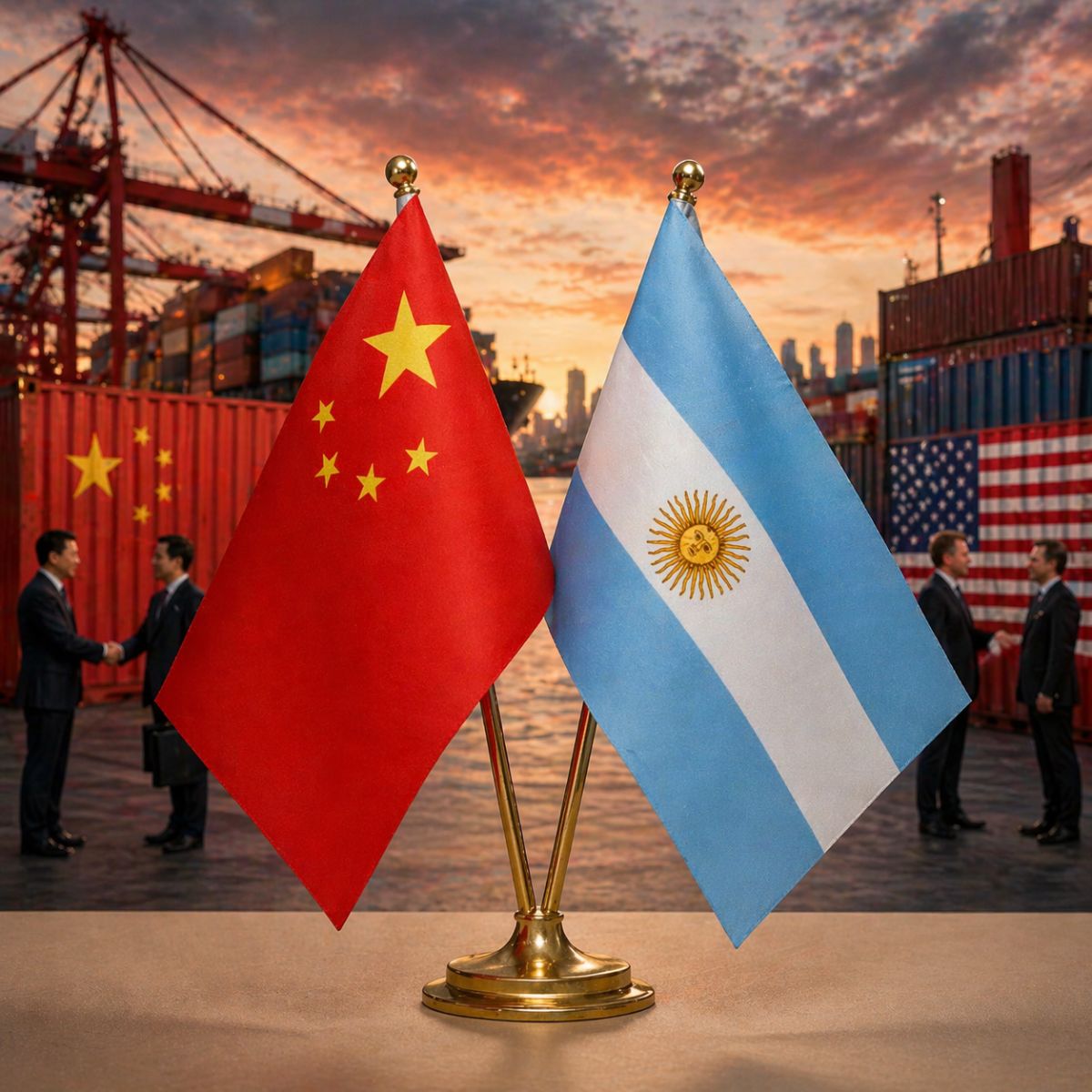

The Chinese embassy in Argentina issued an official statement condemning statements by the US ambassador about Chinese presence in Latin America. The Chinese government classified the remarks as offensive, accused Washington of a Cold War mentality, and argued that cooperation with Latin American countries is based on equality and mutual benefit.
The dispute for influence in the Latin America has gained another openly hostile chapter. The Chinese embassy in Argentina reacted firmly to the statements by the United States ambassador in the country, Peter Lamelas, who criticized the Chinese economic presence in the region and stated that Washington has neglected the continent for decades. In an official statement, the Chinese representation classified the remarks as “offensive and distorted” and accused the Americans of inciting confrontation between blocs and the division of spheres of influence, a logic that Beijing attributed to the Cold War mentality.
The tone of the statement left no room for diplomatic ambiguity. The embassy stated that Lamelas “deliberately attacked and defamed the cooperation between China and Argentina” and expressed “strong discontent and categorical rejection” of the criticisms. The note concluded with a recommendation that sounds like provocation: instead of exaggerating what they call the “Chinese threat,” the United States would do better to do something concrete for the development of Argentina and the countries of Latin America and the Caribbean.
What the American ambassador said to provoke China’s reaction
The statements by Peter Lamelas that motivated the Chinese note were direct and not very diplomatic. The American ambassador stated that the United States ignored Latin America for forty or fifty years and that, in this vacuum, China occupied space. Lamelas also questioned the nature of Chinese cooperation, stating that negotiating with Beijing means dealing with a communist government that uses state control to manipulate information and people, and not with private companies that operate independently.
-
Brazilian Truck Driver in the U.S. Earns $11,200 Commission on Heavy Haul, Highlights High Income Potential and Demands of the Job

-
Teen without prom date invites pet cat to dance, goes viral with tuxedo and pink dress photoshoot

-
Boy Uses Mother’s Sewing Machine to Make Teddy Bears for Hospitalized Children in Tasmania Over 365 Days

-
Restaurants Combat Frying Odors Before Cooking Begins: Here’s Why This Routine Matters




The ambassador’s assessment reflects a recurring concern in Washington about the Chinese economic model in the region. Investments in infrastructure, loans to governments, and bilateral trade agreements have consistently expanded Beijing’s presence in Latin America over the past two decades. For the United States, this penetration represents not only commercial competition but also strategic risk in a region that Washington historically considers its area of influence.
How China defended its presence in Latin America
According to information released by the portal Brasil247, the response from the Chinese embassy was built around three central arguments. The first is that cooperation between China and Latin America fits into the South-South model, based on mutual support and without hidden geopolitical interests. According to the note, this partnership generates concrete improvements in the fundamental interests of all parties, both in the short and long term, differentiating itself from what Beijing presents as the historical paternalism of the United States in the region.
The second argument directly attacked the coherence of American foreign policy. The embassy highlighted that around 73,000 American companies currently operate in Chinese territory, with investments exceeding $1.2 trillion and a compound annual growth rate of 9.8%. The implicit message is clear: Washington cannot benefit from economic cooperation with China within its borders while simultaneously criticizing other countries that seek to do the same. The note classified this stance as “hypocritical double standards.”
The autonomy of Latin America at the center of the debate
The third argument from the embassy touched on a sensitive point for Latin American governments. The note stated that the direction of Latin American countries should be chosen by their own peoples, and that it is they who should decide with whom to cooperate and forge friendships. The phrase is a veiled reference to the pressure that Washington exerts on nations in the region to limit their ties with Beijing.
For China, the issue of autonomy serves as a legitimization strategy. By advocating that each country has the right to choose its partners, Beijing positions itself as a non-imposing alternative in contrast to the stance of the United States, which has historically conditioned economic and political support on strategic alignments. The embassy also rejected geopolitical models it considers outdated, stating that “the old scripts of the 19th century should not be repeated in the 21st-century international scenario.” The message is that the bipolar struggle for spheres of influence belongs to the past and does not fit into the current context of international relations.
What is behind the rhetorical escalation between China and the United States in Argentina
Argentina has become the stage for this clash for reasons that go beyond the diplomatic episode. The country is one of the largest lithium producers in the world, maintains bilateral agreements with China in areas such as energy and transportation, and is undergoing a period of redefining alliances under the current government. For Washington, losing influence in Argentina means weakening its position throughout the Southern Cone, which explains the unusual aggressiveness of Lamelas’ statements.
For Beijing, Argentina is a strategic piece in a network of partnerships that China has been building in Latin America over the past two decades. Investments in ports, roads, telecommunications, and mining have created economic ties that translate into political influence, regardless of the party or ideological orientation of the current government. The embassy’s note is not just a response to an ambassador: it is a statement that China does not intend to retreat from its presence in the region, no matter how much the United States pressures.
Do you think Latin America should choose between China and the United States, or is it possible to maintain partnerships with both without subordinating to either? Leave your opinion in the comments, we want to know how you see this struggle for influence in the region.


