






 Portuguese
  Spanish
  3 min of reading
  0 comments


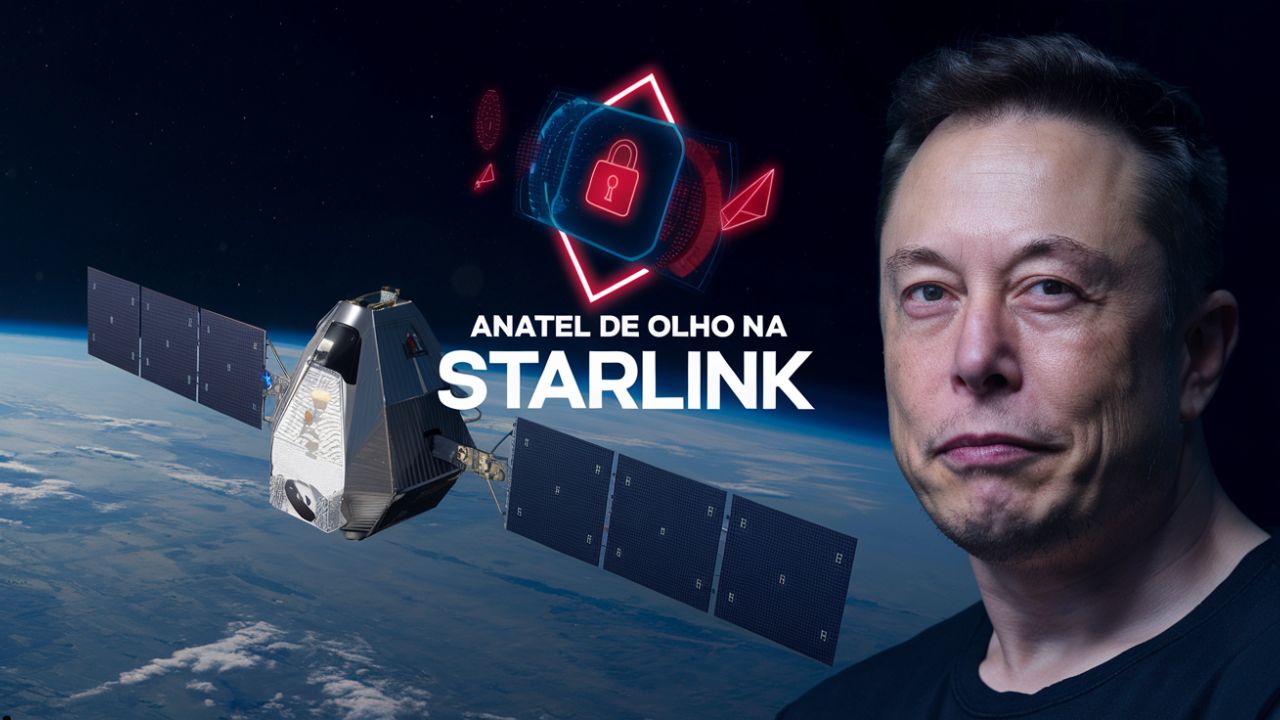
Expansion of Elon Musk’s Satellite Internet Company Raises Questions About Digital Sovereignty, National Security, and Technological Control in the Amazon. Italy and Other Countries Have Also Expressed Concern About the Advancement of Starlink.
Starlink, the satellite internet company controlled by Elon Musk, is under analysis by Anatel (National Telecommunications Agency) for possible geopolitical and strategic risks to Brazil. The concern goes beyond technology: it involves national sovereignty and the growing dominance of a foreign big tech over connectivity in sensitive areas, such as the Amazon region.
According to a report from Estadão published on March 23, 2025, Starlink’s request to increase the number of satellites operating over Brazil has been stalled for more than a year. Anatel is evaluating, in addition to technical criteria, the possible economic and national security impacts associated with the operations of the American company.
Elon Musk’s Starlink Presence in the Amazon Sparks Debate on Digital Sovereignty

Currently, Starlink has over 250,000 customers in Brazil, with a strong presence in isolated areas of the Legal Amazon, according to reporting by The Guardian. The company provides high-speed internet in locations where traditional providers do not operate, benefiting schools, indigenous communities, health clinics, and even public safety bases.
-
Coal mine purchased for $2 million in Wyoming, the Brook Mine holds rare earth elements and critical minerals estimated at up to $37 billion, in an asset that the US is competing for with China.

-
In the year Brazil won the World Cup, gasoline cost R$ 1.77, the cheapest car was worth R$ 13,000, there were no flex-fuel cars, SUVs were rare, and no Chinese brand sold a single vehicle in the country.
-
Neighboring Balneário Camboriú will receive a R$ 1 billion airport with 225 hangars, an area of 2.2 million m², a technology park, and an export zone that promises to transform the economy and generate thousands of jobs.
-
After investing R$ 5,000 in fried chicken in his backyard, a Brazilian transformed two fryers and a freezer into a network with 115 sales points, presence in up to 17 states, and revenue exceeding R$ 115 million per year.



However, this connectivity has also raised alarms about technological dependency. According to environmentalists, NGOs, and local authorities, there are concerns that the use of the satellite network could facilitate illegal activities, such as mining in protected areas. An article from The Guardian in September 2024 warned about the “silent dominance” of Elon Musk’s Starlink in the Amazon territory, highlighting the lack of state control over its operation.
In a statement, Anatel informed that the company needs to meet the regulatory criteria of the country and ensure that its operations “do not compromise the autonomy of Brazilian communications.”
Italy and Other Countries Have Already Blocked or Restricted the Company
Brazil is not the only country scrutinizing Starlink’s operations. Recently, Italy halted negotiations with the company of Elon Musk, as revealed by the newspaper El País on March 19, 2025. According to Italian Defense Minister Guido Crosetto, Musk’s public persona “creates political and strategic noise,” making the operation delicate from a national security perspective.
According to El País, the Italian government fears that data collected via satellite by private companies could be misused, violating confidentiality agreements or serving the interests of other countries.
Concerns have also been raised by authorities from the European Union and African countries, where the company began operations in politically unstable regions. In these locations, governments have warned of the need to create specific regulatory frameworks for satellite companies with strong surveillance and data collection capabilities.


-

1 person reacted to this.