






 6 min of reading
  0 comments


Survey by g1 shows that in 2002, the Fiat Uno Mille was priced at R$ 13,577, the Gol led sales, and Alfa Romeo still existed here. In that year of the fifth championship, Brazil did not even consider Chinese cars, and ethanol was still known as alcohol.
In the year Brazil won the World Cup in 2002, gasoline cost R$ 1.77, the cheapest car was about R$ 13,000, there were no flex-fuel cars, SUVs were rare, and no Chinese brand sold a single vehicle in the country. Going back to that time is to remember the good football and also get a reality check on how the automotive market has changed.
To recall the era, g1 gathered a series of curiosities from 2002, the year of the fifth championship. The data comes from sources such as IBGE, the National Agency of Petroleum, Natural Gas and Biofuels (ANP), Fenabrave, and Anfavea. In that year, the cheapest car was the Fiat Uno Mille, sold for R$ 13,577 in July, the Gol led sales, the SUV segment was almost non-existent, and Chinese brands were not even considered. Today’s scenario is different: just in April this year, more than 17% of sales in Brazil were from Chinese brands, and SUVs already dominate almost half of the market.
Brand new car for the price of a cell phone
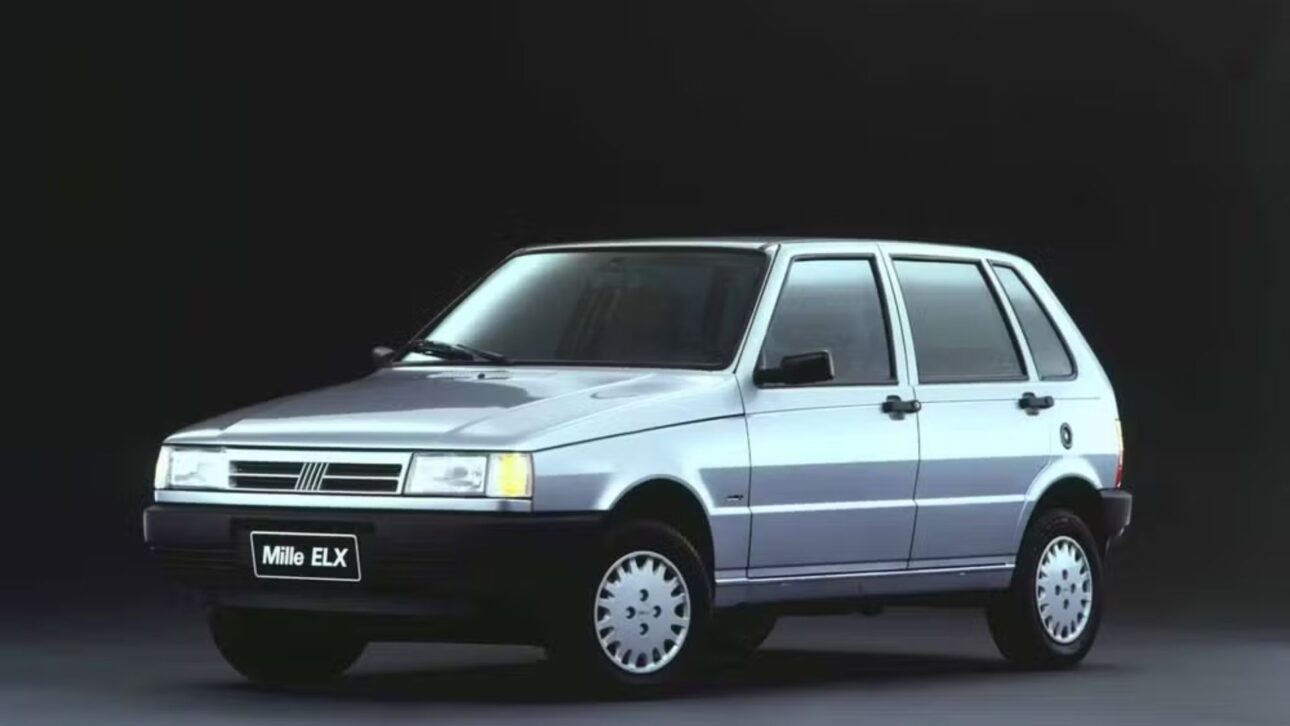
The cheapest car in Brazil in July 2002 was the three-door Fiat Uno Mille, still powered by alcohol, sold for R$ 13,577. Adjusted for inflation by the IPCA, this amount would be equivalent to about R$ 55,589 today. To give perspective, the average Brazilian income at the time, according to IBGE, was R$ 636, equivalent to R$ 2,604 today.
-
Neighboring Balneário Camboriú will receive a R$ 1 billion airport with 225 hangars, an area of 2.2 million m², a technology park, and an export zone that promises to transform the economy and generate thousands of jobs.

-
After investing R$ 5,000 in fried chicken in his backyard, a Brazilian transformed two fryers and a freezer into a network with 115 sales points, presence in up to 17 states, and revenue exceeding R$ 115 million per year.
-
Not even Trump convinces the market: U.S. companies state that Brazil has no substitute, pressure Washington against the 25% tariff, and warn that the measure could raise prices, cause layoffs, delay projects, and harm sectors that depend on stones, wood, seeds, and other Brazilian products.

-
It’s not just Bolsa Família: CadÚnico can provide access to seven little-known benefits, including cheaper electricity bills, free interstate travel, microcredit, cisterns, popular phone service, and exemption from fees in public exams and the Enem.



The hatch had a naturally aspirated 1.0 engine with four cylinders, producing 61 hp, and the list of standard items was almost non-existent: green windows, rear three-point seat belts, and little more. Headrests, locks, and power windows came in a package costing R$ 671; the rear window wiper, washer, and defogger were R$ 424; metallic paint added R$ 294; and the most curious item, air conditioning, required R$ 2,407, almost 18% of the car’s value.
Out goes alcohol, in comes ethanol
In 2002, fuel stations throughout Brazil used the name alcohol, and this went unquestioned for decades. Only in 2008 did entities in the sugar-energy sector begin to advocate for the switch to ethanol, with Unica arguing that the slogan of the Dry Law campaign, which associated alcohol and driving, confused the public, while ANP wanted to standardize the nomenclature, in line with the international market.
For Haroldo Lima, then president of ANP, there was a clear commercial distinction. According to him, alcohol is a generic name, unlike ethanol:
“ethanol is a specific product, with greater commercial value.”
The standardization only came in December 2009, through an ANP resolution, and became effective throughout the country in 2010. In that 2002, according to ANP, a liter of gasoline cost R$ 1.77, ethanol was R$ 0.94, and diesel was R$ 1.07, and flex-fuel cars didn’t even exist yet, as the first one, the Volkswagen Gol, would only arrive in 2003.
The Gol on top and the best-sellers around the world
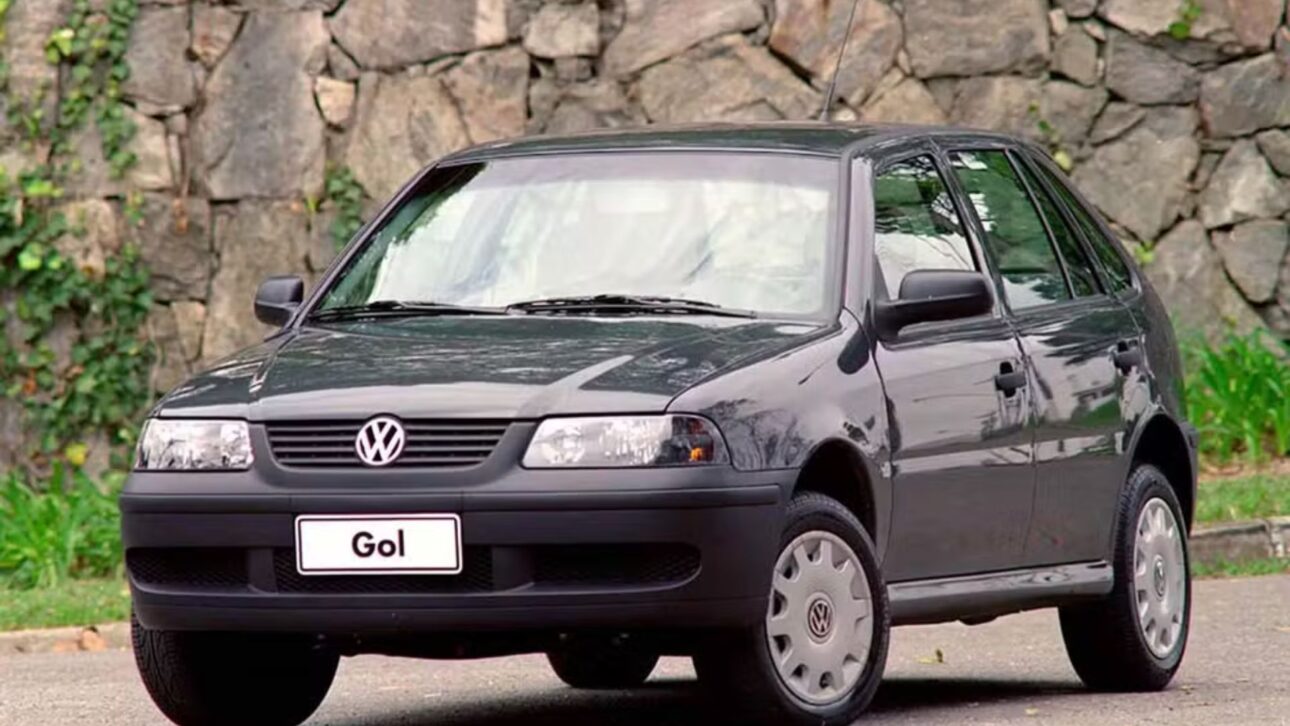
Speaking of the Gol, between 1987 and 2013 it was the best-selling car in Brazil, and in the year of the fifth World Cup win, it closed 2002 with 208.3 thousand units. Abroad, the picture was different: in Europe, the best-seller was the Volkswagen Golf, with over 587 thousand units, closely followed by the Peugeot 206.
In the United States, the best-selling car of 2002 was the Toyota Camry, with over 434 thousand units, although the leadership among all vehicles was held by the Ford F-150, which surpassed 813 thousand registrations that year. Pickup trucks also had their champion in Brazil: the Fiat Strada led with 26,053 units, about 40% of the compact pickup segment, a dominance that by 2026 only grew, with over 142 thousand units and more than 67% of the segment.
Without World Cup name and without Chinese brands
As Volkswagen did not have the competition rights in 2002, it could not use the name Cup in the Gol, so it named the version Sport and adopted the exclusive color Solar Yellow, with a 1.0 gasoline engine of 76 hp. Today, on the contrary, the brand sponsors the teams of the Brazilian Football Confederation (CBF) with the T-Cross Seleção. The Chinese brands that now flood the market simply were not part of the Brazilian scene.
In 2002, with the World Cup hosted in South Korea and Japan, Japanese and Korean brands were successful here, while Chinese cars were not even considered. BYD was still only producing heavy vehicles and launched its first car in 2005; JAC Motors operated with trucks and had the Refine van as its first passenger vehicle; and GWM, Geely, and Chery were just starting in passenger cars. The scenario in 2026 is the opposite, as between January and April almost half of the vehicles imported by Brazil came from China, and in April alone Chinese brands accounted for more than 17% of sales.
From rarity to 43% of sales, the era of SUVs
Few categories have changed as much in Brazil. According to Fenabrave, 43.1% of vehicles sold in the country in 2025 were SUVs, but in 2002 the segment was practically irrelevant, concentrated in large sports utilities and models derived from pickups, with the best-selling imported vehicle in the year of the fifth championship being the Mitsubishi Pajero, with 4,028 units.
The turning point began precisely at the 2002 Auto Show, when Ford presented the first generation of the EcoSport. Derived from the Fiesta, the model arrived in stores in 2003 and inaugurated the segment of more accessible SUVs, based on compact car platforms, the same recipe applied today in models like Fiat Pulse, Chevrolet Tracker, Renault Duster, Citroën C3 Aircross, and Volkswagen T-Cross.
The menu that disappeared and the market that grew
The 2002 menu held options that today seem curious. At a Volkswagen dealership, it was possible to take home a Santana or a Parati Turbo, while the Kombi remained strong for those who needed to work, and it was still possible to buy Alfa Romeo models in Brazil, such as the 166 sedan, with a 3.0 V6 engine of 226 hp, whose price of US$ 59,000 would be daunting even in 2026.
The market itself has grown significantly. In 2002, Brazilians bought almost 1.4 million cars, compared to more than 2.5 million registrations in 2025, while national production went from 1.7 million to more than 2.6 million in the same comparison. The transformation also appears in the fleet: according to Anfavea, the estimate for 2002 was 18.4 million vehicles in circulation, a number that by 2024 had already exceeded 40.3 million.
Revisiting 2002 shows how much the Brazilian market has changed in just over two decades. In the year of the fifth championship, the cheapest car cost R$ 13,577, gasoline was R$ 1.77, flex-fuel cars did not exist, the SUV was a rarity, ethanol was still called alcohol, and no Chinese brand sold a single vehicle in Brazil.
Twenty-four years later, with the country experiencing a World Cup drought, the market more than doubled in sales, Chinese brands soared, SUVs took almost half of the registrations, and flex and ethanol became part of everyday life.
Between the Fiat Uno Mille and today’s Chinese electric SUVs, the comparison is, at the same time, a dose of nostalgia and a portrait of how quickly everything has progressed.
And you, which of these cars from 2002 do you miss the most? Did you have any of them in your garage? Share your opinion and exchange ideas with other readers about the car market and fuels in Brazil.







Be the first to react!