






 Portuguese
  Spanish
  5 min of reading
  0 comments


A former banker paid US$ 2 million for an old coal mine in Wyoming and found rare earths that could be worth billions. The discovery became a piece in the United States’ dispute against China, but geologists and investors are already questioning whether the treasure of critical minerals is as large as claimed.
In 2011, American Randall Atkins bought for about US$ 2 million a forgotten structure in northeastern Wyoming, near Sheridan, thinking he was acquiring just another coal mine. More than a decade later, it made world news: the underground of that coal mine held rare earths and other critical minerals potentially valued at up to US$ 37 billion, according to the company owning the project. It was quite a leap for someone who paid the price of a luxury apartment for the property.
The turnaround placed the so-called Brook Mine at the center of a strategic race. In July 2025, a ceremony marked the start of operations, announced as the first new rare earth mine in the United States in about 70 years. At a time when China dominates global supply, finding this type of mineral on American soil, especially within an old coal mine, sounded like gold to Washington. But the story has a second chapter, much less glamorous.
From coal to rare earths: the turnaround of Brook Mine
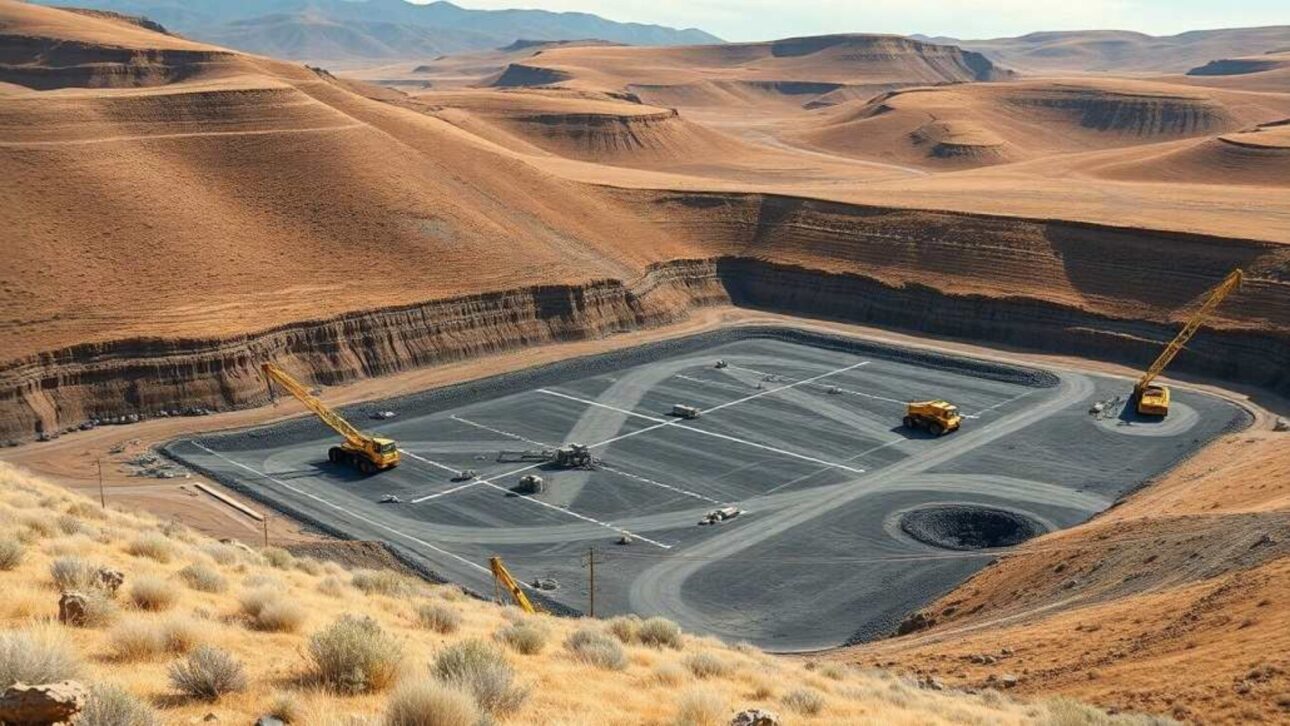
Atkins’ trajectory is almost like a script. A former Wall Street banker, he bet on a depreciated coal mine when the sector was already in decline, and only years later, around 2023, his company, Ramaco Resources, announced it had identified significant deposits of magnetic rare earths mixed with the coal. The United States Department of Energy’s national energy technology laboratory even considered the site as possibly the largest unconventional rare earth deposit ever mapped in the country.
-
The most common mistake when storing eggs is leaving them in the refrigerator door, where temperature fluctuations crack the shell, remove the cuticle, and cause them to lose freshness, with a risk of contamination.

-
A city has planted 880,000 trees and 2.5 million smaller plants since 2016, reduced the temperature by up to 3°C in some areas, and won an international award for using vegetation to combat urban heat in Colombia.
-
More than half of the residents of this city live underground to escape the brutal heat of 50°C: in the world’s largest opal hub, houses, churches, and hotels are carved into the rock and maintain around 23°C year-round in the Australian desert.

-
SBT host, Otávio Mesquita had his R$ 7.5 million mansion in Morumbi destroyed by a storm in 2019, with damages exceeding R$ 1 million and no insurance.



The difference in value explains the enthusiasm. The coal extracted there in the past was worth little compared to what the soil was hiding. Estimates of the operation indicate a volume in the range of 1.4 to 1.7 million tons of critical minerals, and it is this potential that supports the figure of up to $37 billion. Suddenly, a coal mine in Wyoming has gone from being a relic of the past to a promise for the future of the high-tech industry.
Why rare earths are worth more than coal
Despite the name, rare earths are not exactly rare in nature, but they are difficult and expensive to separate and refine. This group of elements, with names like neodymium, praseodymium, dysprosium, and terbium, is the heart of the permanent magnets that drive electric car motors, wind turbines, and a huge list of equipment. Without rare earths, much of modern technology simply stops.
The Brook Mine also contains other coveted critical minerals, such as scandium, gallium, and germanium, used in aviation, defense, and advanced electronics. That’s why the discovery goes far beyond a geological curiosity. While coal powers plants, rare earths and critical minerals power missiles, radars, smartphones, and the energy transition. Swapping coal for these elements is, in practice, exchanging the fuel of the last century for the strategic input of the current century.
The geopolitics: taking it out of China’s hands
Here comes the reason for all the noise. Today, China concentrates most of the world’s mining and, especially, refining of rare earths, which gives Beijing enormous power over entire industrial chains. When China tightens exports of these critical minerals, the West feels it immediately, from car manufacturers to the armed forces. Reducing this dependency has become a declared priority for the United States.
It is on this board that a coal mine in Wyoming takes on the air of a national asset. Producing rare earths at home means less vulnerability in the face of China and more security for sensitive sectors. It is worth remembering that Brazil also appears on this map, sitting on large reserves of rare earths and critical minerals, still little explored, which shows how this race spans the entire world and is not limited to the United States.
The turnaround: not everyone believes in the treasure
And here comes the second chapter. As seductive as the story may be, the numbers from the Brook Mine are far from being a consensus. In January 2026, investors filed a lawsuit in New York court accusing Ramaco Resources and its executives of exaggerating the progress and potential of the project. The complaint is based on reports from a short-sold fund, which claims, based on drone images, that the operation advanced much less than the inauguration party suggested.
Independent geologists also urge caution regarding the $37 billion figure, reminding that potential estimate is not the same as extracted and sold mineral. Transforming rare earths trapped in coal layers into a refined and profitable product is expensive, slow, and technically complex. In other words, the coal mine may indeed hold a treasure of critical minerals, but between Wyoming’s promise and money in the pocket, there is a long road, and the dispute with China is not won just with an announcement.
The saga of the Brook Mine combines everything that makes headlines: money, turnaround, and geopolitics. A $2 million coal mine that may hide up to $37 billion in rare earths is the kind of promise that excites and raises suspicion in equal measure. If Wyoming’s bet pays off, the United States gains momentum against China in the critical minerals war. If not, it becomes another case of inflated expectations.
And you, do you think this treasure will come to fruition or is it too good to be true? Leave your opinion in the comments.
CITED SOURCES
- O Antagonista — original article
- MiningIR — How Randall Atkins turned a $2M coal mine into a $37B rare earth bonanza (story, values, purchase)
- WyoFile — Coal company faces shareholder lawsuit over rare earth claims (January 2026 lawsuit)
- Cowboy State Daily — Ramaco’s rare earth claims draw scrutiny from geologists and short-sellers (technical and market skepticism)


Be the first to react!