Portuguese
  Spanish


Archaeological Discovery In Greece Reveals 2,000-Year-Old Gold Ring Associated With Apollo, Bringing New Evidence About Symbolism And Religious Practices Of The Time
Archaeologists in Greece have discovered a monumental tomb that was used for centuries for burials before it transformed into a healing sanctuary. The structure, located in Chiliomodi, near Corinth in the Peloponnese, revealed artifacts, including a gold ring featuring Apollo, which indicate this transition of function over time.
Discovery And Structure Of The Tomb
The tomb was found in the autumn of 2024, and its discovery was announced on March 10 by the Greek Ministry of Culture. The tomb has a T-shaped structure, with a burial chamber measuring 2.7 meters by 7.4 meters.
The entrance was sealed by a slab in the shape of a door, a common feature in burials from the Hellenistic period (323 to 30 BC).
-
Microsoft Reveals Windows Setting to Safely Remove USB Drives and Prevent Data Loss

-
Astronomers Discover Two Giant Planets with Cotton Candy-Like Density, Comparable in Size to Jupiter, Orbiting a Star 1,110 Light-Years Away
-
Meteor Showers and Full Moon Create Rare Celestial Display Over Brazil in Late July

-
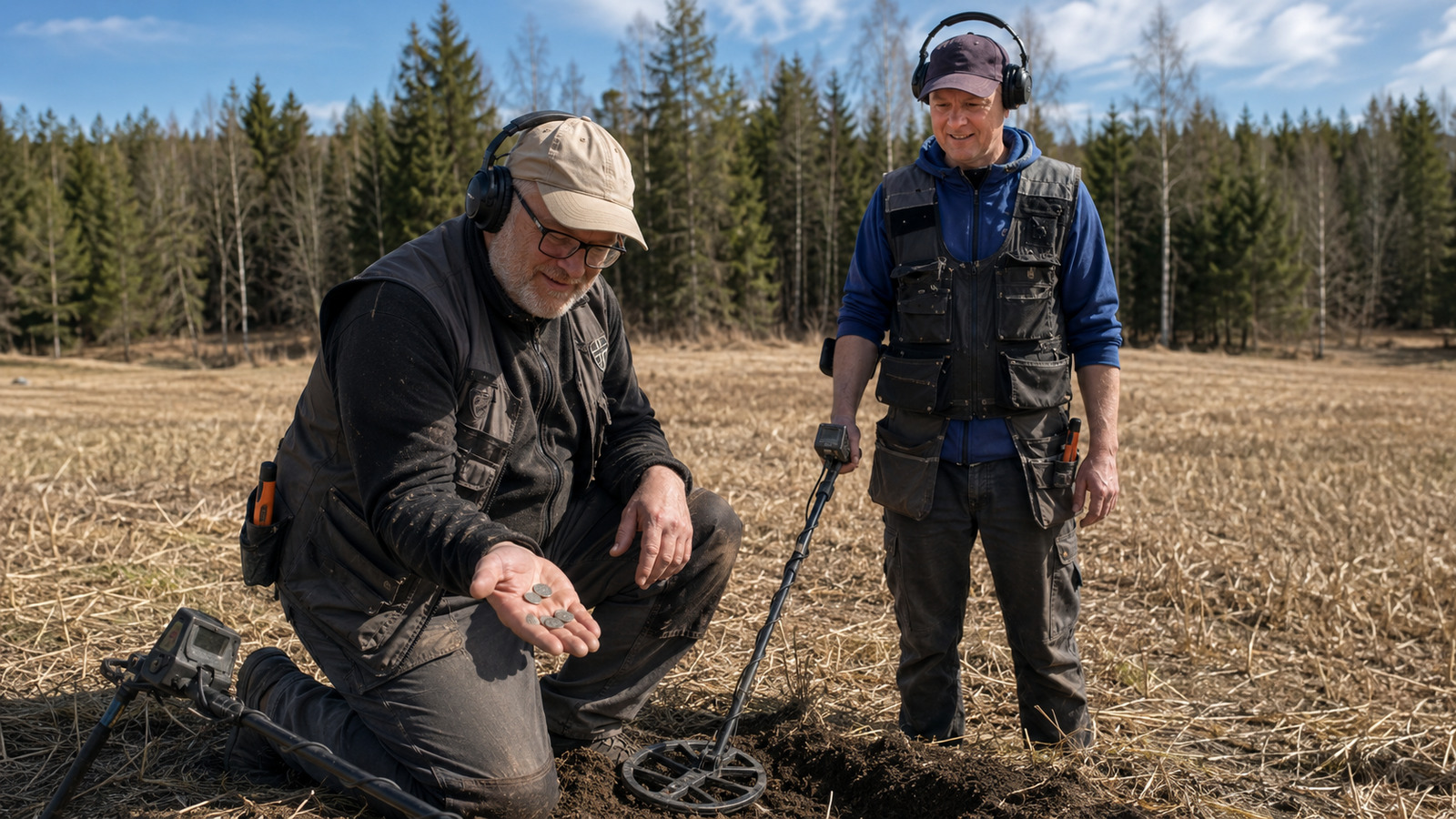
Metal Detector Enthusiasts Uncover Largest Viking Coin Hoard in Norwegian History with 2,970 Silver Pieces Near Rena



Inside the burial chamber, archaeologists identified a large sarcophagus containing a female skeleton. Additionally, there were five rectangular masonry boxes distributed along the walls, but these had been looted at some point in history.

Indices Of Reuse As A Sanctuary
The tomb was used for burials for several centuries before becoming a healing sanctuary between the years 250 and 450 AD, at the end of the Roman period. Among the objects found, a gold ring caught the researchers’ attention.
It features a semiprecious stone carved with the figure of Apollo, the god of healing and medicine. Alongside it, a representation of a snake was found, a medical symbol recognized since antiquity.
In addition to this ring, archaeologists recovered coins, small gold leaves from a floral crown, pottery vessels, iron and bronze items, perfume bottles, and glass beads. These objects help to strengthen the significance of the site over time.
Healing Sanctuary: Votive Offerings And Cult Indices
Outside the burial chamber, excavators found artifacts indicating the use of the monument as a healing sanctuary. Clay fingers and part of an arm made of the same material were unearthed, suggesting votive offerings.
These anatomical representations were common in places dedicated to healing, where objects symbolizing body parts were certainly left in search of treatment or as thanks for a healing received.
The practice of offering votive sculptures of body parts was common in the ancient world. The act symbolized the hope for divine healing or gratitude for received benefits.
This find reinforces the idea that the tomb not only housed the dead but also became a space for religious devotion and the pursuit of health.
Research Still Underway
The excavation of the site has not yet been completed. According to the Greek Ministry of Culture, archaeologists are analyzing the original structure of the funerary complex and its later adaptation as a healing sanctuary. Future studies are expected to investigate details about the renovations made over time.
In addition to the tomb, the area of Chiliomodi contains remnants from the late Roman period, including houses and a large oven. Research continues to deepen knowledge about the history of the region and its occupation over the centuries.
With information from Live Science.