






 Portuguese
  Spanish


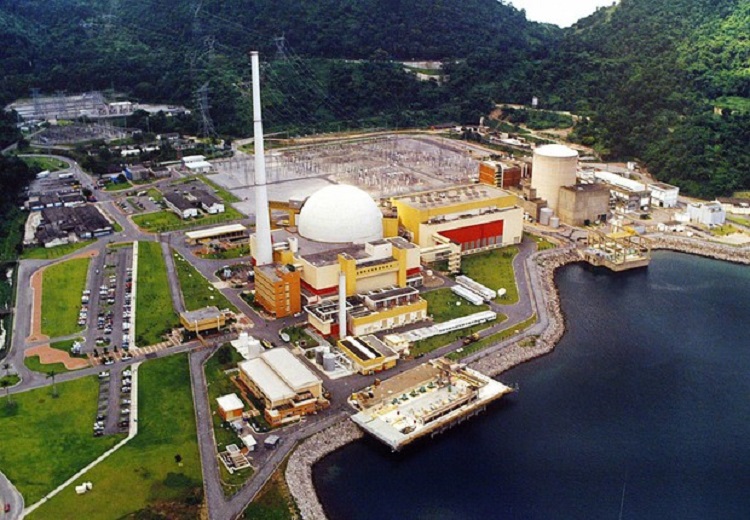

Angra Plants Gain Dry Storage Unit for Irradiated Fuels (UAS), Approved by Ibama This Week
As Four Foreign Groups Compete for the Completion of the Third Plant, another controversial issue regarding the nuclear plants in Angra made significant progress.
Ibama issued this week the installation license for the Dry Storage Unit for Irradiated Fuels (UAS) of the Angra 1 and 2 nuclear plants.
The unit will be used to temporarily receive the used fuels from both plants until the federal government determines where to store them permanently.
The UAS will require investments of around R$ 246 million, and Ibama conditioned the license approval on the presentation by Eletronuclear of a proposal for a study simulating the maximum thermal influence of UAS operation on the local ecosystem.
As well as the presentation of data on Information Center, Helipad, and the nearest point to BR-101 in relation to the unit.
-
A Brazilian city decided to purchase a piece of the Atlantic Forest with more than 153,000 square meters, and owners of preserved areas will be able to submit proposals to transform the forest into a conservation unit.

-
Brazilian siblings aged 11 and 7 read 240 books in just one year and caught attention on social media: while many children spend hours on screens, they turned their family’s routine into an example of reading, discipline, and curiosity.
-
The legendary oak that, according to the story, hid Robin Hood from the Sheriff of Nottingham, died at the impressive age of 1,200 years in England, and the first chilling sign of its end was that no leaves sprouted on the tree this spring.

-
While the world looks at forests, the UN warns that the Earth is also threatened by the silent degradation of natural grasslands and savannas, ecosystems that cover half of the planet, support billions of people, and can exacerbate water, food, and climate crises.


Even with Ibama’s approval, the UAS will still depend on another license, issued by the CNEN (National Commission of Nuclear Energy), for the construction and operation authorization of the unit.
The unit is located outside the plants’ areas, and the forecast for receiving the first used fuels from Angra 1 and 2 is set for 2021.
Currently, there are 222 fuel elements from Angra 1 and 288 from Angra 2 to be removed from the plants, stored in pools located in the nuclear facilities.
In a recent visit to China by the Minister of Mines and Energy Bento Albuquerque, the Chinese reaffirmed their interest not only in Angra 3 but also in other plants that should be constructed by 2050.
Currently, Brazil has two operational plants (Angra 1 and 2), which represent 1.1% of the country’s energy generation.
Angra 3 Resumes Construction in 2020, According to Government Committee! Read the Full Article Here!


