Portuguese
  Spanish


Google asked the US environmental agency to release up to 32 million mosquitoes in California and Florida, for the Debug project. The insects are sterile males, carriers of the Wolbachia bacteria, created to reduce the population of Aedes aegypti, transmitter of dengue, zika, and yellow fever.
It may sound like a horror movie script, but there is a scientific explanation. Google, through its parent company Alphabet, requested authorization from the United States government to release up to 32 million mosquitoes in California and Florida. The initiative is part of the Debug project, aimed at combating disease-transmitting mosquitoes.
The detail that changes everything is the type of insect. The mosquitoes released by Google are sterile males, which do not bite or transmit diseases, infected with a natural bacterium called Wolbachia. The goal is to make the population of Aedes aegypti, one of the deadliest animals in the world, plummet over time.
Why Google wants to release 32 million mosquitoes
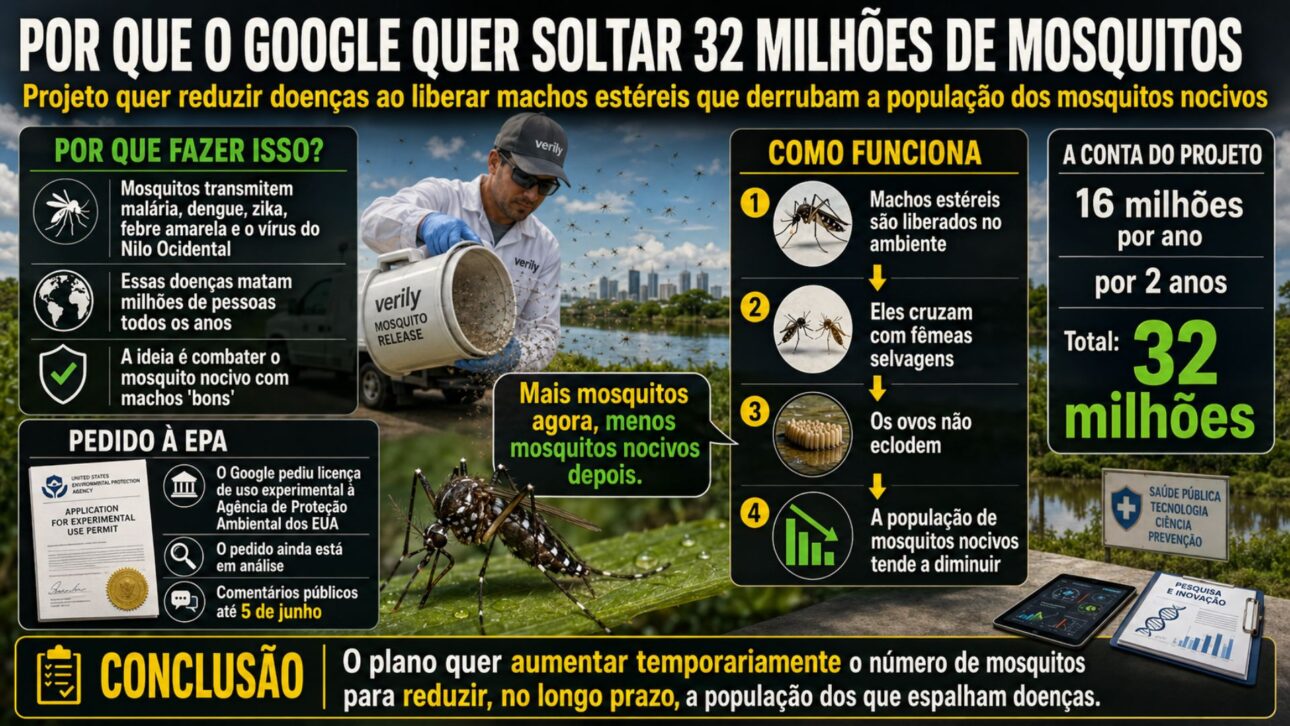
The justification lies in the count of lives. Mosquitoes are considered the deadliest animals on the planet, as they transmit malaria, dengue, zika, yellow fever, and the West Nile virus, diseases that kill millions of people every year.
-
The Trap of Modern Technology: How Screen Overload and Digital Connections Can Impact Your Mental Health and Well-being

-
Wyoming Couple Grows Tropical Fruits Year-Round in -40°C Using Geothermal Greenhouse, Demonstrating Earth’s Heat Can Produce Oranges and Lemons in Snow Without Traditional Heating

-
Ship Returns from Brazilian Coast with Thirty Newly Discovered Life Forms
-
Nigerian Professor Invents Electricity-Free Refrigerator Using Clay Pots and Wet Sand, Extending Shelf Life of Vegetables to 27 Days; 7,000 Units Distributed in Energy-Deprived Villages



The idea of the Debug project is, paradoxically, to add more mosquitoes to the environment, but of the right kind: “good” males that help knock down the “bad” ones.
In practice, Google asked the US Environmental Protection Agency (EPA) for an experimental use permit to release up to 16 million insects per year, over two years, totaling 32 million.
The request is under review, and the public comment period ends on June 5. When a sterile male mates with a wild female, the eggs do not hatch, and the population of harmful mosquitoes tends to decrease.
How the Wolbachia Bacteria Sterilizes Mosquitoes
The heart of the technique is Wolbachia, a bacterium that naturally occurs in about 40% of insect species, but is not normally present in Aedes aegypti.
When males carry it, they become incapable of producing viable offspring with wild females.
It’s important to emphasize: since only males are released, and males do not bite, there is no risk of people being bitten or infected by the bacteria.
This method has a name and history: it is the sterile insect technique, used in the United States for over 60 years.
According to the International Atomic Energy Agency, it is an ecological and effective strategy, already applied against pests like the fruit fly and screwworm.
The novelty of Google is using data analysis, sensors, and automation to create and separate males and females on a large scale, something that has always been slow and expensive, thus scaling the use of Wolbachia.
Where It Has Already Worked: California, Singapore, and the Target Aedes aegypti
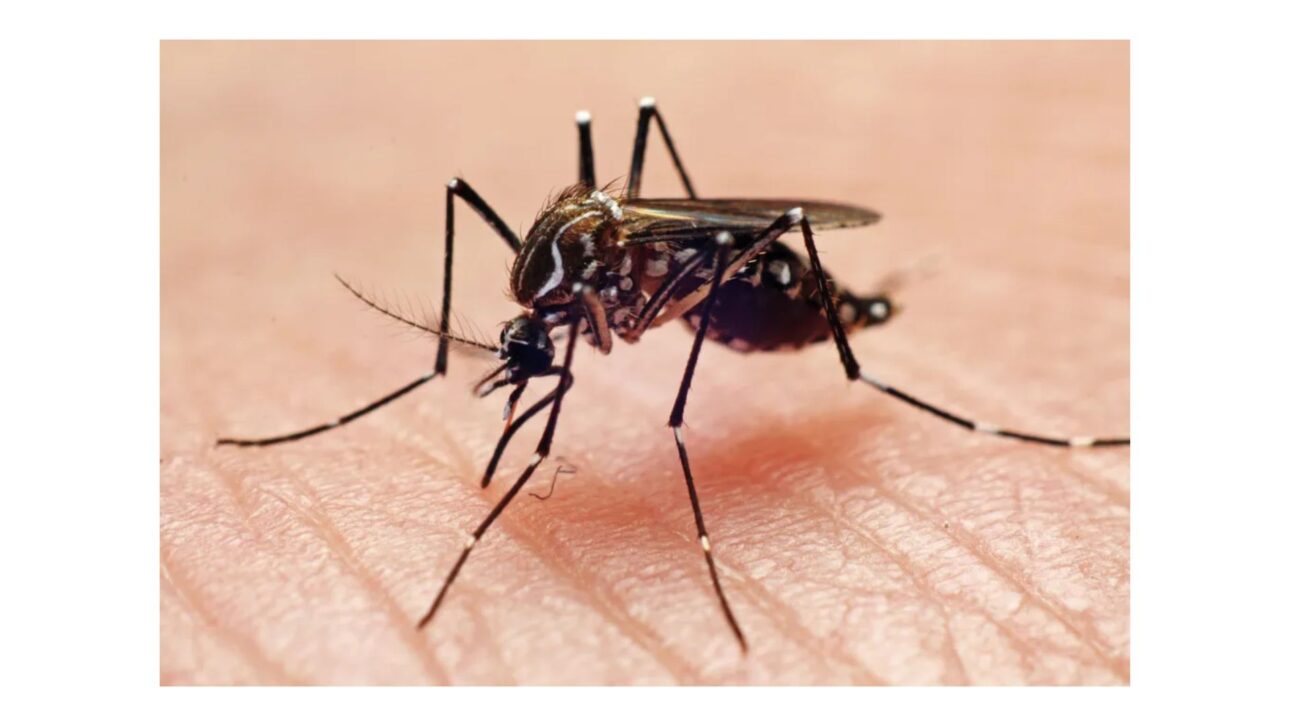
João Paulo Burini via Getty Images.
This is not the first attempt. Verily, a former subsidiary of Alphabet, had already released millions of sterile males in California in 2017.
Outside the USA, the Debug project has supported the Wolbachia Project of Singapore’s environmental agency since 2018, with significant results: according to the program itself, there was a suppression of 80% to 90% of the Aedes aegypti population and a drop of more than 70% in dengue cases after 6 to 12 months of releases.
The target is precisely the Aedes aegypti, a species responsible for most cases of dengue, Zika, yellow fever, and chikungunya, among the more than 3,500 species of mosquitoes that exist.
An important point for the environmental debate: the Aedes aegypti is not native to California or Florida, so no local animal depends on it for food, which reduces the risk of impact on the food chain.
Ethical and Environmental Doubts
Even with the favorable history, experts urge caution. Ecologist Nathan Burkett-Cadena from the University of Florida states that targeting a non-native species like Aedes aegypti is safer, but he would worry about cascading consequences if Google started targeting native mosquitoes.
Bioethicist Henry Greely from Stanford argues that if the intention is to drive a species to extinction, reflection and some social consensus are necessary before taking that step.
However, some see the action as a duty. Neurogeneticist Matthew DeGennaro from Florida International University reminds us that we were the ones who spread Aedes aegypti around the world, comparing it to cockroaches and rats in the insect universe, and concludes that we have an obligation to control it.
For now, the EPA is still reviewing the request, and Google‘s schedule for releasing the mosquitoes remains undefined.
Releasing 32 million mosquitoes to combat mosquitoes themselves is the kind of idea that is frightening at first glance, but it could save lives.
Tell us in the comments if you would trust Google’s project against Aedes aegypti or if you fear the consequences of tampering with nature in this way.