Portuguese
  Spanish


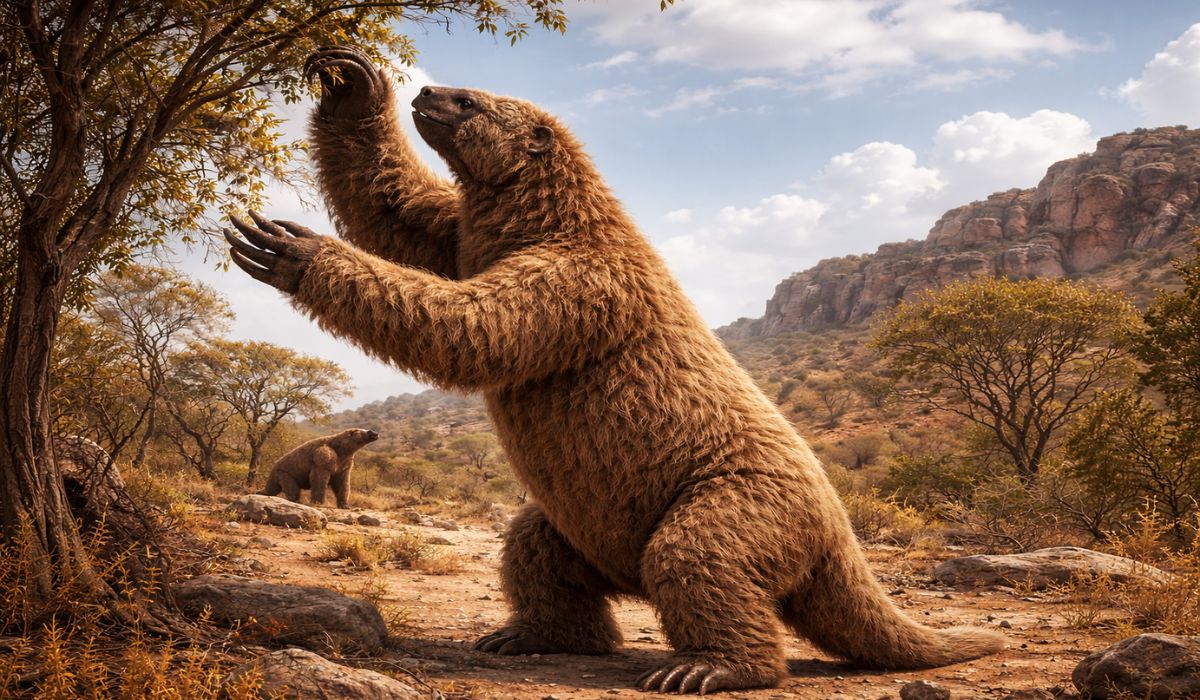


Bone Fragments Found in the Interior of Rio Grande do Norte Reinforce Records of Extinct Megafauna and Expand Scientific Interest in the Environmental Past of Seridó, An Area Recognized Internationally for Its Geological and Paleontological Heritage.
Bone fragments attributed to a giant sloth species Eremotherium laurillardi were identified in the rural area of Parelhas, in Rio Grande do Norte, in an area associated with the territory of the Seridó Global Geopark of UNESCO.
The material was located by a resident of the region and later analyzed by researchers from academic institutions, who confirmed it to be a representative of the megafauna that lived in northeastern Brazil during the Pleistocene period.
According to the preliminary analysis, the fossils correspond to parts of the skeleton of a single individual.
-
Electric car batteries catch fire, destroy roads, and rely on polluting mining? Experts debunk exaggerations, confirm real issues, and reveal how new technologies without cobalt and even without lithium are changing the future of electric mobility.

-
In Andradina, in the interior of SP, a tannery transformed tilapia skin that slaughterhouses used to throw away into exotic leather for bags, shoes, and even wedding dresses, producing about 2,000 pieces per month and exporting to seven countries, proving that fish waste has become high-value fashion.

-
The industrial waste that even recyclers didn’t want has gained value in the interior of Bahia: two entrepreneurs invested R$ 2.8 million to transform 350 tons per year of foam, rubber, and plastic into boards that can replace wood and MDF.

-
What is a red flashlight used for, after all? See why it is so commonly used at night.



Among the identified fragments are portions of femur, rib, and phalange, structures that allow comparisons with other records already described in the scientific literature.
Based on these references, the researchers indicate that the animal could reach about six meters in length and weigh up to five tons.
These estimates are based on parameters adopted in previous studies on the same species.
According to specialists in the field, the Eremotherium laurillardi is among the largest terrestrial mammals that inhabited the current Brazilian territory, with records distributed across different regions of South America.
Find in the Interior of RN Expands Megafauna Records
The discovery occurred in a rural area of the municipality, outside urban centers, within the territorial limits of the geopark.
After the location of the fragments, technical teams collected them and began identification procedures, which included anatomical analysis and morphological comparison with specimens already cataloged in scientific collections.
The confirmation of the species reinforces the potential of Seridó to house traces of the region’s prehistoric past.
Researchers involved in the study believe that records like this contribute to expanding knowledge about the distribution of megafauna in the Northeast, which is still considered uneven compared to other regions of the country.

Although the material found is fragmented, the presence of long bones and elements of the extremities allows inferring general characteristics of the animal.
According to previously published scientific descriptions, it is a large-bodied mammal with a robust body structure adapted to terrestrial life.
Characteristics of the Giant Sloth Eremotherium laurillardi
The Eremotherium laurillardi belongs to an extinct group of mammals commonly known as giant sloths.
Previous studies indicate that these animals were herbivorous and occupied different types of environments in the Americas during the Pleistocene, a period marked by significant climate variations.
The size and mass projections disclosed by researchers follow established references in paleontology.
However, specialists emphasize that these estimates depend directly on the quantity and state of preservation of the available material and may be adjusted as new analyses are conducted.
According to researchers in the field, the continuation of studies may allow a more detailed description of the specimen found in Parelhas.
Stages such as complete cataloging, photographic recording, and comparison with other fossils of the species are part of the scientific process before any more specific conclusions can be drawn.
Seridó Geopark and the Preservation of Fossil Heritage
The Seridó Global Geopark of UNESCO encompasses municipalities in Rio Grande do Norte in a territory recognized for its geological and paleontological heritage.
Since receiving international recognition, the area has become part of a network focused on conservation, scientific education, and sustainable development.
In this context, the fossil fragments identified in Parelhas will be incorporated into the official collection of the geopark.
According to the scientific coordination, the material will undergo a process of tombamento and preservation, following technical protocols adopted for items of scientific interest.
The possibility of future public exhibition is also considered, although it depends on conservation criteria and the completion of study stages.
According to those responsible, the initial priority is to ensure the proper custody of the material and the production of scientific knowledge based on the find.
Indications of Ancient Environments in the Northeast
The presence of a giant sloth in the interior of Rio Grande do Norte is used by researchers as another element for studies on the environments that existed in the region during the Pleistocene.
According to the scientific literature, animals of that size required a compatible plant supply for their diet, which may indicate environmental conditions different from the current ones.
However, specialists highlight that interpretations about climate and vegetation depend on the combined analysis of multiple records, such as fossils of plants, sediments, and other animals.
Therefore, each new find is treated as part of a larger set of evidence, and not as an isolated indicator.
Moreover, records of megafauna are often used in research that seeks to understand the factors associated with the extinction of these large mammals, including environmental changes and transformations over geological time.
What Is Already Confirmed and What Is Still Under Analysis
Despite the identification of the species, details such as the exact age of the fossil, the precise geological context of the site, and the possible association with other remains have yet to be disclosed in public technical documents.
These data are typically presented in scientific reports or academic articles after more in-depth analyses.
Meanwhile, researchers remain cautious when disclosing information.
What is confirmed, so far, is the identification of the bone fragments as belonging to Eremotherium laurillardi and the incorporation of the material into the geopark’s collection for preservation and study purposes.
With the official record of the find, the region is more consistently integrated into the map of Brazilian megafauna.
The expectation of researchers is that new explorations and studies may expand this data set and clarify aspects that are still little known about the presence of these animals in the semiarid region.