






 Portuguese
  Spanish


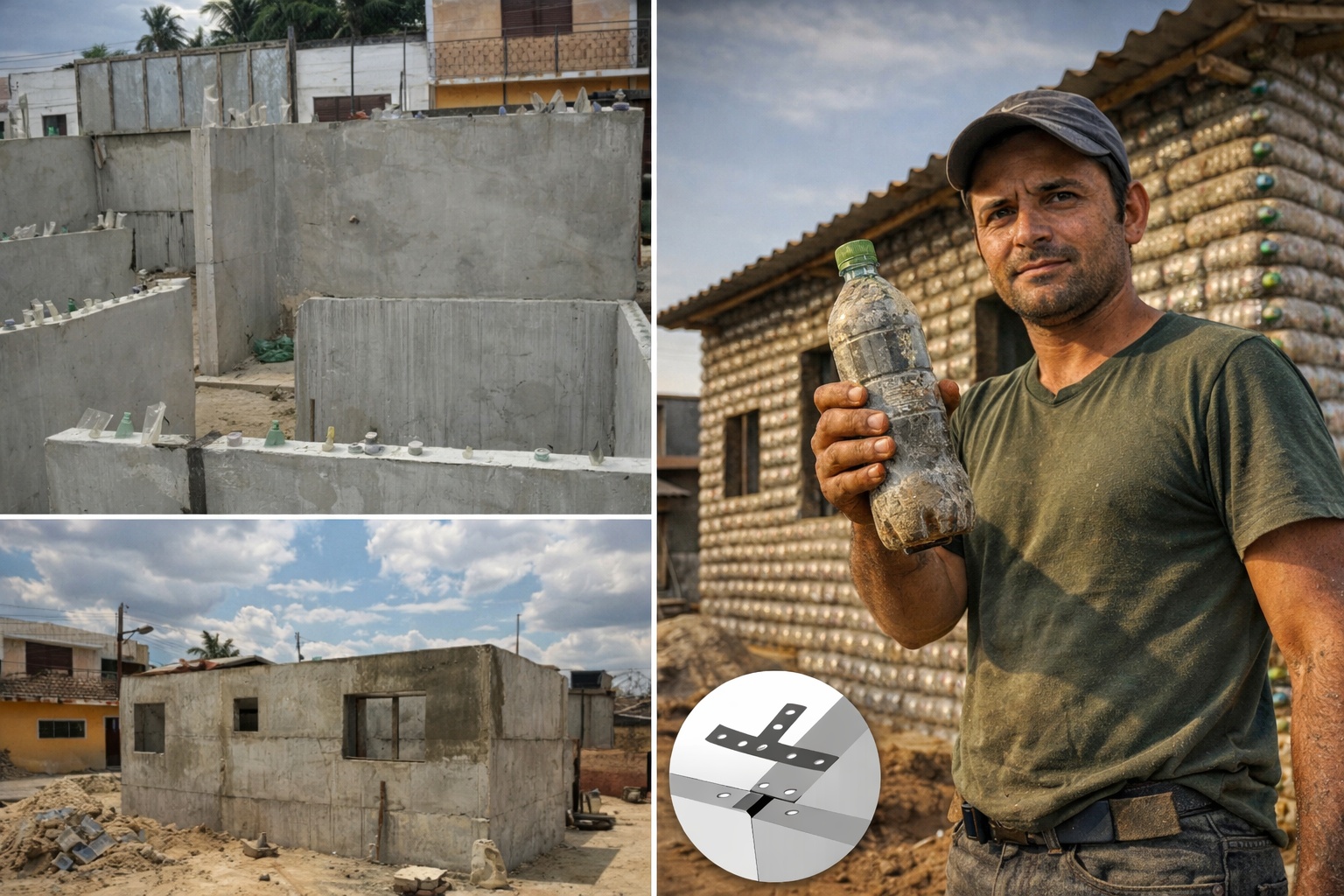


Electrician from RN Builds House with 2,700 PET Bottles, Cuts Costs in Half and Creates Sustainable Alternative to Traditional Masonry with Low-Investment and High-Strength Technique.
Antônio Duarte Gomes, a 34-year-old electrician with no specific academic training in engineering or architecture, managed to create a construction alternative that challenges the traditional masonry model. A resident of the municipality of Espírito Santo, located 69 kilometers from Natal in Rio Grande do Norte, he developed over two years, starting in 2010, a technique that replaces ceramic bricks with PET bottles filled with sand and cement in the construction of residential walls. The first ecological house, as Antônio named his creation, was completed in December 2009 after numerous attempts with various materials and arrangements. The final result consumed approximately 2,700 PET bottles and had an estimated total cost of 8,000 reais. For comparison, a conventional construction with the same dimensions and characteristics would cost around 16,000 reais at the time, representing a 50% savings on the initial investment.
The project originated from a casual observation when Antônio witnessed a pile of plastic bottles burning under the sun. The image sparked a question in him about the possibility of giving a more useful destination to the material that would normally end up in landfills or accumulate in vacant lots. From this initial insight, he began experimenting with different configurations until he reached the model he considers ideal in terms of structural strength and economic viability.
UFRN Laboratory Tests Confirm 30% Higher Strength than Common Ceramic Brick
The technical validation of the project came through tests conducted at the concrete laboratory of the Federal University of Rio Grande do Norte. Antônio Duarte submitted samples of the walls built with PET bottles to the same strength tests applied to conventional masonry blocks. The results surprised even the researchers involved in the analysis.
-
Key Infrastructure Projects for Brazil’s Next President: Expanding Railways to Cut Transport Costs, Reduce Truck Traffic, Create Jobs, and Boost Industries Nationwide

-
While China Builds Undersea Rail and Mexico Connects Two Oceans, Brazil Struggles with Grain Transport Due to Lack of Railways

-
Students Build Kansas’ First Hemp-Insulated Social House for a Needy Family: 85% Less Concrete, Solar Roof Returns Energy to Grid, Carbon Negative in Under 20 Years

-
China to Drill 90 Kilometers Under the Sea to Connect Two Cities Currently Linked Only by Ferry


The walls with a PET bottle structure exhibited a strength of 1.94 MPa (Mega Pascal) in compression tests, while the average tolerance for conventional concrete blocks is around 1.5 MPa. This difference represents approximately 30% more load-bearing capacity, indicating that the alternative solution not only matches but exceeds the structural performance of traditional materials.
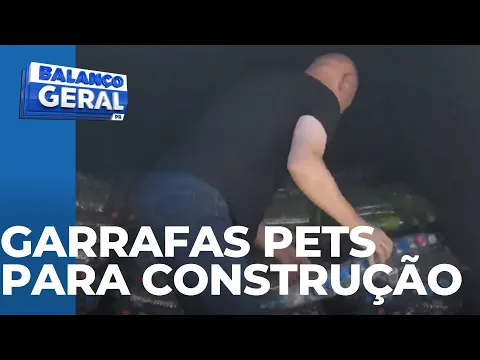

In addition to mechanical strength, the tests also assessed the thermal and acoustic behavior of the walls. The filled plastic bottles act as air chambers that hinder the passage of heat and sound. According to the researchers responsible for the studies, environments built with this technique tend to be cooler in hot climates and have better sound insulation compared to common brick walls.
Technique Uses Wooden Forms and Steel Plates with Filled Bottles Positioned Vertically and Horizontally
The method developed by Antônio Duarte significantly differs from conventional construction processes. The walls are molded inside forms made with wood and steel plates that function as temporary molds.
The PET bottles, previously filled with a mixture of sand and cement, are positioned inside these forms both vertically and horizontally, creating a structural fabric.

The spacing between each bottle is maintained at 12 centimeters, a distance considered ideal to ensure the uniform distribution of loads and allow proper filling with the concrete mix. After positioning the bottles, the mortar prepared with cement and sand is poured into the empty spaces, completely encasing the plastic containers and forming a monolithic wall.
An important differentiator of the technique is the possibility of embedding all electrical and plumbing installations within the forms themselves before concreting.
Water pipes, sewage, and electrical conduits are fixed in predetermined positions in the project, eliminating the need to break walls later for infrastructure passage. This feature significantly speeds up the construction process and reduces material waste.
46m² House Has Two Bedrooms, Living Room, Kitchen, and Bathroom Based on Caixa Econômica Federal Model
The architectural project developed by Antônio Duarte was inspired by the standards of popular houses financed by Caixa Econômica Federal. The residence has 46 square meters of covered area distributed in a basic program of two bedrooms, living room, kitchen, and bathroom. This configuration meets the minimum housing needs for low-income families and fits within the federal government’s housing financing guidelines.

The floor plan follows a functional layout that optimizes circulation between rooms and maximizes the available space.
The bedrooms have sufficient dimensions to accommodate beds and wardrobes, the living room integrates with the kitchen in a semi-open concept, and the bathroom centralizes all plumbing points in one area, reducing costs with pipes.
The external finishing of the walls does not reveal the presence of plastic bottles in their composition. After the curing of the concrete and the removal of the forms, the surface appears identical to conventional walls. It is possible to apply plaster, paint, or any type of ceramic coating without the need for special treatments. The final appearance does not differ from traditional constructions.
Assembly of Ready Walls Takes Only 3 Days Compared to Weeks for Conventional Masonry
One of the main attractions of the technique developed by Antônio Duarte is the speed of execution. When all forms are prepared and the bottles properly filled, a complete house can have its walls assembled in just three days of work. This timeline contrasts drastically with the 15 to 20 days needed to raise equivalent walls in conventional masonry.

The speed of construction arises from the prefabricated nature of the system. The bottles are filled in advance, the forms can be reused in various projects, and the concreting occurs continuously without the need to wait for the setting of brick by brick.
Once the framework is positioned and the mix poured, it only remains to wait for the concrete curing time to remove the forms and proceed with the finishes.
This construction agility has direct economic implications. It reduces labor costs, decreases the immobilization period of capital, and allows families to occupy their homes much more quickly. In emergency situations such as those displaced by floods or natural disasters, the possibility of erecting housing in just a few days represents an important strategic advantage.
Inventor Patented System as Vibrated Concrete Wall with PET Bottles After Complex Process
Conscious of the potential of his invention, Antônio Duarte sought to legally protect the technique developed through patent registration with the Brazilian National Institute of Industrial Property. The patenting process required detailed technical specifications to prevent third parties from copying the idea without the original inventor’s authorization.

The patent was registered under the designation “vibrated concrete wall with PET bottles,” nomenclature that precisely describes the construction method and its particularities. Antônio reports that the preparation of the documentation was complex and required assistance from professionals specialized in intellectual property.
It was necessary to be sufficiently specific to ensure legal protection without overly restricting the possible applications and variations of the technique.
With the patent granted, Antônio gained exclusive rights to the commercialization of the system for a period determined by Brazilian legislation.
Companies or individuals wishing to use the technique on a commercial scale must negotiate licensing with the inventor. This legal protection was fundamental to facilitate discussions with construction companies interested in producing ecological houses on an industrial scale.
Construction Companies Bought Test Units Showing Interest in Industrial Scale Production
The innovative nature of the project and the promising results in terms of cost savings and structural performance attracted the attention of the construction industry. One company in the field has already acquired two units of the ecological house directly from Antônio Duarte for field testing and evaluation of the feasibility of larger scale production.
In addition to this first concrete sale, other construction firms and even individuals sought the inventor for information about the technology. The most frequent questions concern the strength of the walls, the possibility of future renovations, behavior in extreme weather conditions, and comparative costs at different scales of production.
Antônio Duarte admits to selling “handmade” units of the house, produced manually in his workshop in the municipality of Espírito Santo. However, he believes that real transformation will come when industrialized production takes place.
Companies capable of manufacturing the forms in series, processing large volumes of PET bottles, and organizing logistics for distribution could further reduce costs and democratize access to quality housing.
Project Achieved 40 Houses Built in Brazil, 4-Story Building in Petrolina with 60,000 Bottles
Years after the first house was built in 2009, Antônio Duarte has already accounted for approximately 40 residences built using his technique in different regions of Brazil. These units served as practical demonstrations of the system’s viability and allowed for identifying necessary adjustments for improving the construction method.

The largest project executed to date was a four-story building in the city of Petrolina, in the interior of Pernambuco. The construction required about 60,000 PET bottles and demonstrated that the technique is not limited to small single-story residences. With adjustments to the structural sizing and adequate reinforcements, it is possible to apply the concept in more complex vertical buildings.
This set of practical experiences generated valuable learning about climate variations, different soil types, foundation needs, and the behavior of structures over time. The older houses have already surpassed a decade of use and continue to perform well, showing no signs of degradation of the plastic bottles or compromising structural integrity.
Cost per Square Meter R$ 400 Compared to R$ 600 for Traditional Construction, 33% Savings
Comparative cost analyses conducted on different projects consistently point to significant savings when using PET bottles instead of conventional bricks. The average cost per square meter built with Antônio Duarte’s technique is around 400 reais, while traditional masonry constructions cost approximately 600 reais per square meter under the same conditions.
This difference of 200 reais per square meter represents a saving of about 33% on the total cost of the work. For a house of 46 square meters like the original project, the absolute savings reach 9,200 reais – a substantial amount for low-income families needing to maximize the reach of their limited financial resources.
The cost reduction stems from multiple factors. PET bottles are obtained for free or at very low prices from recycling cooperatives. Cement consumption is lower because the bottles occupy a significant volume of the walls. The execution speed reduces labor costs. And eliminating the need to break walls for the installation avoids material waste.
Bottles Provide Thermal Insulation, Houses Stay Cooler, Absorb Less Heat
An important collateral advantage of the construction system lies in the thermal properties of the walls made of PET bottles. Conventional ceramic bricks are materials that absorb heat during the day and have difficulty dissipating it at night, keeping indoor environments warm even after sunset.
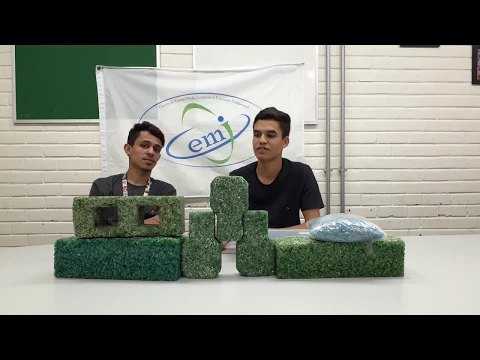
The PET bottles filled with sand and cement, on the other hand, create multiple air chambers inside that act as a natural thermal insulator. This bioclimatic design allows when it is hot outside, the interior of the residence stays significantly cooler, and vice versa. The trapped air hinders heat transfer between the external and internal environments.
Residents of the ecological houses report superior thermal comfort compared to conventional residences, especially in hot climates like the Brazilian Northeast. The internal temperature reduction can reach 3 or 4 degrees Celsius on hot days, reducing or eliminating the need for fans and air conditioners, which generates additional savings on electricity bills.
Inventor Learned Techniques from Practical Observation Without Ever Taking Engineering or Architecture Courses
Antônio Duarte’s trajectory challenges the notion that significant technical innovations necessarily require formal academic training. He only attended Elementary and High School at Escola Joaquim da Luz in Espírito Santo, where he was an average-performing student, with no special distinction in subjects like physics or mathematics.
His technical training came from day-to-day work as an electrician at Cosern, the electrical energy company in Rio Grande do Norte.
In this role, he developed familiarity with construction materials, basic notions of structures, and the ability to visualize practical solutions to concrete problems. He had already gained internal recognition at the company by winning an innovation award for suggesting simple but effective improvements to operational procedures.
When asked how he managed to master complex technical concepts without specific training, Antônio replies that it was through curiosity combined with the willingness to believe in his own ideas.
He naturally uses terms like “thermal expansion” and “ceiling height” in his explanations, knowledge gained through self-study, conversations with professionals in the field, and mainly practical experimentation over the two years of project development.
Savings on Construction Materials Achieve 60% Less Cement Compared to Conventional Work
The positive environmental impact of the technique developed by Antônio Duarte goes beyond reusing PET bottles. The reduction in the consumption of conventional construction materials also significantly contributes to a smaller ecological footprint of the buildings. A traditional work of the same dimensions requires about 10 bags of 50-kilo cement, while the ecological house requires only 4 bags.
This 60% savings in cement consumption has dual environmental benefits. First, it reduces demand for a material whose production is highly energy-intensive and emits greenhouse gases. The cement industry accounts for approximately 8% of global CO2 emissions. Second, it decreases the transportation and logistics costs associated with moving large quantities of inputs to the construction site.
The partial substitution of ceramic bricks with plastic bottles also alleviates pressure on clay extraction and the consumption of firewood in ceramic kilns. Each ecological house takes around 2,700 bottles out of the waste cycle that would typically end up in landfills, rivers, or oceans, where they would take hundreds of years to decompose.
Structural Resistance Allows Renovations and Expansions, Breaking Walls is a Normal Process
A common concern among potential buyers of ecological houses relates to the feasibility of making future renovations and expansions. Antônio Duarte clarifies that the behavior of concrete walls with PET bottles is practically identical to that of conventional walls when it comes to later interventions.
To break a wall aiming to create an opening or expand a room, the same tools and techniques used in traditional masonry are employed. Jackhammers, chisels, and electric saws work normally. The only difference lies in the internal composition revealed after cutting, where the sections of the plastic bottles encased in concrete are visible.
Horizontal expansions also follow similar procedures. New walls can be built and connected to existing ones through appropriate tie-ins. The foundation needs to be sized to support the additional load, but this care is necessary for any type of expansion regardless of the construction system. The flexibility for future modifications was an important requirement considered by Antônio during the development of the technique.
First House Completed December 2009 After Two Years of Trials with Different Materials and Arrangements
The path to the first completed house was marked by extensive experimentation and learning through trial and error. Antônio Duarte dedicated two years of intense work testing different filling materials for the bottles, variations in spacing between them, types of mortar, forms configurations, and concrete curing methods.
Initially, he tried using empty bottles, filled only with air. The result was unsatisfactory because the material was excessively lightweight and did not contribute structurally to the resistance of the walls. Next, he experimented with fillings made from various organic materials that proved susceptible to decomposition and generating undesirable odors.
The definitive solution came with the mixture of sand and cement inside the bottles, providing adequate weight and contributing to the mechanical strength of the whole. Each adjustment in the process followed small improvised strength tests until Antônio felt confident enough to build the first complete unit. The success of this first house in December 2009 validated years of work and paved the way for subsequent projects.
Collaboration with Engineers and Architects Was Fundamental for Technical Improvement of the Innovative Project
Although Antônio Duarte is the creator and main executor of the project, he acknowledges that the technical improvement would not have been possible without the collaboration of trained professionals. During the two years of development, he established partnerships with civil engineers and architects willing to contribute specialized knowledge.
These professionals assisted in interpreting technical construction standards, advised on the appropriate structural sizing, suggested more efficient materials and proportions, and validated design decisions from the perspective of formal engineering.
Their contribution was essential to ensure that the practical solution developed by Antônio also met the safety and durability requirements established by legislation.
This interdisciplinary collaboration illustrates how genuine innovation often emerges from the combination of practical knowledge acquired in daily experience and theoretical foundation gained from academic training.
Antônio brought creativity, the boldness to question established conventions, and the persistence to experiment with unorthodox solutions. The partner engineers and architects provided the technical validation and indispensable methodological rigor to turn a promising idea into a viable reality.






Muito legal, mas não precisava ter enchido com areia e cimento. Ele poderia ter construído no estilo taipa, porém com largura suficiente para colocar as pets no meio do bambu. Já vi gente colocar até lixo (não orgânico) no meio das paredes. O reboco é normal. Grampeando a tela, é possível rebocar normalmente.
Ele pode não ter formação universitária mais tem força de vontade e inteligência e técnica