






 Portuguese
  Spanish


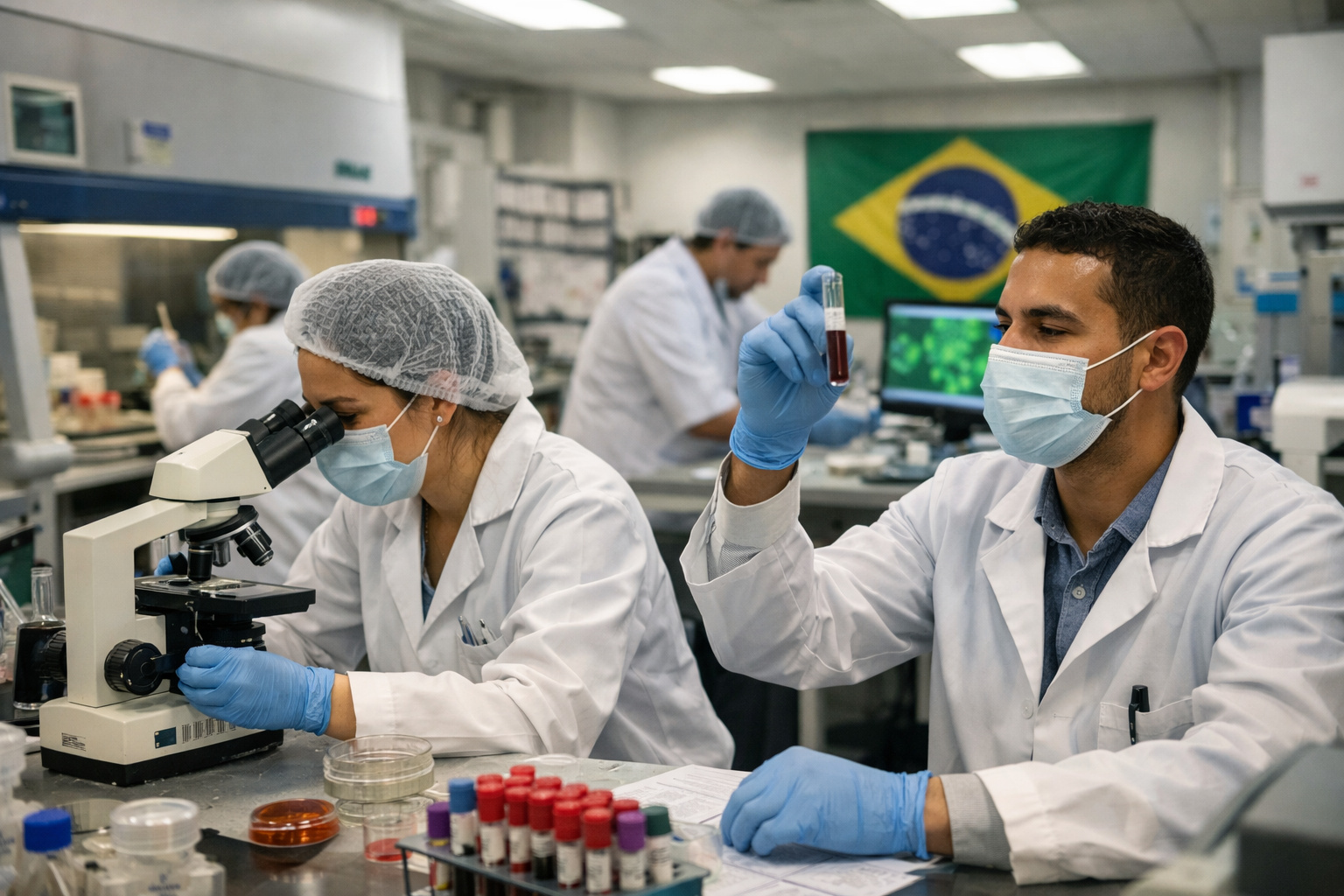


Release Marks Historic Advancement of Brazilian Science by Allowing Clinical Studies with Experimental Medication from UFRJ Targeting Severe Injuries with No Therapeutic Alternatives

The National Health Surveillance Agency has authorized the start of the first phase of clinical trials in humans of polylaminin. The experimental medication was developed by researchers from the Federal University of Rio de Janeiro (UFRJ) to treat spinal cord injuries.
The decision, announced this Monday, represents a historic advancement for Brazilian science. Furthermore, it rekindles hope for patients who currently face few or no treatment alternatives.
The information was disclosed by official bodies and confirmed by the team responsible for the project. Until now, researchers were conducting studies only in the laboratory and in preclinical tests.
-
OnePlus N6 Smartphone to Launch in India with 8,000mAh Battery and 45W SuperVOOC Charging, Lasting Up to Three Days

-
Scientists Plan to Release Air Bubbles Underwater to Protect Antarctica’s “Doomsday Glacier” from Melting

-
Chinese R6000 Drone Combines Airplane and Helicopter Features, Carries Up to 12 People for Multiple Missions
-
In the World’s Most Densely Populated Desert, Families Dig Funnel-Shaped Underground Cisterns to Capture Rare Rainfall and Store Drinking Water for Up to Eight Months




In initial experiments, still with an experimental version of the substance, the application restored movements to a small group of patients as well as to dogs. Given these results, the authorization for testing in humans opens a new phase of research.
Who Can Participate in the First Phase of Clinical Trials
In this initial phase, the study will include only five volunteers. The team will follow strict technical criteria defined by Anvisa.
Participants can be individuals between 18 and 72 years old who have suffered complete thoracic spinal cord injury between the T2 and T10 vertebrae. Additionally, the injury must have occurred less than 72 hours ago and must require surgical indication.
For this reason, patients with chronic injuries will not be able to participate in this phase. This selection aims to reduce risks and allow for a more accurate assessment of medication safety.
The locations where the tests will take place have not yet been disclosed. The institutions involved will determine this phase in the coming months.
Safety is the Main Focus of the Initial Phase
Unlike the next stages, this first phase does not aim to prove efficacy. The focus is on assessing the safety of polylaminin.
Researchers will monitor potential risks, adverse reactions, and side effects after the medication application. This analysis is essential before any clinical advancement.
If the results are positive, the study may advance to phases 2 and 3. In these stages, scientists will evaluate the treatment’s efficacy in a larger number of patients.
Only after the completion of the three phases can the medication request definitive approval for use in Brazil.
Early Release May Be Considered in Exceptional Cases

According to Tatiana Sampaio, head of the Laboratory of Extracellular Matrix Biology at UFRJ and responsible for the project, there is a possibility of provisional release before phase 3.
This hypothesis arises because spinal cord injury is a rare, extremely severe condition with no effective therapeutic alternatives currently available. In such situations, the legislation allows for differentiated regulatory analyses.
This possibility raises expectations around polylaminin, which experts already consider one of the most promising research endeavors in the field.
Brazilian Research May Transform the Future of Treatment
Anvisa’s authorization reinforces the leading role of Brazilian science. Furthermore, it highlights the role of public universities in developing solutions with a direct impact on society.
Although it is still early to talk about a cure, the next steps will be decisive. They will indicate whether polylaminin can be part of spinal cord injury treatment in the future.
Meanwhile, patients, families, and healthcare professionals closely monitor each advancement with attention and caution.
If you or someone close were facing a spinal cord injury with no treatment options, would you participate in an experimental study like this?





Si, estaria dispuesto a participar en un estudio esperimental
Si yo participaría, no camino por un tumor intramedular que tenia, ya no esta. Necesito localizar a la Doctora, por favor pásenme los datos, yo estoy en Monterrey.