






 Portuguese
  Spanish


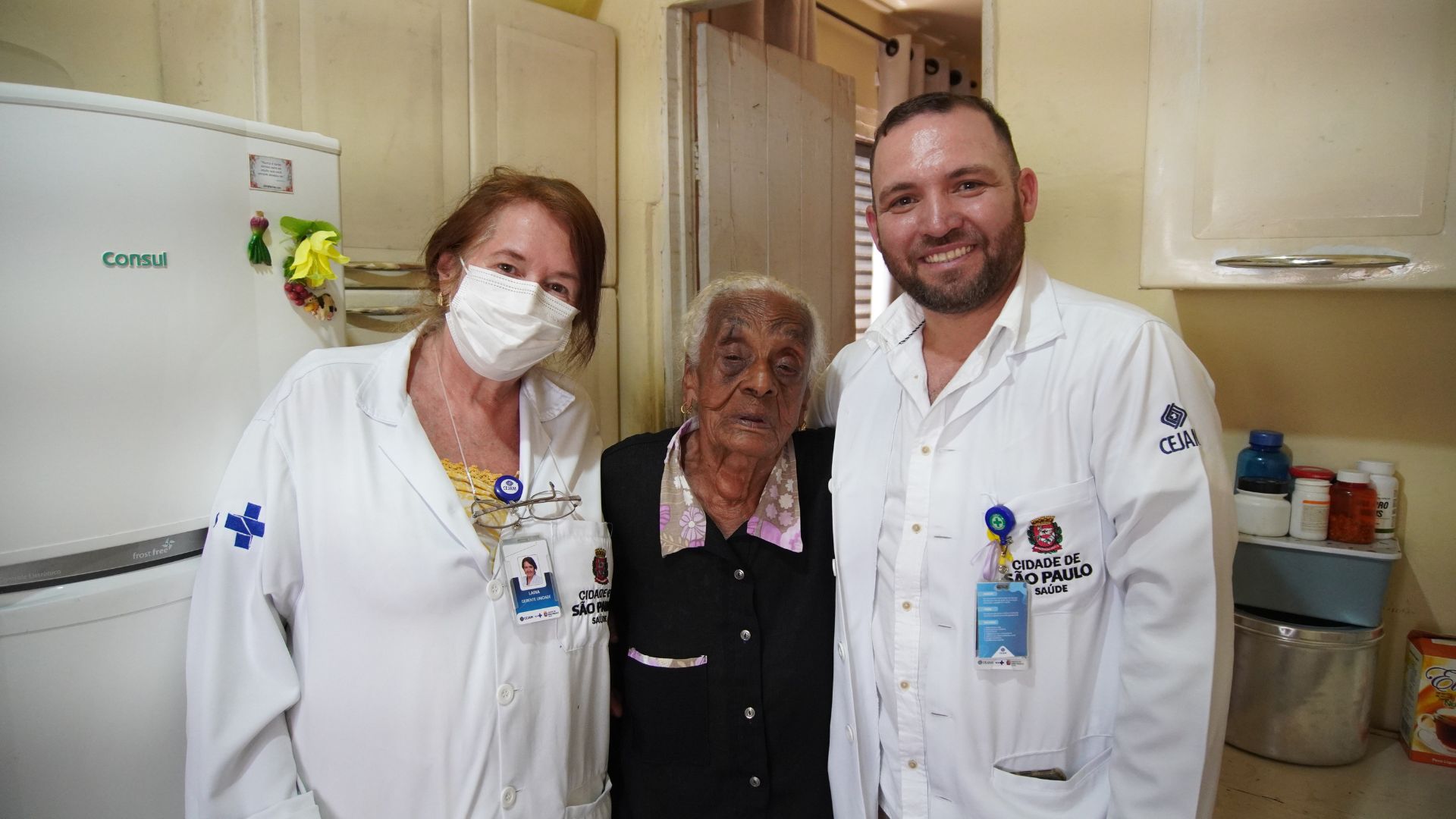


Literate at 85, Elderly Completes High School at 91, Wins Full Scholarship and Begins College in Nutrition in Greater São Paulo, Becoming a Symbol of Educational Resurgence Through EJA and a Concrete Example of Late Access to Higher Education in Brazil.
At 91, Iolanda Ribeiro Conti enrolled in the Nutrition course at Guarulhos University (UNG), in Greater São Paulo, after winning a full scholarship and completing, in her old age, a cycle that began with literacy at 85.
A resident of Guarulhos, she became news after completing high school at the end of 2024, a stage finalized by the Education of Youth and Adults (EJA) that paved the way for her arrival at higher education, something uncommon in her 90s.
From Literacy Notebook to University Campus
Born in Piranguçu, in the South of Minas Gerais, Iolanda spent much of her life without regular schooling, according to reports published in articles that reconstruct her childhood and the period when she had to work early, far from the classroom.
-
Forgotten Map Leads Diver to Shipwreck with Gold, Rare Jewels, and Secrets Hidden for Nearly 350 Years

-
Furong: The 2,000-Year-Old Chinese City Built on a 60-Meter Waterfall Becomes a Global Tourist Phenomenon

-
YouTube Inventor Dubbed “Real-Life Tony Stark” Builds Robotic Legs for Father’s Day, Creating a Wheelchair That Conquers Stairs and Rough Terrain
-
Brazilian Scrap Dealer Processes 3,000 Tons of Ferrous Scrap Monthly, Paying $0.09 to $0.70 per Pound, Reveals Why a Hidden Cylinder Costs 1,500 kg Discount





When she decided to return to school, her restart happened through EJA, a program aimed at people who did not complete basic education in the expected timeframe, and her learning routine included everything from the first strokes to reading and writing.
The initial milestone of this turnaround was at 85, the age when she began learning to read and write, still struggling with basic difficulties, such as signing her name, according to published accounts about her case.
From there, the student advanced through stages that usually take years, completing elementary school in 2023 and reaching high school the following year, without interrupting her plan to continue studying.
High School Graduation at 91

The high school graduation ceremony, held in Guarulhos, highlighted her journey and drew attention due to the contrast between the figure of a nonagenarian graduate and the more common image of teenage students at this educational stage.
Reports about the event recorded that the graduation took place on December 11, 2024, and that the path was made through EJA, emphasizing that the diploma represented a turning point for someone who had been out of school for decades.
With the exposure of her case, the sequence of events began to be followed as a clear line of achievements, with late literacy, educational advancement, and the attempt to transform the continuity of studies into a concrete project.
In this context, the idea of pursuing Nutrition ceased to be just a stated intention and began to be treated, in publications, as the next expected step for someone who finished high school already planning to remain in the educational environment.
Full Scholarship and Beginning of Nutrition Course at UNG
In February 2025, Iolanda received the news that she had won a full scholarship to study Nutrition at UNG, according to records published about the initiative and the organization made to enable her enrollment.
Commenting on the achievement, she stated: “I was surprised to win the scholarship. I will study every day.”
The actual entry into the degree was recorded on March 17, 2025, a date mentioned in reports that describe the reception on the first day, with welcoming from professors and students and the introduction of the new student to the academic community.
In addition to attending classes, the course requires regular assessments and activities, and the transition to university life means dealing with biological content and discussions about food and health, as expected in a Nutrition program.
University Routine at 91
Published reports about Iolanda’s daily life describe that classes occur in a hybrid format, with in-person meetings three times a week and remote activities, which require adaptation to technologies and distinct methods of monitoring.

In this process, her daughter, Vera Lúcia Ribeiro Conti, appears as a central support figure, responsible for taking and picking up her mother, as well as helping organize the routine, according to information shared in reports.
Her own family reported that the desire to study has always been present, and that the continuation after high school happened because the student did not want to end her journey just at the moment she felt most confident to advance.
In another recorded statement, Iolanda summarized the emotion of starting college by saying: “It was wonderful, I was very happy.”
Her interaction with significantly younger classmates also gained prominence in the articles, both due to the age difference and the daily interactions, with reports of friendship and welcoming within the group that accompanied the new student.
Speaking about this integration, her daughter stated that the experience can be beneficial for everyone involved, as there are students fresh out of high school sharing space with someone who carries decades of experiences outside the school environment.
Public Recognition and National Repercussion
After starting the course, her journey was also remembered in institutional spaces outside the university, with a tribute recorded in the Guarulhos City Hall in July 2025, according to publications about her case.
This type of recognition often appears linked to stories where education is resumed later, especially when there are clearly documented stages, such as literacy, completion of basic education, and entry into a degree program.
Beyond visibility, the sequence of events highlights the existence of a formal pathway for those who have drifted away from school, with EJA serving as a return gateway and high school acting as a requirement for greater aspirations.
At the same time, the story holds because it does not depend on metaphors, as it involves classrooms, teaching materials, schedules, and the obligation to keep up with subjects, elements that represent a real routine, not just a symbolic one.
With the repercussion of her graduation and the start of the Nutrition course with a scholarship, Iolanda’s journey began to be cited as an example of late literacy that does not end with certification, but advances to higher education.
How many people who left school early, due to work or lack of access, would still return to studying if they saw, with the same clarity, that the path to university can start with the first letters?




Que modelo de superação! Parabéns! A meu ver nunca é tarde pra recomeçar
Ontem essa mesma imagem ilustração uma matéria onde o título era IDOSA DE 111 ANOS MORA SOZINHA. Hoje está 20 anos mais jovem. Quem escreve realmente não lê.
Provavelmente é fake