






 Portuguese
  Spanish
  4 min of reading
  0 comments


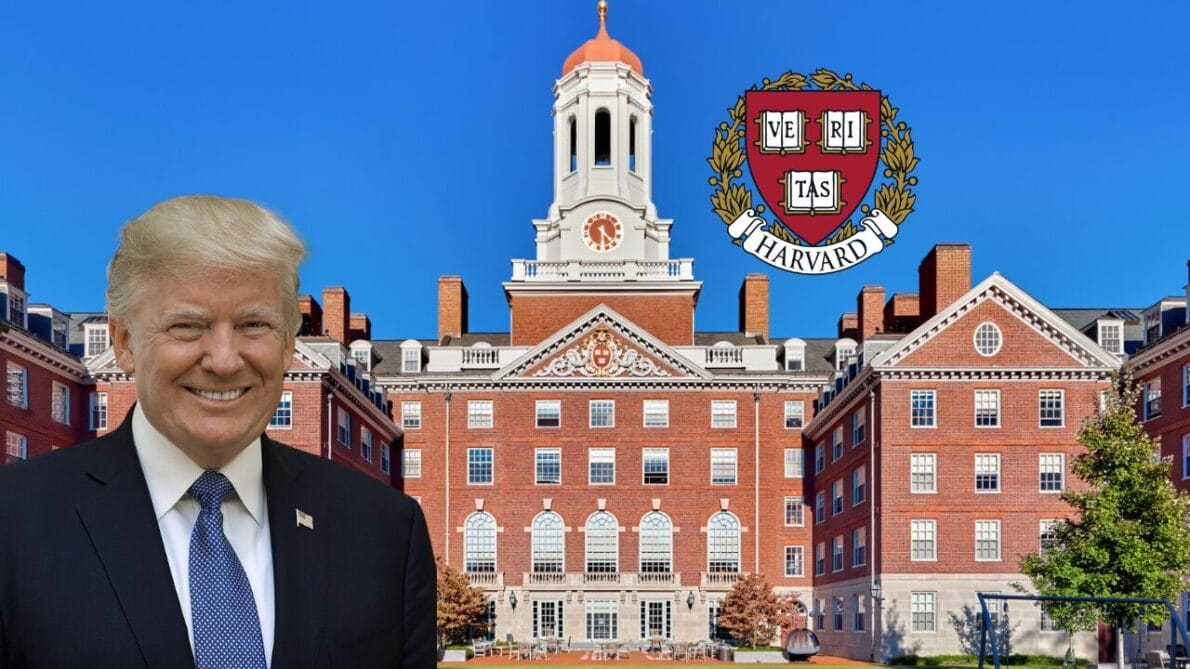
Harvard Sues Trump Administration to Prevent US$ 2.2 Billion Cut, Defending Its Academic Autonomy Against Political and Ideological Pressures.
In an unprecedented and forceful move, Harvard University filed a lawsuit against the United States government on Monday (21), after receiving direct threats from President Donald Trump involving the freezing of more than US$ 2.2 billion (about R$ 13 billion) in federal grants.
The lawsuit marks one of the most critical moments in the relationship between the Trump administration and academic institutions, with Harvard taking the lead in defending academic freedom and becoming the first to openly confront the White House’s demands.
According to the university, the suspension of funding represents an attempt at intimidation and ideological imposition, putting at risk not only academic autonomy but also thousands of scientific and medical research projects funded by federal money.
-
Chinese aircraft carrier Liaoning conducts about 170 takeoffs and landings in the Western Pacific, but Japanese surveillance turns the training into a regional alert: Beijing denies specific targeting while Tokyo monitors the fleet that passed 590 km from Miyakojima, reigniting tension in Asia.

-
China did not like the decision by the U.S. to place BYD, Alibaba, and Baidu on a list linked to the Chinese military sector.

-
China imposes sanctions on the Philippine Defense chief, bans entry to Hong Kong and Macau, and turns criticisms over the South China Sea into a new diplomatic crisis that could bring Manila even closer to the US.
-
Somali referee was close to fulfilling his dream of officiating at the World Cup, was barred in the USA and returned home welcomed as a hero in Somalia




Harvard’s President, Alan Garber, stated that he would not accept any form of political pressure that interferes with the institution’s internal decisions, including its admissions policy, administrative structure, or areas of research.
Trump Administration Political Pressure Against Harvard
The crisis began with a letter sent by Donald Trump’s administration to Harvard University at the beginning of the month, demanding wide-ranging and immediate reforms in the institution’s leadership.
Moreover, the government demanded changes in admission policies, alleging ideological imbalances and a lack of alignment with values considered “patriotic.”
Hours after Harvard’s negative response to the demands, the federal government implemented the freezing of funds.
In public statements, Trump intensified attacks on the university, even threatening to revoke its tax exemption and accusing the institution of being a “political entity” that promotes “ideological terrorism.”
Harvard’s response was forceful.
“No government — regardless of which party is in power — should dictate what private universities can teach, who they can admit or hire, and what areas of study and research they can pursue,” declared Alan Garber, reinforcing Harvard’s commitment to the values of academic freedom.
The reaction to the attack did not come only from university leadership. Alumni, faculty, and members of the academic community mobilized in defense of the university.
A group of alumni sent a letter to the institution’s dean asking Harvard to legally contest all demands that violate constitutional principles and educational autonomy.
Institutional Support and Public Protests
Over the weekend, protests took to the streets of Cambridge, gathering students, faculty, and local residents in support of Harvard University.
Additionally, the American Association of University Professors (AAUP) filed its own lawsuit against the Trump administration, arguing that the funding cuts were made without proper notification to Congress and the university, in violation of legal procedures.
“These broad and, at the same time, undefined demands are not corrective measures aimed at addressing any violation of federal law. Instead, they clearly aim to impose on Harvard University the political views and ideological preferences of the Trump administration, compelling the university to punish speech that the government disapproves,” state the authors of the lawsuit filed by the AAUP.
Harvard Faces Shared Fate with Other Ivy League Universities
The case of Harvard is not isolated. Other renowned institutions, such as the universities of Pennsylvania, Brown, Princeton, and Columbia, also received similar letters with threats of billion-dollar cuts. Columbia University, in fact, has already complied with some of the demands following direct pressure from the White House.
However, Harvard stands out as the first to litigate the confrontation, turning the episode into a symbol of resistance to the Trump administration’s attempt to reshape American higher education according to ideological guidelines.
Implications for the Future of Higher Education in the US
The battle between Harvard and Donald Trump raises profound questions about the future of education in the United States.
The use of federal funds as a tool for political control sets a dangerous precedent, according to experts in educational law.
Harvard’s initiative may, therefore, influence other universities to follow the same path and defend their constitutional principles in court.
Anurima Bhargava, a Harvard alumna and one of the leaders of the movement supporting the university, summarizes the sentiment of many:
“Today, Harvard defended the integrity, values, and freedoms that underpin higher education. Harvard reminded the world that learning, innovation, and transformative growth do not bend to intimidation and authoritarian whims.”
With information from g1







Be the first to react!