Portuguese
  Spanish


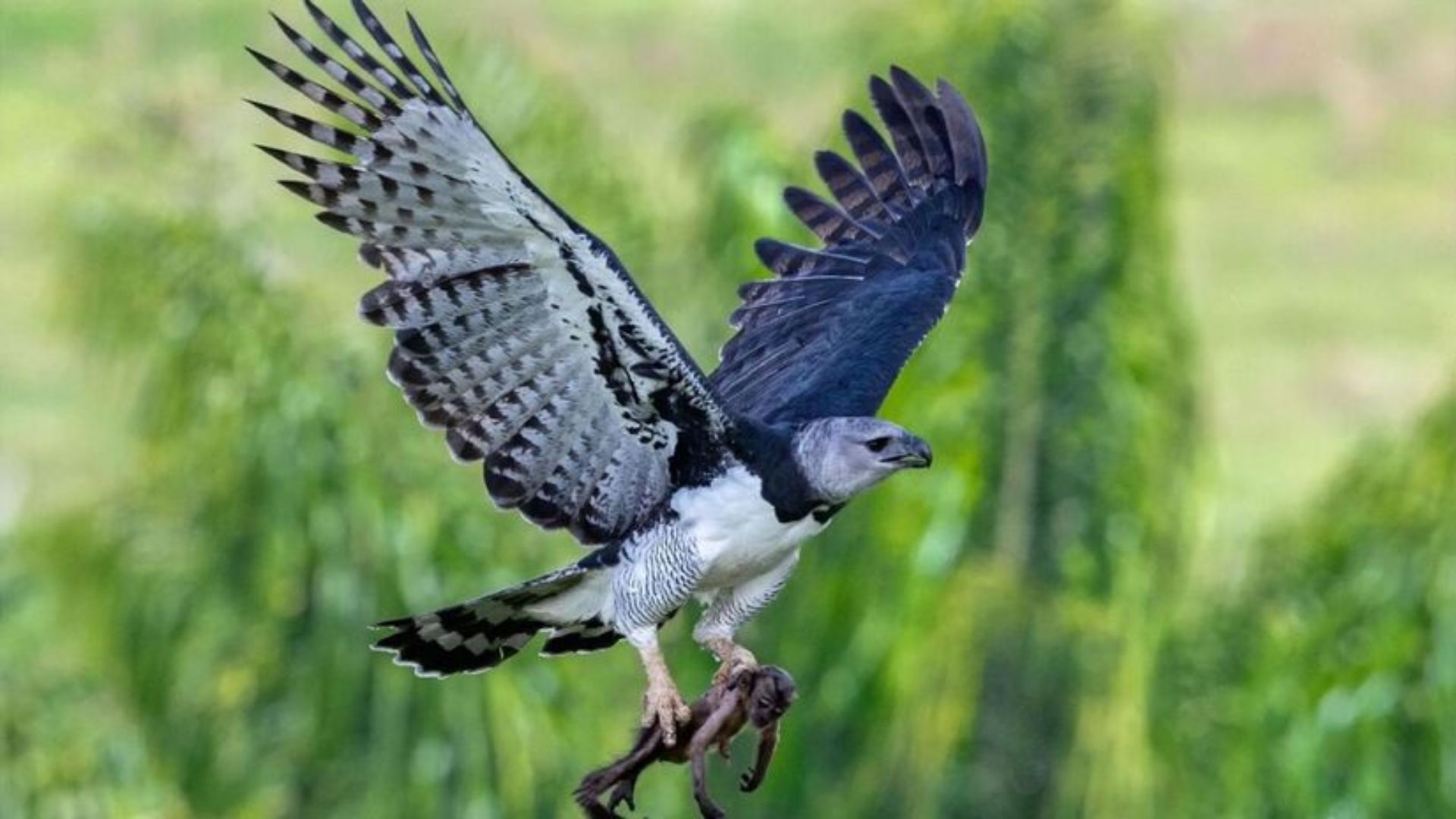


Rare Record of an Eagle Symbol of Conservation Reignites Debates About Forest Connectivity, Habitat Protection, and Challenges for Top Species in Areas Pressured by Deforestation in South America, with Special Attention to the Atlantic Forest and Its Remnants.
The recent sighting of a Harpy Eagle (Harpia harpyja) in the jungle of Misiones, in northeast Argentina, has once again highlighted the situation of large forest predators in South America and the role of conserving continuous areas of native forest.
After a long period without consistent confirmations of the species in the country, the documentation of a young individual is being analyzed by researchers as an indication that there are still patches of forest capable of supporting the bird, which relies on preserved environments to hunt, move, and breed.
The relevance of the record goes beyond the reappearance of one of the largest birds of prey in the world.
-
Award-Winning Korean Electric Scooter Concept Folds to Briefcase Size, Eases Transport Challenges

-
YouTuber Discovers Surreal Collection in 400-Year-Old Italian Fortress Near Florence: 419 Anvils, Giant Walruses, Ancient Church, and WWII Tunnels

-
Creative Uses for Toilet Paper Rolls That Will Change Your Perspective
-
Crab Trapped in Plastic Bottle for 62 Days Near Okinawa Highlights Little-Known Impact of Marine Pollution on Small Animals


According to conservation experts, the presence of the Harpy Eagle is directly associated with connectivity between forest fragments.
In landscapes heavily fragmented by pastures, crops, and infrastructure, species with large territorial requirements tend to disappear first, and the Harpy Eagle is among the most sensitive to habitat loss.
Sighting of the Harpy Eagle in Misiones and Environmental Implications

The confirmation of the animal in Misiones occurred in the context of field activities aimed at wildlife monitoring.
These efforts often employ different detection strategies, such as camera traps and other tracking techniques in areas considered priorities for conservation.
According to researchers working in the region, the fact that it is a young individual is being closely monitored because it helps assess whether the species merely passed through the area or if conditions exist for it to stay, including potential breeding nearby.
The scientific interest is also explained by the location of the sighting.
Misiones concentrates one of the main remnants of the interior Atlantic Forest, a biome that suffered significant reduction throughout the last century and is now presented in a fragmented manner.
Still, the province maintains relevant blocks of subtropical forest, making each occurrence of rare species treated as strategic information to guide public policies, enforcement, and restoration efforts.
In situations like this, confirmed records often trigger practical measures.
Among them are the expansion of field surveys, the reinforcement of monitoring in sensitive areas, and the mapping of potential use zones for the species.
Technicians also prioritize identifying locations that can be used for nesting, aiming to protect them before they undergo changes.
Top Predator and Umbrella Species in Forest Conservation

The Harpy Eagle occupies the top of the food chain in tropical and subtropical forests.
In practice, this means that its survival depends on a set of environmental factors, such as prey availability, presence of large trees, and continuity of forest cover.
Researchers explain that the disappearance of such predators often reflects broader processes of environmental degradation, which affect various other species.
For this reason, the bird is often classified in conservation projects as an “umbrella species”.
The logic, adopted by specialists, is that protecting the space needed for a species with such high demands tends to benefit a wide variety of organisms that share the same habitat, including plants and animals that are less visible to the public but essential for the functioning of the ecosystem.
Another aspect highlighted by studies and research programs is the vulnerability associated with the reproductive cycle of the Harpy Eagle.
The species exhibits slow reproduction, which hinders the recovery of populations after local losses.
Conservation initiatives in Brazil and other countries in the region indicate that maintaining large areas of well-preserved forest, with tall and mature trees, is a determining factor for reproductive success.
Yabotí Biosphere Reserve and Biodiversity Corridors

Among the areas frequently mentioned in conservation debates in Misiones is the Yabotí Biosphere Reserve, recognized by UNESCO.
The territory encompasses extensive areas of subtropical forest, hosts high biodiversity associated with the Atlantic Forest, and includes human communities within its limits, according to the model adopted for reserves of this type.
Environmental planning specialists highlight that the importance of Yabotí goes beyond its international status.
Biosphere reserves are considered strategic for maintaining ecological corridors and reducing the isolation of animal populations that need to move through large areas.
For top species like the Harpy Eagle, connectivity between forest fragments is seen as important as the existence of formally protected areas.
This challenge, however, is not limited to areas under strict protection.
Public information about the reserve indicates the presence of zones with different levels of use and also private properties within it, a common arrangement in large conservation mosaics.
According to specialists, this context requires coordination between public agencies, landowners, and local communities to ensure adequate management and effective enforcement.
Global Situation of the Harpy Eagle and Protection Initiatives

In international conservation assessments, the Harpy Eagle is classified as Vulnerable, a category that indicates a high risk of extinction in the medium term if current pressures persist.
These surveys indicate a population decline trend, primarily associated with habitat loss and fragmentation in its occurrence area.
In Brazil, research and conservation programs, such as those linked to the Harpia Project, describe the species as dependent on large forested areas and maintain ongoing monitoring and data collection actions.
Institutional communications from the project also report on monitoring nests and documenting chicks in monitored areas, information used to guide protection strategies.
Despite differences between biomes and regions, researchers studying the species indicate a recurring pattern.
Where forests lose height, diversity, and continuity, the Harpy Eagle faces more obstacles to survival.
The bird requires large trees for nesting, which are precisely those most impacted by logging and land conversion for agricultural or urban uses.
Disclosure of Rare Records and Associated Risks
Public interest in rare records tends to grow rapidly, especially on social media.
Conservation specialists assess that this visibility can help increase support for projects and raise awareness about the importance of environmental protection.
At the same time, they warn of risks associated with excessive disclosure of sensitive information.
In cases involving endangered species, exposing details that allow individuals to be located can have negative impacts, such as increased human circulation in fragile areas or encouraging illegal hunting and trapping.
For this reason, researchers often recommend caution in disclosing coordinates and precise location data.
In this context, technical teams advise the public to contribute by valuing conservation and scientific work, without turning rare records into tourist attractions.
If the reappearance of the Harpy Eagle in Misiones indicates that there are still forest corridors capable of sustaining it, the pressing question is whether these remnants will be protected and connected in time to ensure the species’ survival in the region.