






 Portuguese
  Spanish


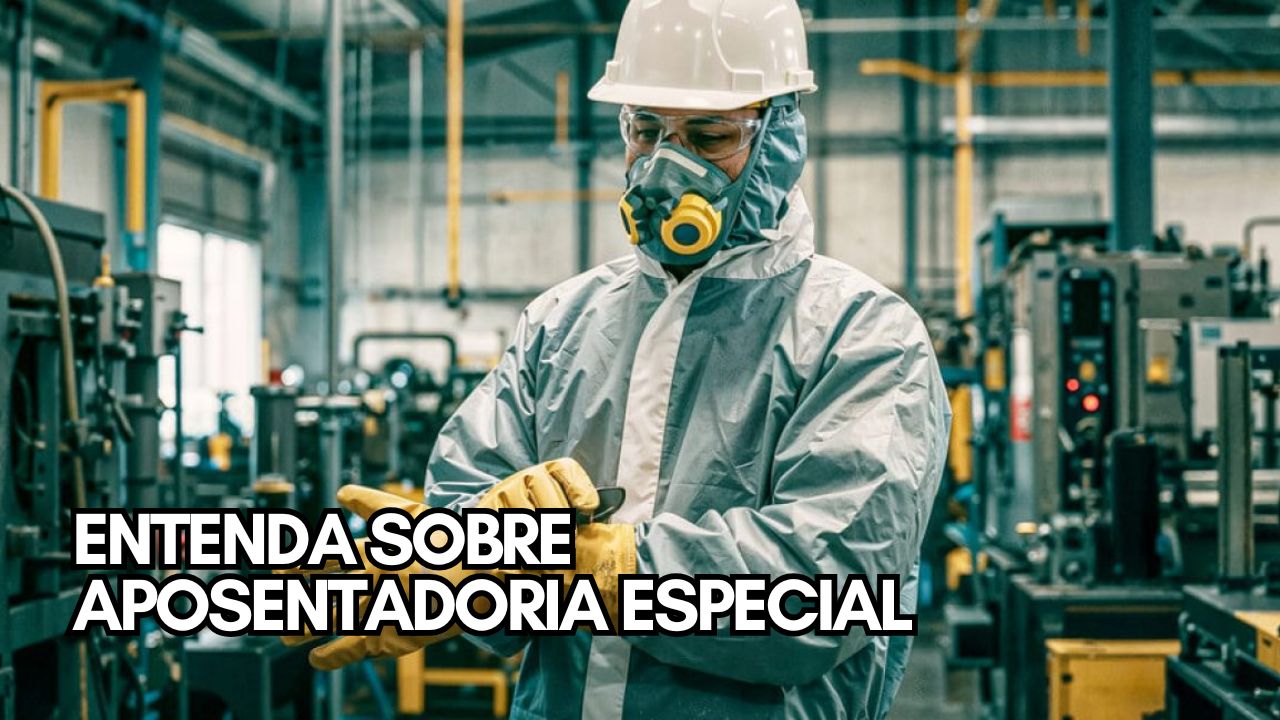


Understand How Special Retirement in INSS Works for Those Exposed to Harmful Agents, with Less Contribution Time and New Minimum Age Rules.
Special retirement is a type of INSS benefit created to protect the worker who spends their whole life exposed to risks or harmful agents to health. With it, those who prove activity in a harmful environment can retire earlier, with 15, 20, or 25 years of contribution, instead of the common rules applied to most insured individuals.
This form of special retirement works similarly to what happens with teachers and police officers, but is aimed at those working in conditions that may cause long-term health damage, such as underground miners, rock drill operators in subterranean rocks, rock drillers in caves, among others.
To be eligible, it is not enough to have worked in a dangerous or unhealthy place once in a while. The exposure must be permanent, uninterrupted, and technically proven.
-
Seniors Over 60 Can Travel for Free Across Brazil: Elderly Statute Ensures Two Free Bus Seats and 50% Discount When Full for Low-Income Passengers

-
Detran RJ starts requiring a toxicological test for those obtaining their first driver’s license in the car and motorcycle category starting June 29; see who will be affected.

-
Florida takes TikTok to court and accuses the Chinese giant ByteDance of ignoring the law that bars minors under 14, while parents and authorities demand more protection for children on social networks.
-
Chamber approves constitutional amendment reducing the age of criminal responsibility from 18 to 16 years; what now?




What Is Special Retirement
Special retirement is a benefit from INSS aimed at the insured who regularly and permanently works exposed to harmful agents to health or physical integrity.
The goal is to recognize that this worker endures greater wear over their working life and, therefore, can retire with less contribution time. Depending on the type and intensity of risk, the minimum required time for special retirement can be:
15 years of contribution
20 years of contribution
25 years of contribution
This reduced time is not chosen by the worker. It is defined based on the type of activity and the level of risk provided for in the pension legislation for that function.
Who Can Be Entitled to Special Retirement
Insured individuals of INSS who can demonstrate that they worked for years in an environment with permanent exposure to harmful agents may have the right to special retirement. This exposure can be:
- From intense noise
- From extreme heat or cold
- From chemical agents
- From excessive humidity
- From hazardous or professional risk in certain activities
Among the mentioned examples are underground miners, stone crushers, rock loaders, rock drill operators, and rock drillers in caves.
The key here is the word prove. Without technical proof, the INSS does not recognize special retirement, even if the worker has indeed faced harmful conditions.
The Role of PPP in Special Retirement
This proof is mainly done through the Previdentiary Professional Profile (PPP), an obligatory document provided by the employer.
It is the PPP that records:
- The period during which the insured worked at the company
- What harmful agents were present in the work environment
- The intensity and frequency of that exposure
- The conditions under which the activity was performed
Without a well-filled PPP, the request for special retirement is usually denied, even for clearly risky activities. Therefore, it is essential for the worker to:
- Request the PPP whenever they leave a company
- Check if the information about harmful agents and function is consistent with reality
- Keep the document carefully for use at the time of the benefit request
Grace Period and Minimum Contribution Time
In addition to exposure to harmful agents, special retirement requires compliance with the minimum grace period of 180 months of contribution to INSS, just like in other types of retirement.
In practice, the insured needs to observe two criteria at the same time:
- Have at least 180 contributions to INSS
- Complete 15, 20, or 25 years of special activity time, depending on the type of risk of the function performed
This special time is not just the total time of signed work, but rather the time in which the worker was actually exposed to harmful agents, proven by the PPP and other technical documents.
What Changed in Special Retirement with the Pension Reform
Constitutional Amendment No. 103, of 2019, known as the pension reform, significantly changed the conditions for special retirement.
Before the reform, it was enough to meet the minimum time of 15, 20, or 25 years of special activity to be entitled to the benefit, without the requirement of a minimum age.
With the reform, new conditions came into effect for those who had not yet completed all the requirements by the cutoff date (11/13/2019). Now, to retire with special retirement, it is necessary to:
- Fulfill the grace period of 180 months
- Prove the time of exposure to harmful agents
- Reach the minimum age, which varies according to the time of special activity:
- 15 years of special activity: 55 years of age
- 20 years of special activity: 50 years of age
- 25 years of special activity: 60 years of age
That is, special retirement is no longer just based on contribution time and now combines exposure time with minimum age.
Transition Rule by Points
For those who were already working exposed to harmful agents, but had not completed the requirements before the reform, a transition rule based on points was created.
Under this rule, the insured needs to add:
- Age
- Total contribution time
- Time of effective exposure to harmful agents
Each group needs to reach a minimum score, according to the special exposure time:
- 15 years of exposure: 66 points
- 20 years of exposure: 76 points
- 25 years of exposure: 86 points
Thus, even without reaching the minimum age of the new definitive rules, those who were in special activities before the reform can retire with special retirement if they reach the required score, provided they prove grace period, contribution, and harmful exposure.
How to Request Special Retirement in INSS
The request for special retirement is made directly to INSS, through digital channels or by Central 135. For this, the insured should pay attention to some points:
- Gather all the PPPs from the companies they worked for exposed to harmful agents
- Check if the exposure periods are correctly listed in the document
- Organize other reports and evidence related to the work environment, when available
- Verify if they meet the grace period of 180 months
- Calculate the time of special activity and, if applicable, the minimum score of the transition rule
The better documented the special retirement request is, the greater the chance of the benefit being granted without delays or rejections. In case of technical doubt, it is possible to seek specific guidance from professionals specialized in pension law.
For official and updated information on special retirement, the indicated channel is INSS itself, whether through the website, app, or Central 135.
Finally, here’s a question for you to reflect on and comment: Have you ever worked or do you currently work in an environment exposed to risks, and do you believe you may be entitled to special retirement?


Esses bostas são piores que os criminosos so ferram o trabalhador tanta reforma e a reforma política não fazem.
Sou marítimo e com as mudanças das regras, fomos prejudicados. A lei que amparava os marítimos simplesmente foi deixada de lado. E os riscos? Ainda permanecem, e pior! Antes uma unidade tinha 200 metros três pisos, hoje uma unidade offshore tem 300 metros em média com 6 andares, pisos… Escadas, ruidos, vapores, gases e até radiação, isso mesmo, linhas e equipamentos radioativos, temos que fazer curso para manipular os resíduos específicos.
Mudem as regras!
Mas, mudem também o jogo.
O favorecimento deve ser para o colaborador exposto, não para ajustes fiscais e os políticos.
Trabalhei no serviço rural 9 anos 8 anos recebi insalubridade, logo após 16 anos de agente comunitário de saúde recebi insalubridade