






 Portuguese
  Spanish
  3 min of reading
  0 comments


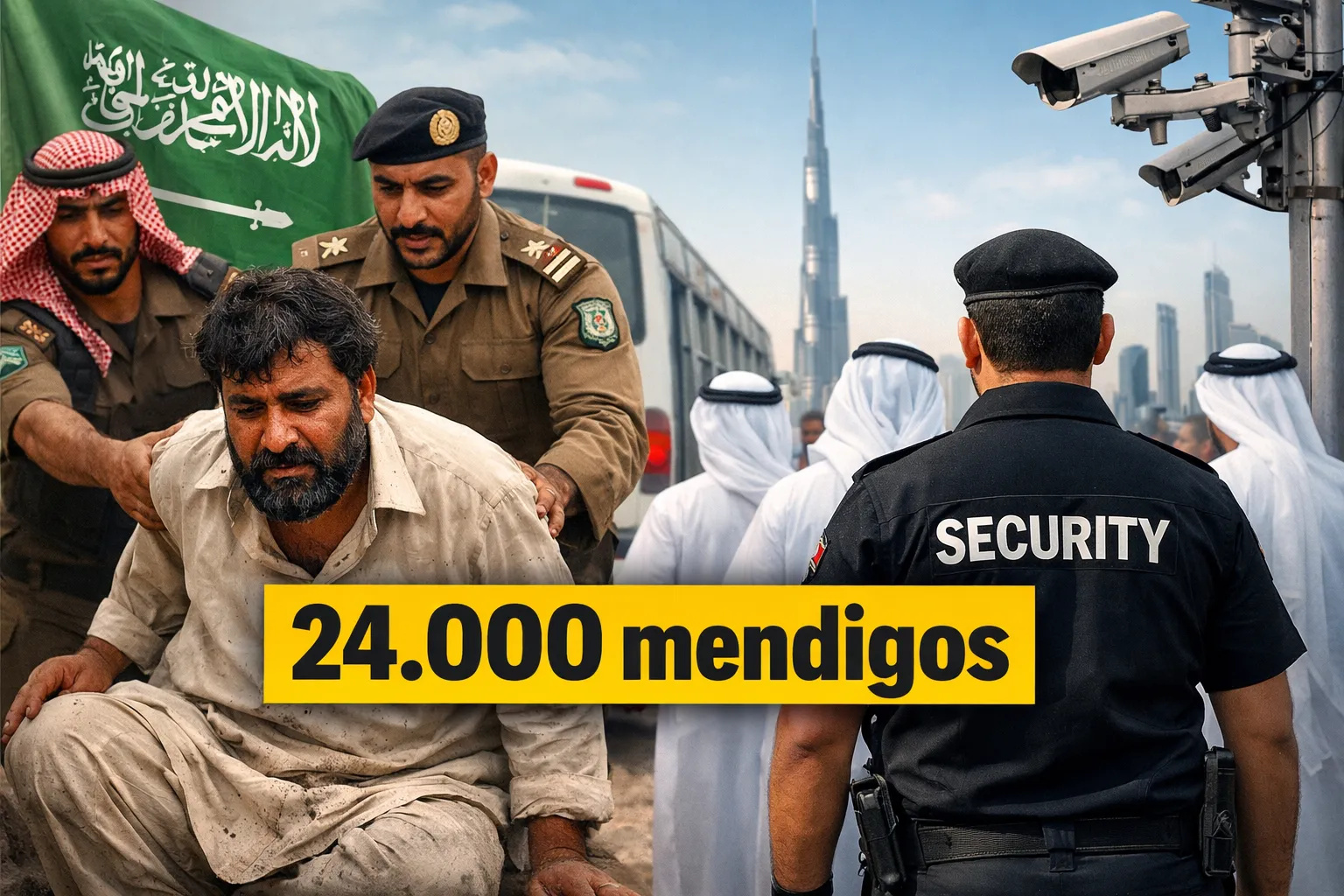
Measures In The Gulf Involve Deportation Of 24,000 Citizens In 2025, Visa Restrictions In The United Arab Emirates And Actions By Pakistan To Contain Organized Begging And Irregular Immigration.
Saudi Arabia deported 24,000 citizens from Pakistan in 2025 under accusations of begging, while the United Arab Emirates imposed visa restrictions on most Pakistanis, citing risks of criminal activities and direct impacts on the international reputation of the Asian country.
The measure reflects a coordinated hardening of immigration policies in the Gulf, driven by concerns over organized begging, irregular immigration, and the misuse of religious and tourist visas by Pakistani citizens in various international destinations.
According to official data, only Saudi Arabia carried out the deportation of 24,000 Pakistanis this year, alleging involvement in begging practices, reinforcing control measures initiated after diplomatic warnings made to Islamabad.
-
Son of a Chinese immigrant who sold tea in the countryside of São Paulo, Zhang Ye almost went bankrupt in 2021 and today, at 28 years old, claims to earn 1 million reais per day and has become the number 1 on TikTok Shop in Latin America.

-
Hidden in Shenzhen, a Chinese company claims to ship over 20,000 orders a day and promises to turn any dropshipping beginner into a respected brand for just 20 dollars.
-
Brazil has 8.4 million illiterates and more than half live in the Northeast, where 10.6% of people cannot read or write a simple note, compared to 2.3% in the Southeast, according to the Pnad Contínua Educação 2025 from IBGE.
-
A great economist predicted that by 2030 we would work only 15 hours a week, and John Maynard Keynes’s forecast is about to fail miserably almost 100 years later.




The United Arab Emirates adopted visa restrictions for most citizens of Pakistan, stating that some of the travelers would engage in criminal activities upon arrival, which led to increased immigration surveillance.
Official Data Indicate The Scale Of The Migration Problem
Information from the Federal Investigation Agency of Pakistan indicates that, in 2025, authorities disembarked 66,154 passengers at airports in the country in an attempt to dismantle organized begging networks and contain illegal immigration.
The Director General of the FIA, Riffat Mukhtar, stated that these networks have caused significant damage to Pakistan’s international reputation, emphasizing that the phenomenon is not limited to Gulf countries.
Mukhtar highlighted that similar patterns were identified in travels involving countries in Africa and Europe, as well as the misuse of tourist visas for destinations like Cambodia and Thailand, expanding the reach of the problem.
According to the official, in addition to the 24,000 deported by Saudi Arabia, Dubai expelled around 6,000 Pakistanis, while Azerbaijan deported approximately 2,500 citizens from the country for involvement in begging.
Saudi Pressure On Religious Visas And Pilgrimage
The issue had already caught the attention of Saudi authorities in 2024, when Riyadh formally urged Pakistan to prevent beggars from exploiting Umrah visas to travel to Mecca and Medina.
The Saudi Ministry of Religious Affairs warned that the inability to contain this practice could have adverse consequences for Pakistani pilgrims performing Umrah and Hajj, affecting future religious flows.
These alerts reinforced the link between immigration policies, control of religious visas, and concerns about Pakistan’s international image with host countries of Islamic pilgrimages.
Legal Analyses Point To Organized Structure Of Begging
Legal experts in Pakistan also analyzed the phenomenon. In an article published in Dawn in 2024, lawyer Rafia Zakaria described begging as a highly structured activity and not just a simple act of desperation.
“The begging industry in Pakistan is very organized and successful, to the point of deciding whether to export and expand to other countries,” wrote Zakaria while analyzing the operation of these networks.
She further stated that during Hajj, Pakistani beggars often position themselves around holy sites in Mecca and Medina, systematically approaching foreign pilgrims.
Pakistani Government Recognizes Reputational Impact
Government officials expressed similar concerns. In 2024, the Secretary for Overseas Pakistanis, Zeeshan Khanzada, stated that the vast majority of beggars detained in Middle Eastern countries were Pakistani citizens.
Khanzada estimated that around 90% of the begging cases recorded in these countries involved nationals of Pakistan, reinforcing the perception of a structural problem with diplomatic and migratory effects.
Complementary information indicates that the issue remains at the center of discussions between Islamabad and Gulf countries, with a direct impact on visas, deportations, and the future circulation of Pakistani workers and pilgrims.








-

2 people reacted to this.