






 Portuguese
  Spanish


Vision 2030 Boosts Revenues, Accelerates Megaprojects, and Tries to Free Saudi Arabia from Oil Dependency — but the Risks Are Enormous.
In the heart of the desert stands one of the boldest economic bets of the 21st century. Saudi Arabia, historically dependent on oil, has decided to challenge its own destiny with a quiet, yet billion-dollar plan that has already multiplied revenues and initiated the construction of futuristic cities that promise to change the face of the Middle East.
In 2024, the total revenue of the Saudi government reached US$ 336 billion, a 4% increase over the previous year, even amidst a scenario of price volatility for crude oil. The declared goal is clear: reduce oil dependency and create new sources of wealth. At the center of this transformation is the Vision 2030, an ambitious economic diversification plan that covers everything from luxury tourism to renewable energy.
Vision 2030 and the Saudi Economic Diversification Strategy
Launched in 2016 by Crown Prince Mohammed bin Salman, the Vision 2030 proposes nothing less than reinventing the Saudi economy. Among its goals are increasing non-oil revenues, expanding the private sector’s contribution to GDP, and transforming the country into a global hub for investment, tourism, and innovation.
-
U.S. City Builds Tiny Home Village on Water Company Land to House 136 Homeless People: Inside the Social Housing Units

-
Woman Turns Shipping Container into Home, Embraces Rural Life to Cut Monthly Expenses to Just Over $330
-
France Revamps 530 Social Housing Units with Large Balconies and Glass Facades Without Demolishing Existing Buildings

-
Facing high rent, couple transforms parents’ garage into a fully functional apartment, creating a complete home at a fraction of the market cost.




Within this strategic umbrella, the National Transformation Program (NTP) has set bold targets, such as raising non-oil revenues from 163 billion Saudi riyals to 600 billion and attracting massive private investments.
The logic is simple: while oil continues to guarantee revenue, the surplus is used to finance sectors that, in the future, will have to sustain the economy.
Rising Revenues, Expanding Clean Energy
The revenue of US$ 336 billion in 2024 did not come solely from oil. The renewable energy sector, although still incipient, grew by 300% in installed capacity, reaching about 2.8 GW, with a focus on newly connected solar plants and wind farms.
Still, the share of renewable sources in the Saudi energy matrix is only 1.4%, far below the global average of 41%.
This contrast reveals a challenge: the kingdom is rapidly advancing in the construction of green infrastructure, but the energy transition will be a long-term process. For now, oil remains the backbone, but diversification megaprojects are already beginning to change the economic landscape.
Futuristic Megaprojects: NEOM, The Line, and Sindalah
If Vision 2030 is the brain of the transformation, the megaprojects are its face. The most well-known is NEOM, a planned city-region in the northwest of the country, initially valued at US$ 500 billion, but which is now projected to cost close to US$ 1.5 trillion according to internal estimates.
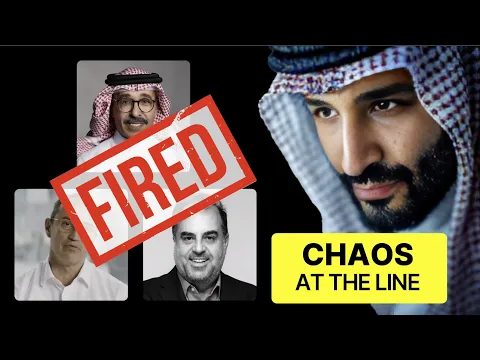

At the heart of NEOM is The Line, a 170 km linear city, with no cars, powered entirely by renewable energy and designed to accommodate up to 9 million residents. The promise is to revolutionize the concept of urbanism, concentrating services and transportation in a high-tech corridor with high-speed internal mobility.
Another highlight is Sindalah, a luxury island designed to host up to 2,400 visitors per day, featuring marinas, five-star hotels, and golf courses, generating about 3,500 jobs by 2028.

These projects are not just showcases of modernity: they are part of a plan to attract tourists, investors, and global talent, positioning Saudi Arabia as a hub for innovation and leisure in the Middle East.
The Tension Between Ambition and Financial Reality
Despite the optimistic discourse, the execution of the megaprojects faces significant obstacles. In 2025, the Saudi budget projects revenues of US$ 316 billion against expenditures of US$ 342 billion, indicating a deficit that pressures the pace of construction.
Internal sources reveal that some sections of NEOM have been reduced or postponed due to resource constraints.
The drop in oil prices in 2024-2025 raised a red flag: without the extra boost of higher crude prices, the capacity to simultaneously finance all megaprojects may be compromised. This forces the government to prioritize projects that yield quicker returns, such as Sindalah, over more complex and time-consuming initiatives.
Criticism and Risks Surrounding Vision 2030
The scale and speed of investments raise questions. Audits indicate that the cost of NEOM has multiplied by up to 20 times since its announcement, while the original scope of The Line has been scaled back to meet budgetary constraints.
There’s also the geopolitical factor: tensions in the region, energy market volatility, and the possibility of changes in global trade policy could affect the confidence of foreign investors. Not to mention the challenge of creating a new economy in a country whose business culture and workforce structure are still adapting to the openness to non-traditional sectors.
Energy and Geopolitics: A Strategic Chessboard
While investing in the future, Saudi Arabia maintains its role in the present as a leader of OPEC and the world’s top oil exporter.
This position guarantees influence in global energy negotiations, but also exposes the country to the pressures of energy transition and competition with emerging producers.
The Saudi strategy is twofold: to use the power of oil to finance the transition and, at the same time, to consolidate the image of a state capable of leading in cutting-edge sectors.
The success of this equation will depend not only on the execution of megaprojects but on the ability to balance the books and attract private capital sustainably.
The Future: Renewed Power or Mirage in the Desert?
The transformation of Saudi Arabia is one of the most ambitious economic experiments in contemporary times. With robust revenues, advances in the clean energy sector, and unprecedented-scale megaprojects, the country is attempting to rewrite its history beyond oil.
However, the tension between ambition and reality is constant. Budget cuts, delays, and scope adjustments already show that the path to 2030 will be more arduous than planned.
The question that remains is: will Saudi Arabia be able to deliver its post-oil future on time and at the promised scale, or will the futuristic cities risk turning into unfinished monuments to a dream too grand for the desert?








