






 Portuguese
  Spanish
  5 min of reading
  0 comments


Excavations in Woodstown reveal what could be Ireland’s largest Viking trading settlement, with artifacts, workshops, and links to Norway.
In June 2026, new excavations in Woodstown, County Waterford, in southeast Ireland, have once again placed the archaeological site at the center of research on the Viking presence in the country. According to RTÉ News, Irish and Norwegian archaeologists are working at the site to investigate a settlement that may have been the largest Viking trading center ever identified in Ireland.
According to Archaeology Magazine, Woodstown is located on the banks of the River Suir and shows evidence of occupation between the 9th and 10th centuries, a period when Viking groups transitioned from coastal raids to more structured trading settlements. The hypothesis is still treated with caution by researchers, but the remains found indicate a much larger and more complex community than a simple temporary camp.
Discovery during roadworks revealed a much larger Viking site than previously imagined
The modern significance of Woodstown began to gain dimension in 2003, when archaeological investigations associated with roadworks identified significant remains at the site. According to the Viking Woodstown project, the discovery was considered so important that the road planning had to be altered to preserve the area.
-
How much does a gym owner earn? The business may require from R$ 430,000 to R$ 1.87 million to open in Brazil, but real profit depends on loyal students, timely payments, high energy costs, rent, payroll, and strict cost control.

-
Goodbye to granite sinks? Stainless steel model conquers modern kitchens, reduces maintenance costs, facilitates daily cleaning, and becomes the preferred choice in new residential projects.

-
The man who led a famous footwear and clothing retailer, sold the company to Amazon, abandoned the mansion lifestyle, lived in a 22 m² trailer in Las Vegas, surrounded by alpacas, chickens, and an alternative community.
-
McDonald’s ends promotion that existed for 15 years, requires customers to use the app starting in July, and sparks boycott threats on social media in the United Kingdom




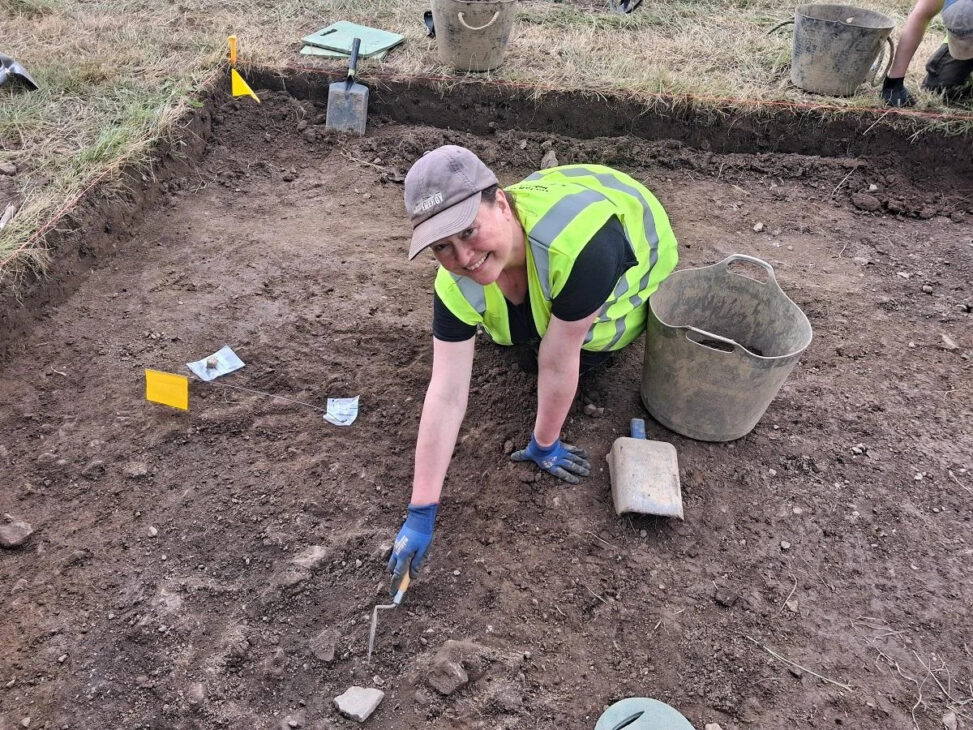
Since then, the site has been studied as one of the most significant recent Viking discoveries in Ireland. What initially might have seemed like a limited occupation revealed signs of habitation, trade, craftsmanship, and circulation of objects linked to the Scandinavian world.
This combination made Woodstown a special case. Unlike cities that have continuously grown over ancient layers, the site remained preserved underground, allowing archaeologists to investigate a Viking settlement with less subsequent urban interference.
460-meter trenches help to gauge the scale of the settlement
According to Archaeology Magazine, one of the most impressive structures identified in Woodstown is a set of ditches that extends for about 460 meters. This information helps explain why the site has come to be regarded as a possible large commercial settlement, rather than just a transit point.
The extent of the ditches indicates some level of spatial organization. In sites of this type, linear structures can be associated with boundaries, circulation areas, protection, access control, or internal organization of the occupation.
There is still no definitive confirmation that Woodstown is the largest Viking commercial settlement in Ireland. What exists, according to the sources consulted, is a strong hypothesis based on the scale of the structures, the quantity of artifacts, and the diversity of archaeological evidence.
Thousands of objects indicate trade, metallurgy, and daily life
According to Archaeology Magazine, about 4,000 artifacts have been associated with the Woodstown site. Among the materials mentioned are objects related to trade, metallurgy, navigation, domestic daily life, and the Scandinavian presence in the region.
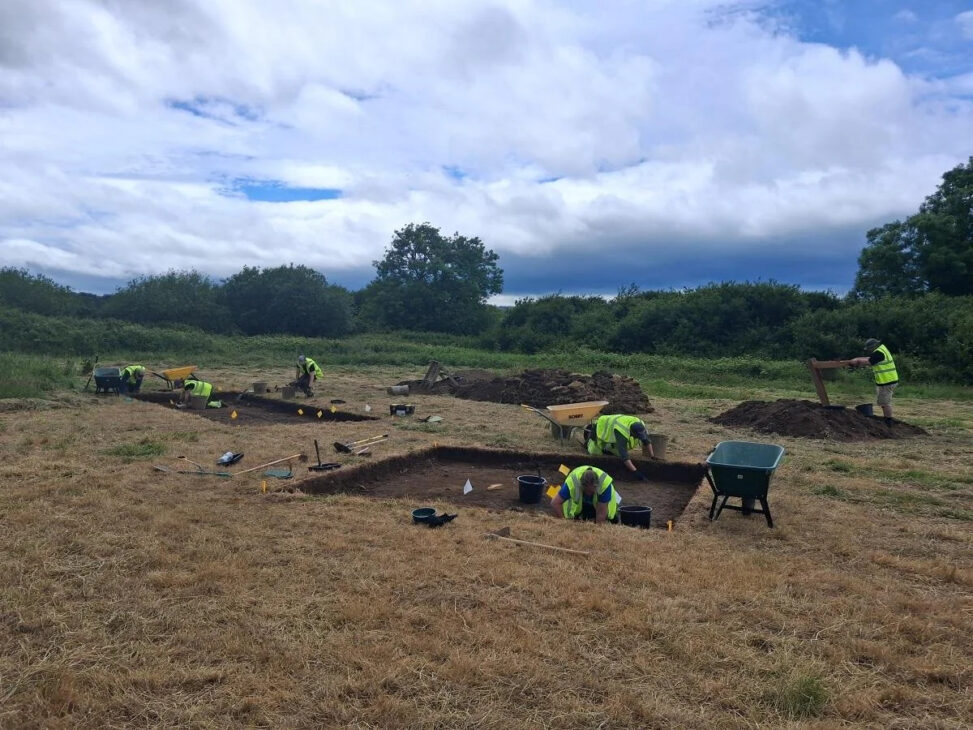
The variety of finds is one of the most important aspects of the excavation. Trade weights, metal fragments, tools, imported pieces, and workshop traces suggest that Woodstown functioned as a center of exchange and production, not just as a military stay location.
According to RTÉ News, current excavations also seek to better understand the connections between Ireland and Norway during the Viking Age. This link appears in objects, techniques, and materials that help researchers reconstruct contact routes in the North Atlantic.
Objects linked to Norway reinforce the Scandinavian connection of the site
The connection between Woodstown and Norway is one of the central points of recent research. According to RTÉ News, the excavation involves Irish and Norwegian teams interested in understanding how Viking communities established themselves and circulated between the two territories.
According to Archaeology Magazine, some findings point to materials and objects of Scandinavian origin, including evidence compatible with Norwegian connections. This type of evidence is essential because it helps differentiate a simple cultural influence from a more direct presence of groups coming from Scandinavia.
The location of the settlement also favors this interpretation. Situated near the River Suir, Woodstown would have access to river and maritime routes, a strategic condition for trade, movement, and communication with other points of the Viking world.
Woodstown may change the understanding of Viking presence in Ireland
For a long time, Viking presence in Ireland was mainly associated with well-known urban centers like Dublin and Waterford. Woodstown expands this scenario because it shows the possibility of a significant commercial settlement outside the more famous urban centers.


According to the Viking Woodstown project, the site has special importance precisely because it preserves evidence of an early phase of Viking presence in the region. This allows for investigation into how these groups organized themselves before the consolidation of larger port cities.
If current hypotheses are confirmed, Woodstown could occupy an even more relevant place in Irish archaeology. The site would help explain how trade, territorial occupation, craft production, and maritime contacts shaped Viking expansion in the country.
What still needs to be confirmed by archaeologists
Despite the strong potential of the discovery, classification as the “largest Viking commercial settlement in Ireland” still depends on broader scientific confirmation.
What is already documented is the existence of a large-scale site, with thousands of artifacts, extensive structures, and signs of connection with the Scandinavian world. What the new excavations seek to clarify is the real size of the occupation, its duration, its economic function, and its weight within the Viking network in Ireland.
This caution is important because it avoids turning an archaeological hypothesis into certainty before the complete publication of results. Even so, Woodstown already appears as one of the most important Viking sites in the country.
A settlement buried for over a thousand years returns to rewrite Irish history
Woodstown draws attention because it brings together all the elements of a high-impact archaeological discovery: strategic location, unusual preservation, thousands of artifacts, extensive structures, and direct connections with the Viking world.
More than a thousand years after the end of the occupation, the site once again reveals how trade, navigation, and Scandinavian presence transformed medieval Ireland. And, if the new excavations confirm the scale suggested by researchers, Woodstown may cease to be just an impressive discovery and become a central piece in the country’s Viking history.


Be the first to react!