






 Portuguese
  Spanish
  4 min of reading
  0 comments


The operation to move the superload is by the concessionaire CCR-Motiva, on BR-116, from km 218, in Guarulhos, to km 205, in Arujá, and begins with the removal of the guardrails. Temporary closures, detours, and slowdowns may occur, and the schedule may change according to the conditions of the day.
A superload of 342.9 tons, 54 meters in length, and 5.8 meters in height will block a section of the Via Dutra between Guarulhos and Arujá, in the Metropolitan Region of São Paulo, starting at 10 PM on June 16, heading towards Rio de Janeiro. The information comes from the concessionaire that manages the highway, CCR-Motiva, which will carry out a special operation to assist in transporting the excess load.
The movement promises to affect traffic on one of the main connections between São Paulo and Rio. According to information from the IG portal, the movement will occur on the northbound lane towards Rio de Janeiro, from kilometer 218 in Guarulhos to kilometer 205 in Arujá, and will begin with the removal of the road’s guardrails to enable the vehicle’s passage. In addition to the closure, the operation is expected to cause slowdowns in the section.
How and when the superload will block the Via Dutra
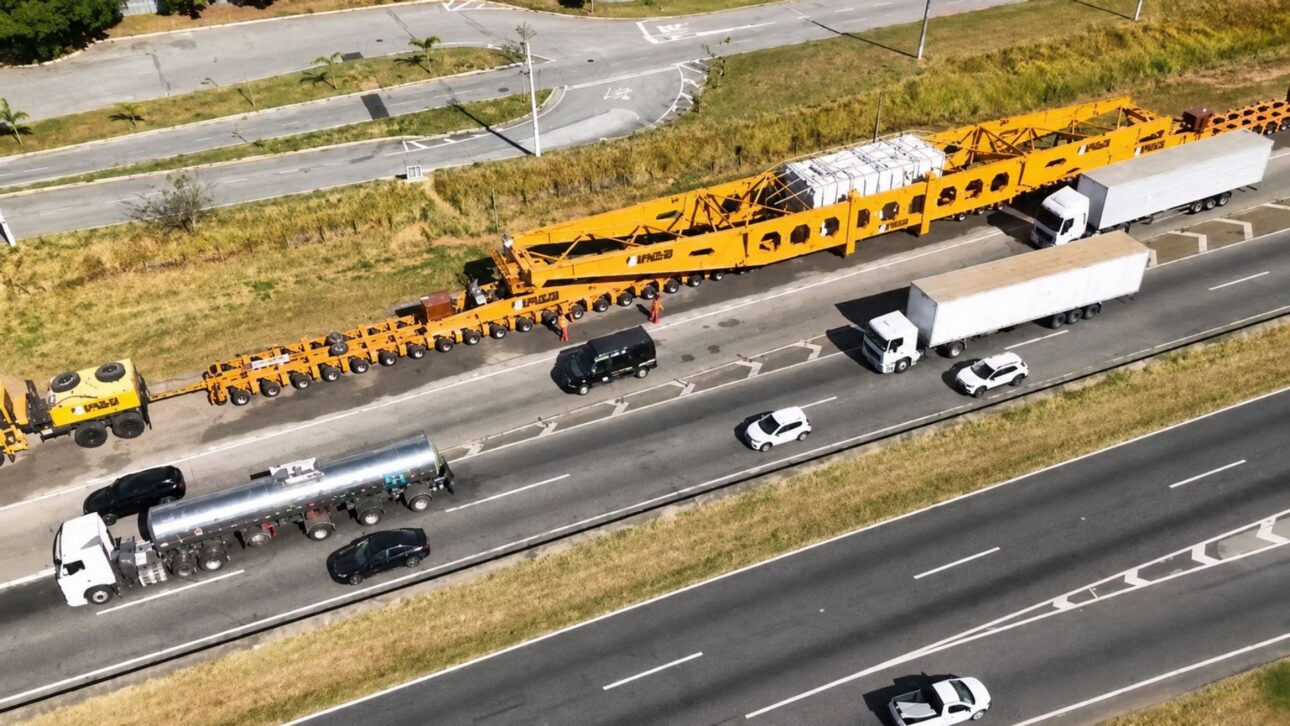
Load of over 800 tons resumes transport on Via Dutra
The closure has a defined section and schedule. The superload will block the Presidente Dutra Highway, BR-116, between Guarulhos and Arujá, in Greater São Paulo, starting at 10 PM on June 16. The movement will be made on the northbound lane towards Rio de Janeiro, from km 218 in Guarulhos to km 205 in Arujá.
-
The man who led a famous footwear and clothing retailer, sold the company to Amazon, abandoned the mansion lifestyle, lived in a 22 m² trailer in Las Vegas, surrounded by alpacas, chickens, and an alternative community.

-
McDonald’s ends promotion that existed for 15 years, requires customers to use the app starting in July, and sparks boycott threats on social media in the United Kingdom

-
Between four giant rocks and without electricity, a stone house built in 1974 in the Serras de Fafe in Portugal impresses by using natural granite as the structure of the dwelling.
-
Stone tower in Scotland is over 2,000 years old, about 13 meters high, was built without mortar on a remote island, and still intrigues archaeologists about its true function.




The starting point of the operation is the preparation of the road. Before the vehicle passes, teams will remove the road’s guardrails, the lateral protection structures, to make room for the transport set. It is already known that, besides the closure itself, the presence of a vehicle of this size tends to slow down traffic in the region during the action.
The dimensions of the 342.9-ton superload
The size of the convoy explains the need to close the lane. The superload is a transport set consisting of a trailer 54 meters long, 5.8 meters high, and 3.85 meters wide, with a total weight of 342.9 tons. These measurements are far above those of a regular truck, making it unfeasible to share the lane with normal traffic.
That’s why the transport is treated as an oversized load. Such a long, tall, and heavy volume requires a special operation, with the support of the concessionaire, to circulate safely. The height of 5.8 meters and the width of 3.85 meters weigh as much as the weight when planning the route, as they affect the passage through lanes, shoulders, and highway structures.
Temporary closures, detours, and slow traffic
Those hitting the road at the time should expect more than a single blockage. During the action, temporary closures, operational detours, and slow traffic may occur, resources used to ensure the safety of the road and the transport of the superload itself. The movement of a slow and giant vehicle on a busy highway at night usually requires alternating stops and releases.
The scheduled time is also not a guaranteed certainty. The schedule may change due to operational and weather conditions, meaning factors like rain or unforeseen events on the route may advance, delay, or reorganize the passage. Therefore, it is ideal to follow the local guidelines instead of relying on an exact time.
The guidelines from CCR-Motiva for drivers
The central recommendation is to double attention when crossing the section. The concessionaire advises drivers passing through the superload area to reduce speed, maintain a safe distance from other vehicles, and follow the signage and instructions from operational teams. These precautions are necessary because the operation mixes an unusual vehicle with normal traffic.
It is also advisable to plan the route with some leeway. Those needing to pass between Guarulhos and Arujá during the operation window should anticipate possible stops and detours and consider leaving early or seeking an alternative route. As the passage time may change according to conditions, the extra time margin helps avoid surprises on the road.
A 342.9-ton superload, 54 meters long and 5.8 meters high, will block the Via Dutra, BR-116, between Guarulhos and Arujá, in Greater São Paulo, from 10 PM on June 16, heading towards Rio de Janeiro.
The special operation by concessionaire CCR-Motiva, from km 218 to km 205, begins with the removal of the barriers and may bring temporary closures, detours, and slow traffic, with the schedule subject to change according to conditions. The guidance for those crossing the section is to reduce speed, maintain distance, and follow the teams’ signage.
And you, do you often take the Via Dutra at night and have you ever been stuck in a cargo operation like this? Do you think large transport vehicles should have even more restricted hours? Share your experience and exchange ideas with other drivers, respecting different viewpoints.







Be the first to react!