






 Portuguese
  Spanish
  4 min of reading
  0 comments


Stainless steel sink gains space in modern kitchens by combining economy, hygiene, and sophisticated look that challenges the reign of granite
The search for more functional, easy-to-clean environments aligned with contemporary decoration trends has driven a significant change in residential kitchen projects. In this scenario, stainless steel sinks and countertops have regained prominence, often surpassing traditional options in granite and other natural stones.
According to information published by the portal Diário do Litoral, in a report by Luna Almeida, the movement reflects a growing preference for materials that combine practicality, durability, and modern aesthetics. Stainless steel, present in professional kitchens for decades, has also regained value in Brazilian homes thanks to its versatility and low maintenance cost.
Besides the sophisticated look inspired by industrial and contemporary environments, the material offers important advantages related to hygiene and preservation, factors increasingly considered by consumers during renovations and constructions.
-
The man who led a famous footwear and clothing retailer, sold the company to Amazon, abandoned the mansion lifestyle, lived in a 22 m² trailer in Las Vegas, surrounded by alpacas, chickens, and an alternative community.

-
McDonald’s ends promotion that existed for 15 years, requires customers to use the app starting in July, and sparks boycott threats on social media in the United Kingdom

-
A superload of 342 tons, 54 meters in length, and 5.8 meters in height will close a section of Via Dutra between Guarulhos and Arujá on Tuesday night, heading towards Rio de Janeiro.
-
Between four giant rocks and without electricity, a stone house built in 1974 in the Serras de Fafe in Portugal impresses by using natural granite as the structure of the dwelling.




Why stainless steel has regained favor in residential projects
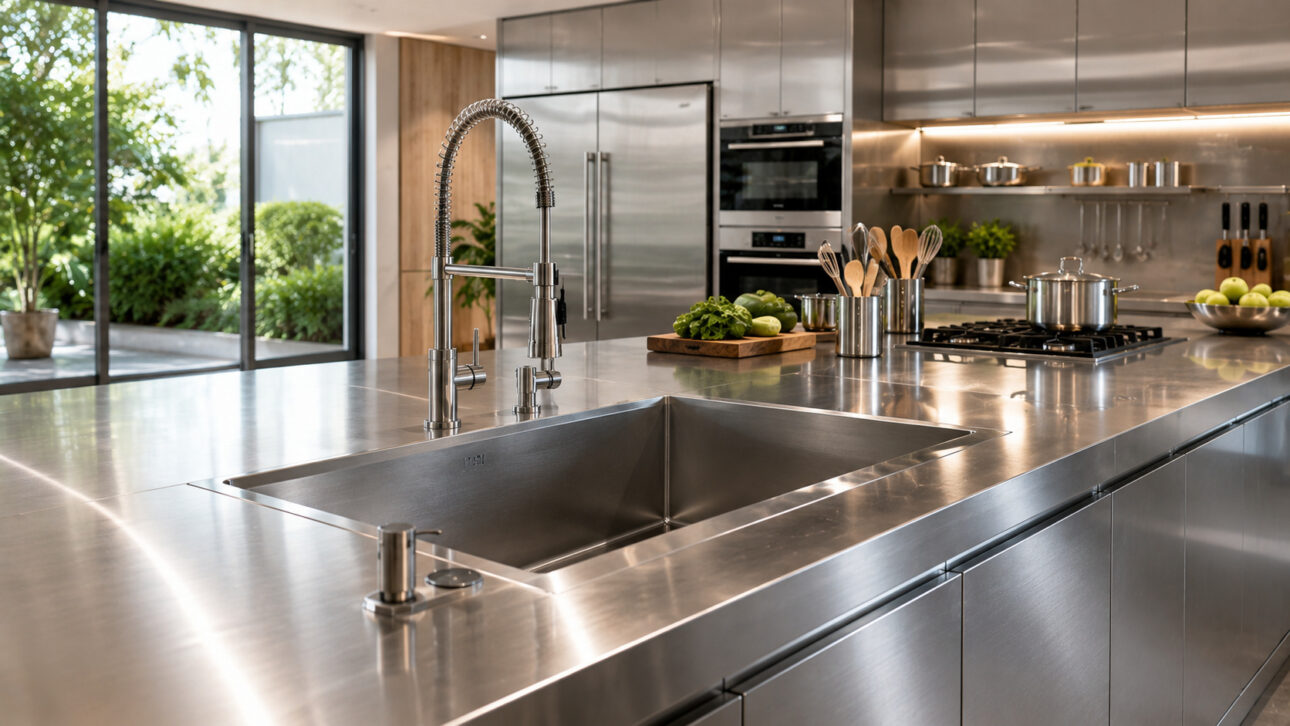
For many years, granite was considered synonymous with strength and elegance in kitchens. Its robust appearance and variety of colors made it one of the most popular choices among architects and homeowners.
However, the evolution of interior design concepts has brought new priorities. Today, besides appearance, consumers seek solutions that facilitate domestic routines and reduce the time spent on cleaning and maintenance.
In this context, stainless steel has drawn attention for having a completely smooth and non-porous surface. This characteristic prevents the absorption of liquids, grease, oil, and food residues that often end up causing permanent stains on natural stones.
While certain substances can compromise the appearance of granite over time, stainless steel preserves its original characteristics even after years of intense use. This difference has been decisive for those who want a functional kitchen without sacrificing aesthetics.
Another relevant aspect is the material’s compatibility with various decorative styles. Whether in minimalist, industrial, contemporary, or integrated kitchens, stainless steel offers an elegant finish that easily matches modern appliances and custom cabinets.
Superior hygiene and durability are among the greatest differentials
The sanitary issue is one of the main arguments explaining the growing preference for stainless steel. As it has no pores, the material significantly hinders the accumulation of dirt and reduces favorable conditions for the proliferation of bacteria and microorganisms.
For this reason, stainless steel is widely used in restaurants, hospitals, laboratories, and industrial kitchens, places where hygiene standards are extremely strict.
In homes, this same characteristic represents more safety in meal preparation and a lower risk of cross-contamination between foods.
Moreover, the resistance of stainless steel is impressive. The material withstands constant thermal variations, frequent contact with water, steam, and cleaning products, and resists impacts caused by heavy pots and utensils.
Unlike some natural stones, which can suffer cracks or fractures with sudden temperature changes, stainless steel maintains its structural integrity even under intense use.
This combination of mechanical resistance, corrosion protection, and ease of cleaning makes the investment a long-term solution for the kitchen.
Simple care helps preserve shine and appearance for many years
Despite its high durability, stainless steel requires some basic care to maintain its elegant appearance and characteristic shine.
Experts recommend that daily cleaning be done using neutral detergent and soft sponges. This simple routine is sufficient to remove common residues without compromising the surface finish.
On the other hand, abrasive materials should be avoided. The use of steel wool, metal brushes, or products containing chlorine can cause scratches and accelerate corrosion processes over time.
After cleaning, it is also advisable to rinse the surface well and dry it immediately with a clean, soft cloth. This procedure reduces the appearance of stains caused by mineral residues present in the water.
When small marks or loss of shine appear, simple household solutions can help. The occasional use of vinegar or specific stainless steel polishing products usually restores the original appearance without much difficulty.
Thus, with minimal maintenance and relatively simple care, stainless steel countertops and sinks can remain beautiful and functional for many years.
As consumers increasingly value convenience, hygiene, and efficiency, stainless steel consolidates its position as one of the most complete alternatives for modern kitchens, challenging the historical dominance of natural stones in the most used environment of the house.
Would you replace a granite sink with a stainless steel one to gain more convenience and ease of cleaning in daily life?





Be the first to react!