Portuguese
  Spanish


The problem bothers millions of Brazilians living in hard water regions, but the solution is simple, cheap, and already stored in most kitchens in the country
The shower loses its appeal when the water starts to come out weak, crooked, or dripping from just a few holes. The first reaction of those who experience this is usually the same: to think that the shower is broken and it’s time to replace the device. But most of the time, the problem is much simpler — and cheaper to solve — than it seems.
According to information published by the Katia Ribeiro website, the main culprit behind this annoyance is almost always limescale. The water that reaches Brazilian homes carries natural minerals, such as calcium and magnesium, and over time, these residues accumulate in the small holes of the showerhead. Gradually, a whitish crust forms there, closing the water passage until the jet loses strength altogether.
Why the shower clogs and why this is more common than it seems
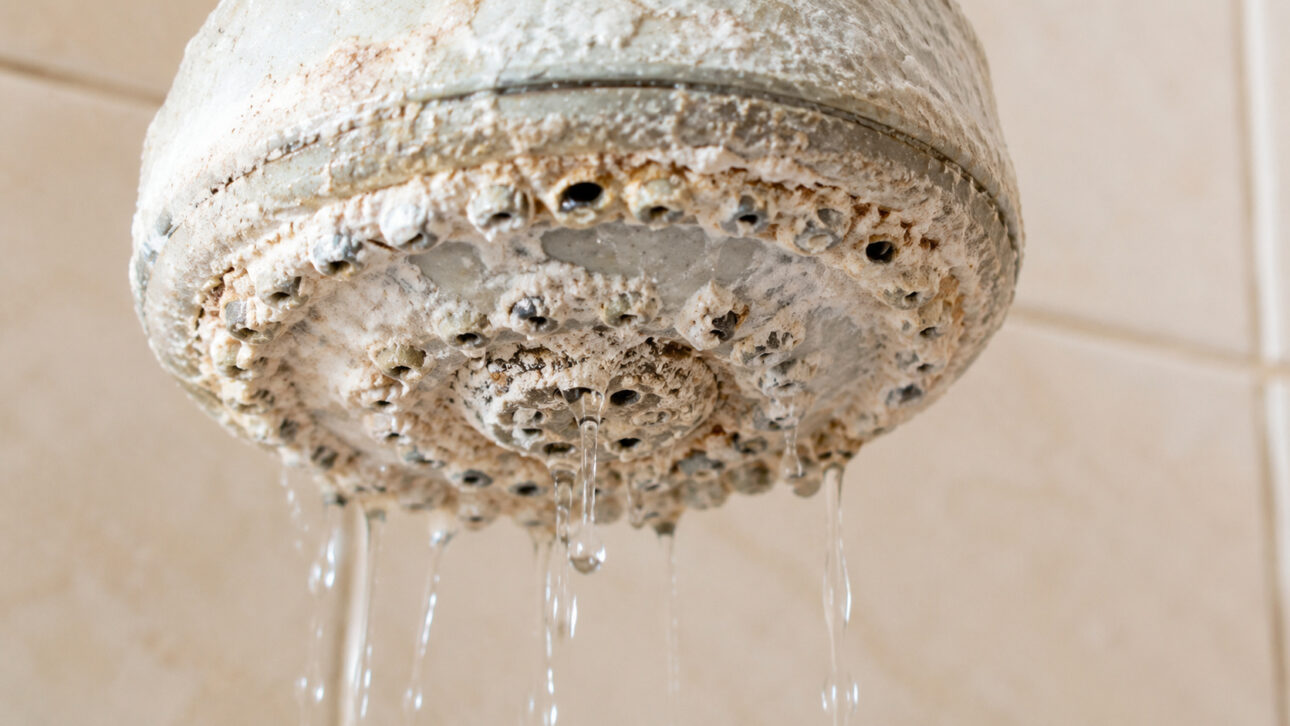
In this sense, the severe accumulation of mineral residues is not just an aesthetic problem. It reduces shower comfort and, in electric showers, can even accelerate the premature burning of the device’s internal resistance. This is why the jet starts to lose intensity, come out irregularly, or flow strongly from just a few holes, while others seem completely dry.
-
Award-Winning Korean Electric Scooter Concept Folds to Briefcase Size, Eases Transport Challenges

-
YouTuber Discovers Surreal Collection in 400-Year-Old Italian Fortress Near Florence: 419 Anvils, Giant Walruses, Ancient Church, and WWII Tunnels

-
Creative Uses for Toilet Paper Rolls That Will Change Your Perspective
-
Crab Trapped in Plastic Bottle for 62 Days Near Okinawa Highlights Little-Known Impact of Marine Pollution on Small Animals


This type of clogging, by the way, is even more frequent in regions with water considered “hard,” that is, with a higher concentration of dissolved minerals — a reality for much of the Brazilian municipalities. On the other hand, once limescale starts to accumulate, it tends to return with a certain regularity, making periodic cleaning an important step to prevent the problem from recurring month after month.
Before any intervention, however, there is a precaution that cannot be ignored: turning off the circuit breaker. In electric showers, handling the equipment with the power on poses a real risk of shock — and this is not an exaggeration by those who recommend the procedure. Ideally, turn off the specific circuit breaker for the shower or, if in doubt, the main circuit breaker of the house before touching any part of the device.
The ingredient that is already in your kitchen and solves the problem
While many people resort to expensive cleaning products or even consider calling a technician, the most efficient solution is often literally inside the kitchen cabinet: vinegar. This is because vinegar dissolves limescale on its own, without requiring much effort — it’s its natural acidity that does the job of loosening the accumulated crust in the holes.
If the shower model allows unscrewing the bottom part of the spreader, the cleaning tends to be even more thorough. With the power already turned off, simply remove this piece and soak it in a container with vinegar for about an hour. After this period, an old toothbrush helps to gently scrub each of the holes, releasing the remaining accumulated dirt. If any hole remains blocked even after brushing, a wooden toothpick or a thin needle is usually enough to clear the passage, without risking damaging the piece.
After that, just rinse well under running water, put the spreader back in place, and test its operation — in most cases, the jet comes out much stronger on the first try. It is also worth noting that many people often recommend mixing vinegar with baking soda during cleaning. Although this combination is quite popular and really works on more resistant crusts, it is important to understand that, in most situations, pure vinegar is already sufficient to solve the clogging — the baking soda comes in as reinforcement only when the limescale buildup is older or thicker.
How to prevent the problem from happening again
As limescale tends to accumulate again over time, the most efficient strategy is not just to solve the clogging when it appears, but to adopt a routine of preventive cleanings. A simple cleaning every few months is usually enough to keep the holes unclogged and maintain good water pressure for much longer.
However, a detail that almost no one mentions deserves attention: it is not recommended to overuse vinegar. Very frequent applications can, over time, accelerate the wear of metal finishes and some plastic parts of the shower. Therefore, it is ideal to perform the cleaning only when necessary, respecting the recommended soaking time, without overdoing the frequency of applications.
Finally, an important warning for those who carry out the entire process correctly and still notice that the jet remains weak in all points of the house — not just in the shower. In these cases, the cause is probably not related to the clogging of the spreader. It is advisable, then, to investigate the general pressure of the property’s hydraulic network or possible problems in the piping and, if the problem persists, seek the help of a professional specialized in hydraulic installations.