Portuguese
  Spanish


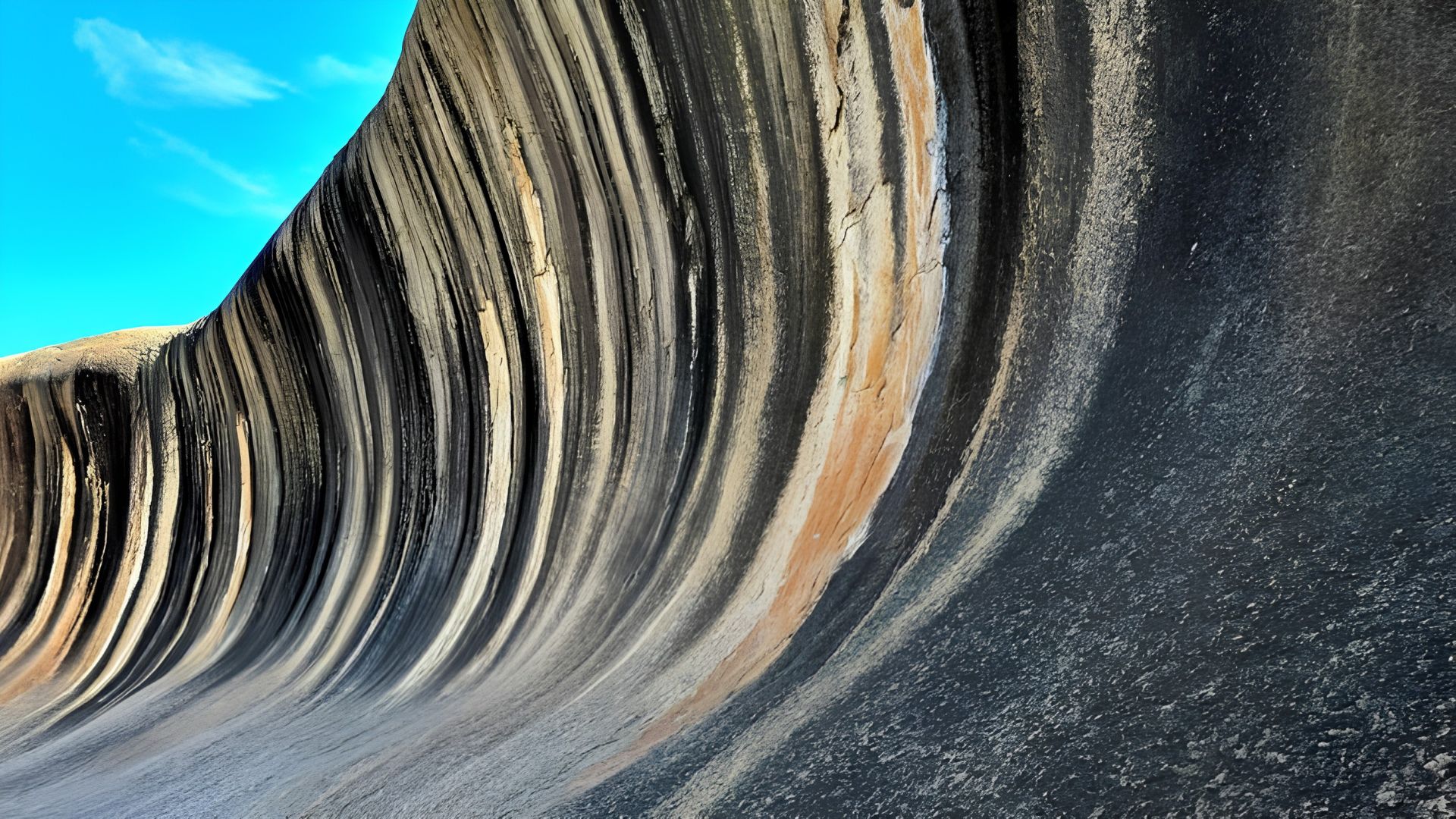

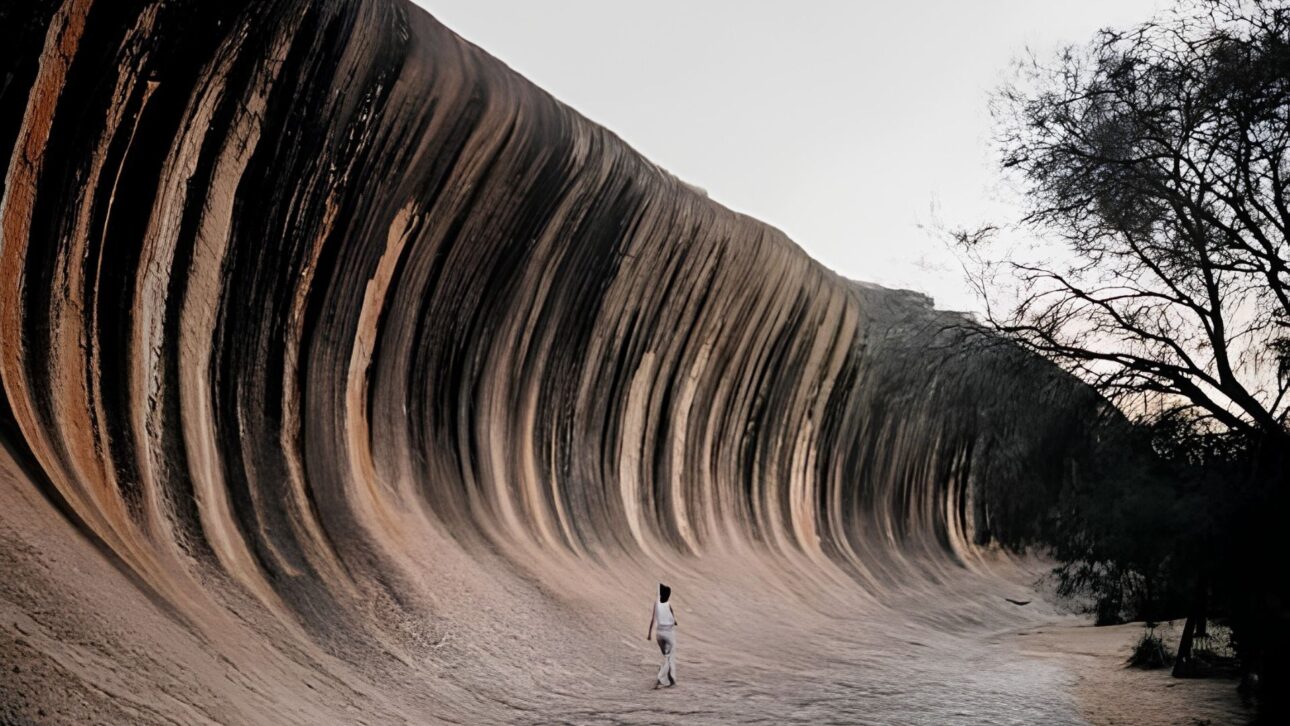
Wave Rock, in Australia, is a granite formation with 15 meters in height and 110 meters in length shaped by erosion.
In the interior of Western Australia, far from the ocean and surrounded by agricultural fields in the Wheatbelt region, there is a rock formation that seems to defy the surrounding landscape. The Wave Rock emerges as a huge stone wave about to break, but frozen in time.
Located near the town of Hyden, the structure is the northern face of a large granite outcrop called Hyden Rock. According to the Australian Museum, the formation is about 15 meters high and 110 meters long, with a curvature that resembles a giant ocean wave in the middle of the dry land.
15-meter granite wave became one of the most famous geological formations in Western Australia
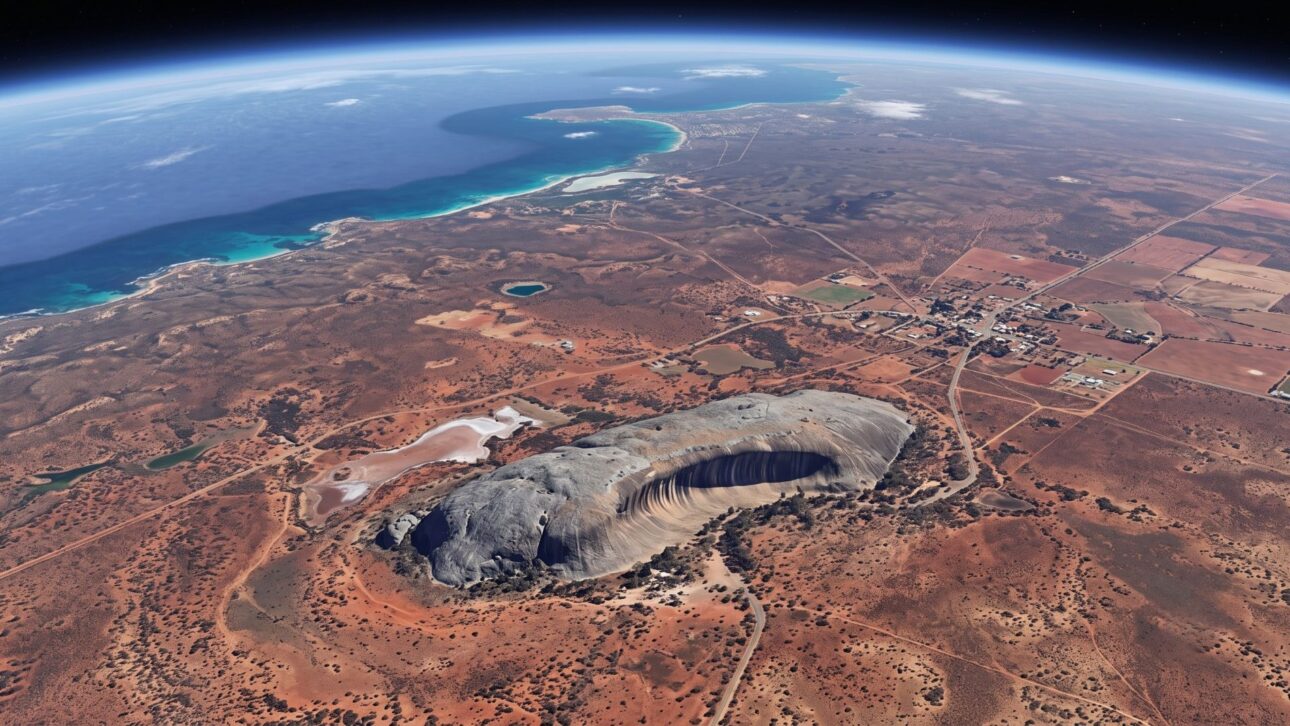
Wave Rock is located in the Wheatbelt region, approximately 350 kilometers southeast of Perth, according to the Australian Museum. The distance from the sea reinforces the visual impact of the formation: an ocean-like wave in the middle of the Australian interior.
-
How to Unclog Showerhead Holes Blocked by Limescale and Hard Water Without Replacing or Hiring a Technician

-
Award-Winning Korean Electric Scooter Concept Folds to Briefcase Size, Eases Transport Challenges

-
YouTuber Discovers Surreal Collection in 400-Year-Old Italian Fortress Near Florence: 419 Anvils, Giant Walruses, Ancient Church, and WWII Tunnels
-
Creative Uses for Toilet Paper Rolls That Will Change Your Perspective


According to the official tourism body of Western Australia, the rock was shaped by more than 2.7 billion years of wind and rainwater action, creating the curved granite face that today attracts visitors from various parts of the world.


The structure is also known as Katter Kich by indigenous peoples of the region, information highlighted in tourist materials that associate the site not only with geology but also with the cultural landscape of southwestern Australia.
Water erosion and chemical weathering sculpted the rock into the appearance of a wave about to break
The appearance of Wave Rock was not caused by a single force, but by a slow process of natural wear.
According to the Australian Museum, the curved face was rounded by weathering and water erosion, which carved out the base of the rock and left a large rounded overhang.
This type of erosion occurs when rainwater penetrates, flows, and reacts with rock minerals over long periods. The lower part tends to be worn away more intensely, creating the curvature that resembles a wave in motion.
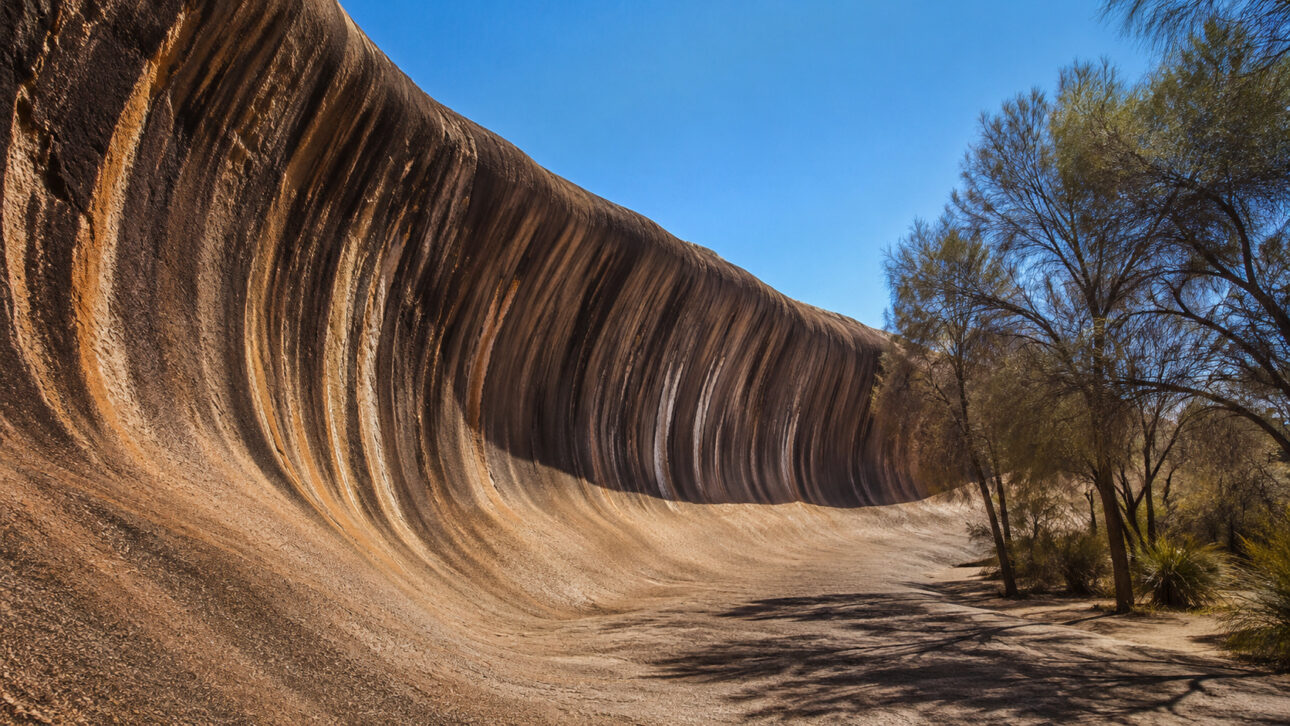
The local tourist portal of Hyden also attributes the rounded shape to weathering and water erosion, highlighting that the water flowing over the surface dissolves minerals and contributes to the colored stripes seen on the rock.
Red, yellow, and gray stripes transform the granite wall into a natural postcard
Besides the shape, the colors help make Wave Rock even more striking. According to the tourism material from Western Australia Tourism, the visible stripes on the rock wall are the result of the dissolution and deposition of minerals carried by water flowing over the granite during wetter periods.
These marks create shades ranging from red, orange, yellow, brown, and gray, reinforcing the impression of a petrified wave.
In 2023, ABC News Australia reported that residents and visitors noticed changes in the coloration of Wave Rock, associated with water flow and the ongoing interaction between minerals, rock surface, and the local environment.
The formation is part of Hyden Rock, an ancient granite remnant in the middle of the Wheatbelt
Wave Rock is not an isolated piece of stone. It is part of Hyden Rock, a large erosive granite remnant.
According to the Australian Museum, the “wave” corresponds to the northern face of this outcrop, slowly shaped by natural processes until it acquired its current form.

The local government of Kondinin reports that the rock is about 2.7 billion years old, placing the formation among the oldest geological records in the region.
This time scale helps explain why Wave Rock seems so improbable. What the visitor sees in a few minutes is the result of billions of years of exposure, weathering, infiltration, mineral reactions, and gradual removal of material.
The frozen wave in the desert shows how geology can create landscapes that seem artificial
Wave Rock impresses because it seems out of place in the environment. Instead of being in front of the sea, the “wave” appears in the dry interior of Western Australia, as if an ocean wall had been petrified far from the coast.
But the explanation is purely geological: ancient granite, rainwater, chemical weathering, erosion, and deep time.
The inevitable question remains: how many natural forms still seem impossible simply because they were sculpted on a time scale that human life can barely imagine?