Portuguese
  Spanish


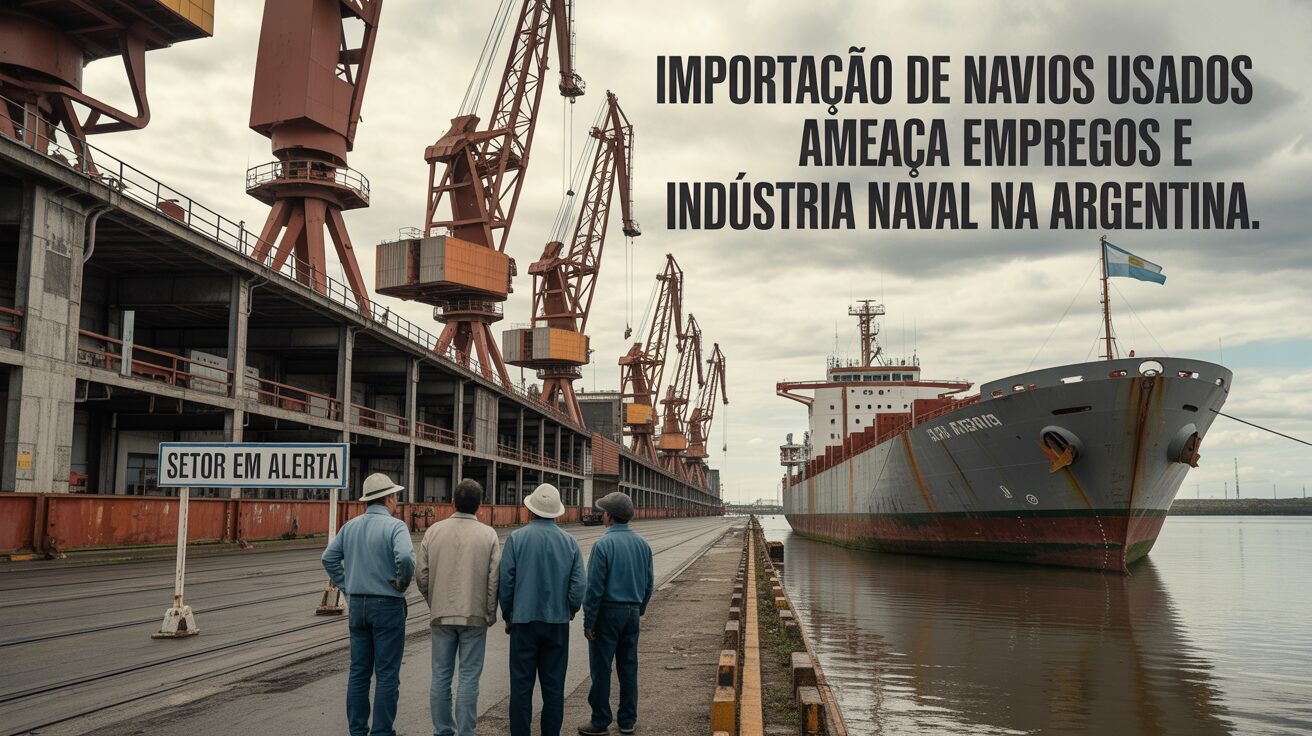

Buenos Aires Naval Industry Association Warns of Collapse Risk in Mar del Plata, with Production Chain Losses and Severe Employment Impacts
The possible release of imported used vessels in Argentina has raised alarm bells in one of the country’s most traditional industries: the naval sector. According to entrepreneurs and representatives of the production chain, the measure could represent a historic setback, with a real risk of mass unemployment, industrial dismantling, and weakening of strategic hubs like Mar del Plata.
Marcelo Domínguez, president of the Buenos Aires Naval Industry Association, states that the Argentinian federal government’s proposal threatens years of investments in technology, skilled workforce training, and competitiveness achieved by local shipyards. This information was disclosed in an interview with the newspaper El Marplatense.
“They are eliminating the system for controlling used goods, which was a fundamental tool to protect our industry. This is already written on the darkest page of Argentina’s naval industry history,” Domínguez stated.
ARTICLE CONTINUES BELOWSee also
The U.S. Navy Conducts Submarine Tests in Idaho Lake to Detect Underwater Noises Hidden by the Ocean

Nuclear Submarine USS Alexandria Retired After 35 Years, Having Completed Over 1 Million Miles in Missions

MODEC Introduces New Hull Design for FPSO Gato do Mato to Produce Up to 120,000 Barrels of Oil Per Day in Brazil’s Pre-Salt Region
This Massive 12-Meter, 21-Ton Underwater Drone Can Operate Autonomously for Up to Five Days


Mar del Plata May Become the Epicenter of the Crisis in Argentina
The port city of Mar del Plata, one of the largest naval and fishing bases in the country, is at risk of being severely affected if the measure is approved. Domínguez warns that, in addition to the shipyards, there are hundreds of small and medium enterprises (SMEs) dependent on the construction and maintenance chain of vessels.
“The naval industry is not made up solely of shipyards. We have carpenters, electricians, kitchen equipment suppliers, metallurgists, and many other segments that depend on naval activity. This entire network is at risk,” he emphasized.
According to him, even without exact numbers, the impact on employment would be significant, with risks of project halts and company closures.
“Perfect Storm” for the Argentinian Naval Industry
The association leader classified the current scenario as a “perfect storm”, as the possible importation of used vessels adds to the crisis faced by the national fishing sector.
“We know that fishing is going through difficulties. But as always, the weakest link in the chain is the first to break. And that link, once again, is us — the workers of the naval industry,” Domínguez stated.
The concern is that used boats from abroad may enter the country without any prior debate or evaluation of the industrial or environmental impact, jeopardizing the entire long-term development strategy of the Argentinian naval sector.
Consolidated Industry Feels Unprotected
Although the government treats it as a segment that could “adapt,” the shipyards and boat manufacturers in Argentina consider themselves part of a consolidated, competitive industry essential for economic sovereignty.
“The three largest fishing vessels in Argentina were built here. We have technical capacity, a skilled workforce, and proven competitiveness. The unregulated opening puts all of this at risk,” Domínguez emphasized.
The entity representing the naval sector in Buenos Aires has been seeking to open dialogue channels with the National Secretariat of Industry and Commerce to prevent the proposal’s advancement. According to Domínguez, the sector is preparing historical documents and technical analyses demonstrating the damages that similar measures have caused in the past.
Proposal Reignites Debate on Protection of National Industry
The Argentinian case reignites a recurring discussion in countries with a naval production chain: is it possible to open the market without destroying the existing industrial base?
For sector experts, measures like this need to be accompanied by robust compensation plans, support for local production, and legal safeguards that prevent the replacement of the national industry with second-hand foreign products.
In addition to the risk of deindustrialization, there are environmental concerns, as used vessels may not meet the emission or safety standards required for new constructions.
Although the Argentinian government has not yet officially announced the release of used vessel imports, the movement behind the scenes already concerns companies, workers, and trade associations. For representatives of the naval industry, this is a serious strategic mistake that could jeopardize jobs, investments, and the future of navigation in the country.
“It doesn’t surprise us, but it impacts us. It’s a huge setback in terms of industrial sustainability and economic development,” concluded Marcelo Domínguez.