Portuguese
  Spanish


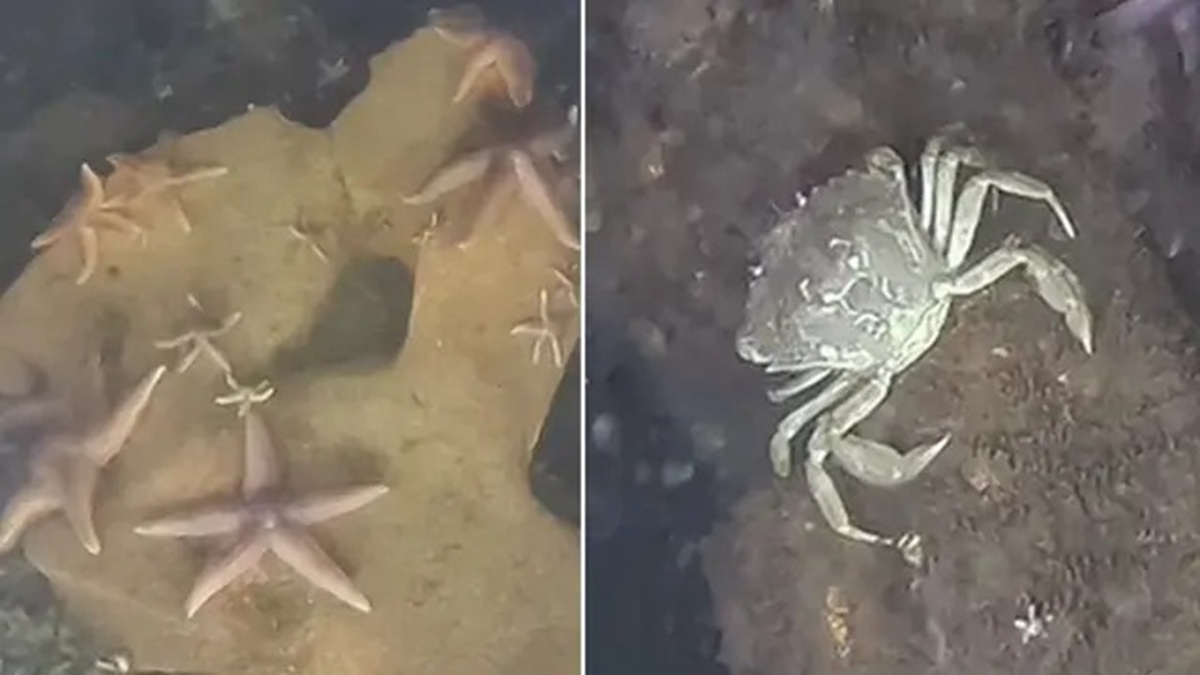

Study Reveals That World War II Warheads in the Baltic Sea, Once Considered Toxic, Now Sustain Dense Colonies of Crabs, Worms, and Starfish.
A surprising finding caught the attention of European scientists: World War II explosives, once considered highly toxic, have turned into a haven for a vibrant community of marine animals in the Baltic Sea.
Researchers who explored an old munitions dump revealed, through a submersible, that crabs, worms, and fish inhabit abandoned warheads in greater numbers than in the surrounding seafloor.
“We were prepared to see significantly lower numbers of all types of animals,” said study author Andrey Vedenin from the Senckenberg Research Institute in Germany. “But the opposite happened.”
-
Spain Launches World’s Largest Floating Dry Dock: 56-Meter Giant Produces Massive Concrete Structures in A Coruña Using Technology Proven in Brazil

-
AI-powered toys that talk, recognize faces, and collect data face scrutiny from Brazilian government over children’s privacy concerns

-
4,000-Year-Old Child’s Skull Unveils Ancient Burial in 7,500-Year-Old Norwegian Rock Shelter, Impressing Archaeologists

-
Norway Defeats Brazil in World Cup but Invests Billions to Preserve the Amazon, Strengthens Amazon Fund, and Joins Brazil in Leading Global Effort Against Tropical Deforestation


The German waters hold approximately 1.6 million tons of munitions discarded during both World Wars. These relics may still contain hazardous substances such as TNT, chemical residues, and even nuclear material.
Hard Surfaces Attract Wildlife
The study focused on Lübeck Bay, where V-1 flying bomb warheads remain submerged. With the help of the submersible, scientists recorded anemones, starfish, and other species living on these structures.
According to ecologist James Porter from the University of Georgia, who did not participate in the research, this is an underexplored field: “Normally, the ecology of bombs is not studied.”
Vedenin explained that the absence of hard surfaces in the Baltic Sea promotes this phenomenon. The seabed is dominated by mud and sand, as stones and gravel were removed in the 19th and 20th centuries for use in construction. The metal carcasses of the warheads serve as rare substrates, allowing benthic organisms to attach.
Additionally, the chemical contamination of the area reduces human presence, creating a kind of isolation that benefits marine fauna.
Adaptation to Toxic Compounds
The team recorded about 43,000 organisms per square meter on the warheads, compared to only 8,200 per square meter in the adjacent sediment.
Even when exposed to substances like TNT and RDX, with concentrations ranging from 30 nanograms to 2.7 milligrams per liter, the animals thrived.
“Overall, the epifaunal community in the munitions dumped in the study area reaches a high density, with the elevated metal structures providing suitable habitat,” the authors wrote.
The majority of species settled on the metal carcasses, not directly on the explosive material, which likely reduced their exposure to toxins. The researchers highlighted that, in this specific case, the remains of war may even contribute to restoring conditions similar to lost natural habitats.
Sunken Ships Also Became Sanctuaries
Similar phenomena have been observed in other locations. In the United States, scholars mapped 147 shipwrecks of the so-called “Ghost Fleet” in Mallows Bay, Maryland. These World War I ships were burned and sunk in the 1920s.
Today, the fleet harbors diverse marine life and also birds, such as osprey. With high-resolution aerial images, researchers created a detailed map of the area, which could serve future ecological, archaeological, and cultural work.
“It’s a really cool testament to the power of life,” said David Johnston, a conservation biologist at Duke University who studies World War I shipwrecks along the Potomac River.
Both the European and North American studies were published in the journal Communications Earth & Environment, reinforcing how artificial and unexpected environments can transform into vital refuges for biodiversity.