






 Portuguese
  Spanish


Doppelmayr, from a small town in Austria, dominates the global cable transport market and has built from ski resorts to cable car networks that serve as air subways in large cities
When you ride a cable car at a ski resort, climb a tourist mountain, or cross a city suspended on a cable, there’s a good chance you’re being carried by an Austrian company that almost no one knows. The world’s largest cable car manufacturer is called Doppelmayr, born in a small town in Austria, and it practically dominates the sector worldwide.
The history is old, and the reach is enormous. According to Doppelmayr, it was founded by Konrad Doppelmayr in the district of Rickenbach, in Wolfurt, in 1893, and since then has become the global leader in cable car engineering. It’s the kind of silent giant that moves millions of people every day without ever appearing.
How the world’s largest cable car manufacturer became the absolute leader
The Austrian’s dominance comes from doing one very specific and difficult thing well: moving people safely suspended on a steel cable. This requires precision engineering, redundant braking systems, powerful engines, and decades of accumulated experience to ensure no one falls. It’s a sector where mistakes are not an option.
-
Toxic Waste from Brazilian Cassava Processing Transformed into Patented Eco-Friendly Bricks, Passing National Standards and Promising Lower Costs

-
Brazil’s Busiest Port to Triple Soybean Loading Speed with $1.1 Billion Investment in Paraná Terminal, Reaching 8,000 Tons per Hour

-
Cost of Installing Subflooring in 2026: The Importance of Proper Slope to Prevent Water Damage and Costly Repairs
-
New Offshore Borehole Mining Technique Extracts Lithium and Cobalt Without Damaging Ocean Floor


Few companies in the world master this technology entirely, and the Austrian company is the largest of them. Manufacturing, installing, and maintaining cable cars on icy mountains or over chaotic cities is a challenge that deters competitors, and the company has turned this difficulty into an advantage. The world’s largest cable car manufacturer has grown precisely where few dare to enter.
A blacksmith shop from 1893 that became a giant
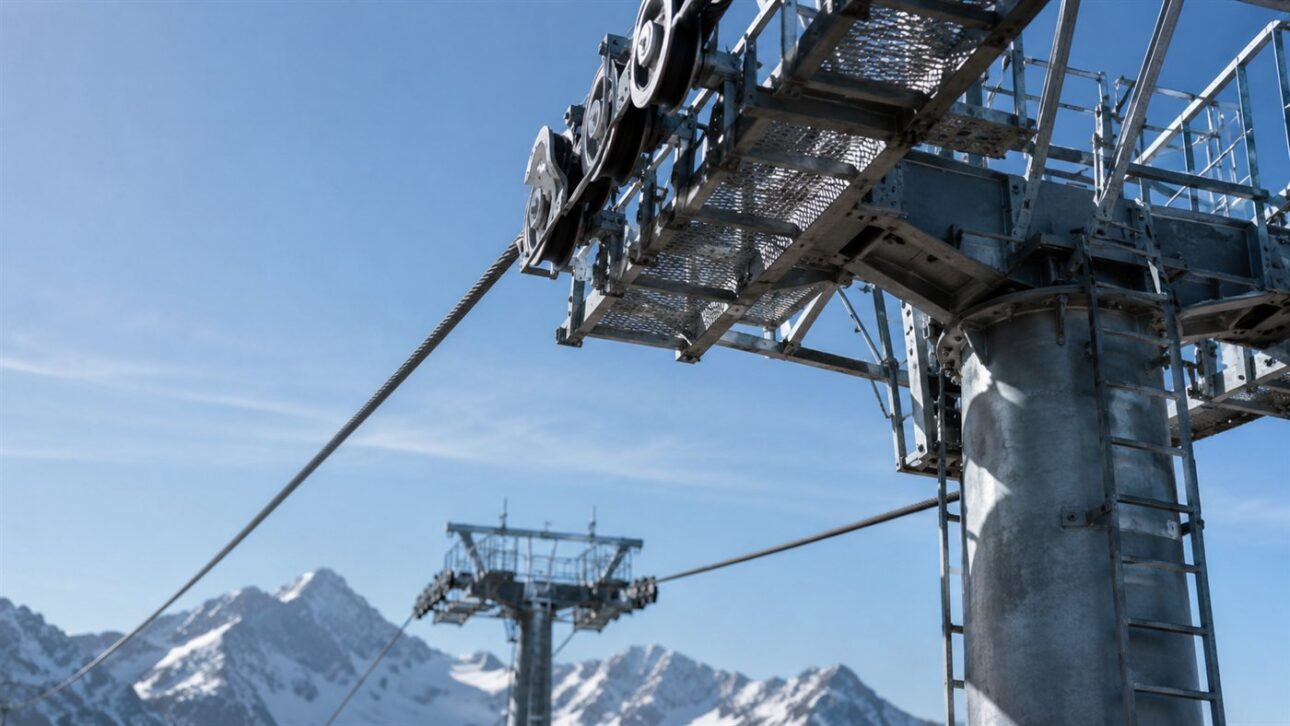
The origin is humble and ancient. According to Doppelmayr, the business began in 1893 as a forge opened by Konrad in Wolfurt, Austria, focused on tools and repairs for local agriculture and industry. It wasn’t until 1937 that they opened their first ski lift in Zürs am Arlberg, entering the field that would make them famous.
From there, growth followed the explosion of mountain tourism and ski resorts in Europe. From a rural locksmith, the company became a world reference in taking people to the heights, first in the Alps and then worldwide. In 2002, it merged with the Swiss company Garaventa, firmly consolidating its global leadership in the sector.
From Tourist Toy to Real Public Transport
For a long time, cable cars were associated with ski resorts or tourist spots, like taking visitors to the top of a hill. But in recent decades, it has become a serious public transport solution, especially in cities with difficult terrain, where building a subway or avenue is expensive or impossible.
The big insight is that the cable goes where the bus cannot. In neighborhoods nestled in hills, the aerial cable shortens in minutes routes that used to take hours on foot, connecting isolated communities to the center. This change transformed the Austrian company’s tourist luxury product into a tool for mobility and social inclusion in various parts of the world.
The Largest Urban Cable Car in the World is in South America
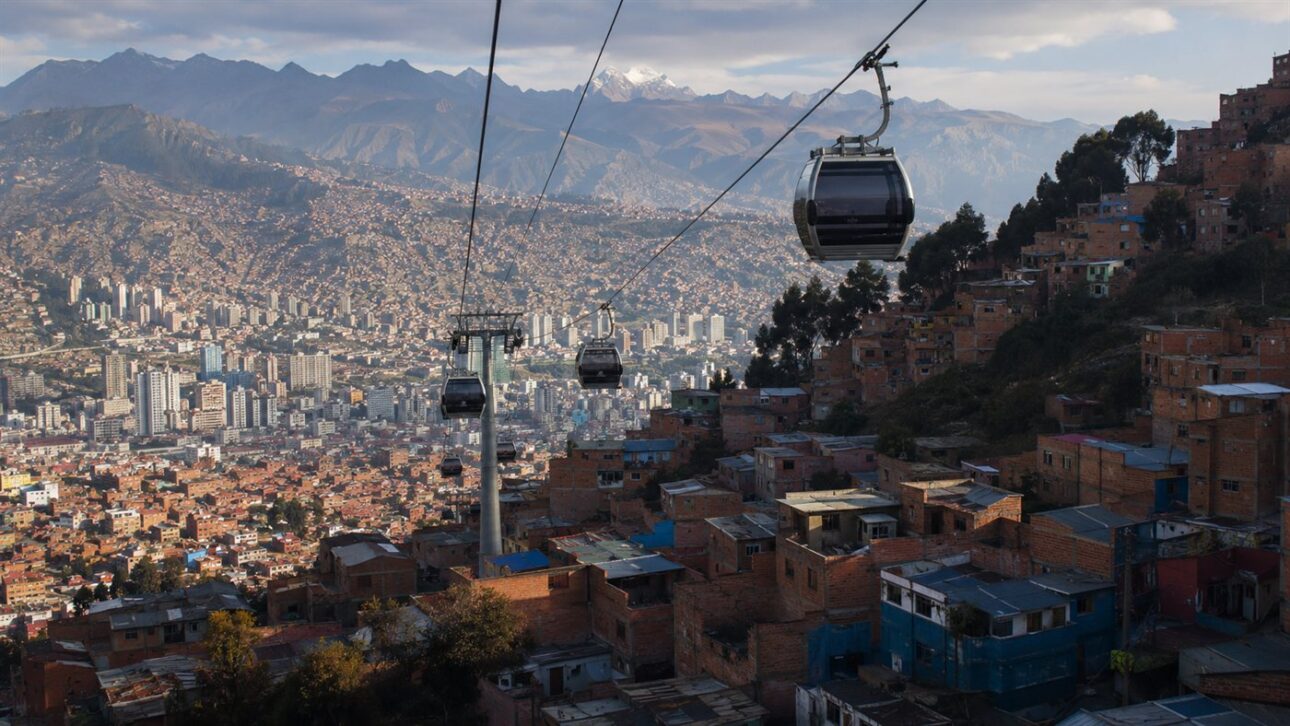
The most impressive example of this turnaround is very close to Brazil. In Bolivia, the Mi Teleférico network connects the cities of La Paz and El Alto at over 4,000 meters above sea level and functions as a true aerial metro. According to Vindobona, it is the largest cable car network in the world, with about 33 kilometers of cable distributed over ten lines.
This monumental network was built by the Austrian company, showing how Alpine technology adapted to the Andean mountains. Also according to Vindobona, since the inauguration of the first line in May 2014, the system has transported almost 200 million passengers. What was once tourist fun has become the daily transport of hundreds of thousands of people in one of the highest and most challenging regions in the world. Brazilian cities with rugged terrain have also already invested in cable cars as urban transport, following the same logic.
How people suspended on a cable move safely
The operation seems simple but hides sophisticated engineering. A continuous steel cable, driven by powerful motors, circulates between stations and towers, pulling the cabins. Modern systems allow the cabins to detach from the cable upon arrival at the station, reducing speed for passengers to board, and reattach upon departure.
All this is surrounded by redundancy to prevent accidents: emergency brakes, sensors, backup generators, and constant inspections. The safety of a modern cable car rivals that of aviation, precisely because a failure at height would be catastrophic. It is this reliability, built over more than a century, that makes customers worldwide seek the same company.
Why cable cars are growing in cities
With traffic worsening and cities becoming denser, cable cars have come back into fashion as a clean and cheap mode of transportation compared to the subway. They occupy little ground space, do not generate traffic, and operate on electric energy, which aligns with environmental goals.
More and more cities are studying cable lines to overcome rivers, hills, and congested areas. Cable transportation has ceased to be a quaint exception and has become a serious part of modern urban planning, and leading this wave is the same Austrian company. The trend further expands the reach of a business that already dominates the mountains, from ski resorts to major urban centers.
Why almost every cable car leads to a company from Austria
In the end, the story of this manufacturer is another case of a hidden giant shaping everyday life without appearing. Whether going up to ski or crossing a city nestled in hills, millions of people trust their lives, unknowingly, to the engineering of a company from a small Austrian town.
It is proof that mastering a specific and difficult technology can yield world leadership lasting more than a century. Next time you enter a cabin suspended on a cable, it’s worth noticing whose plaque is at the station. Did you imagine that almost every cable car in the world had the same origin?


