






 Portuguese
  Spanish


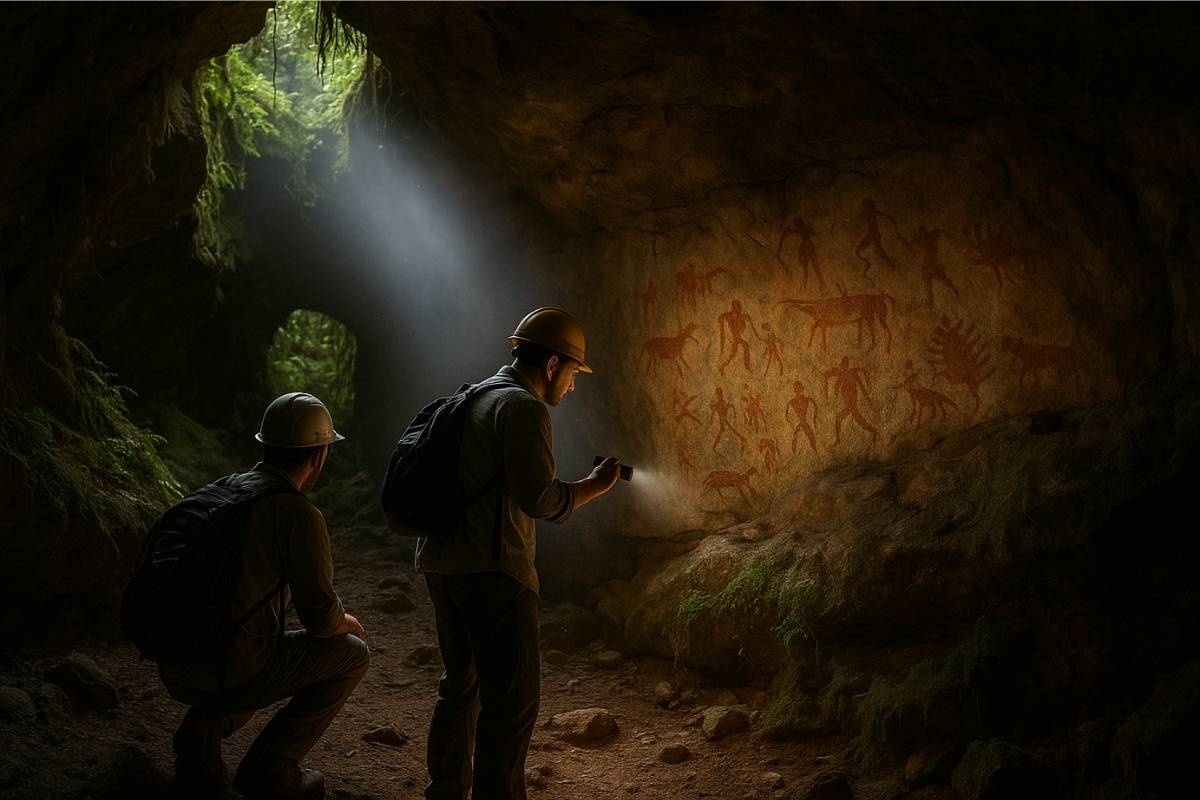


Archaeologists Discover Millennia-Old Rock Paintings in a Cave in the Mantiqueira Mountains, Revealing Possible Presence of Ancient Peoples and Reviving Debates About Lost Civilizations in Brazil
Brazilian researchers have just found a set of rock paintings in a cave in the Mantiqueira Mountains that may change what was known about human presence in the Southeast interior. The discovery, made within the Itatiaia National Park, has reignited interest in ancient peoples who inhabited the region millennia before Portuguese colonization and may reveal clues to a true “lost colonial city” forgotten by official history.
The Beginning of a Mysterious Investigation
The find is being studied by experts from the National Museum of UFRJ, the State University of Rio de Janeiro (UERJ), and the Itatiaia National Park (PNI), in partnership with the Institute of National Historical and Artistic Heritage (Iphan). The group is trying to decipher when the paintings were made and who produced them. Preliminary analyses indicate they may date between 2,000 and 3,000 years, although the study is still in its early stages.
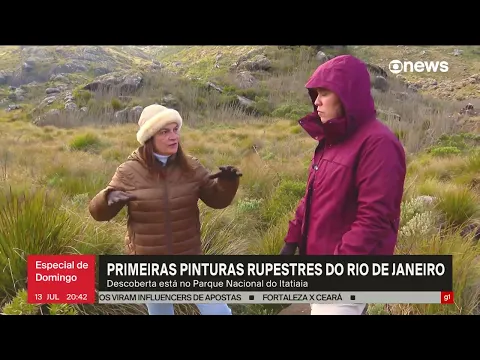
Archaeologist MaDu Gaspar, a professor in the Archaeology Program at the National Museum, explained that the team seeks to understand the physical and cultural context of the site. “Regions with shelters and caves with rock paintings are rarely isolated points. They are usually part of a network of human occupations. We are just beginning to understand this landscape and the possible routes and resources that sustained these groups,” she stated in an interview with Agência Brasil.
-
Award-Winning Japanese Restaurant Reveals It Has Preserved Part of the Same Frying Oil for 66 Years

-
American Youth Transforms from Severe Obesity to U.S. Air Force Enlistment, Losing 90 Kilograms in Two Years
-
11-Year-Old Entrepreneur Sells 60 Homemade Sweets Daily, Mastering Cost Calculation, Social Media Promotion, and Client Negotiation Since Age 7

-
Peruvian Mountain’s 5,200 Aligned Holes May Unveil Ancient Indigenous Market for Corn and Cotton


Discovery by Chance During a Climb
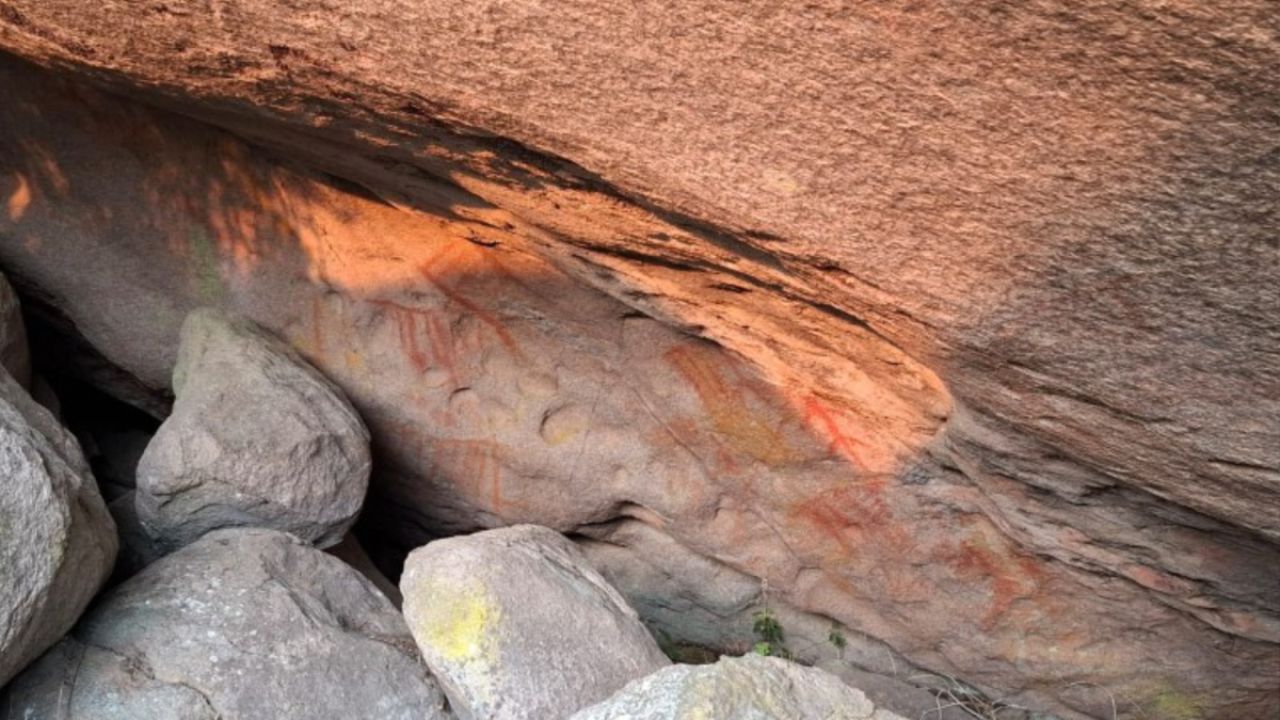
Curiously, the site was found by chance. The operational supervisor of the upper part of the Park, Andres Conquista, reported that he was on a routine climb when he noticed an unusual rock formation surrounded by red flowers. As he got closer, he saw inscriptions that he initially thought were modern graffiti. “When I realized there were no names or dates, I understood it could be something very ancient. I took photos and brought them to the ICMBio team,” he recounted.
From there, the find mobilized the park and the universities. The Chico Mendes Institute for Biodiversity Conservation (ICMBio) confirmed the authenticity of the paintings and alerted Iphan to initiate the process of protecting the archaeological site. The area is now isolated and monitored by cameras, with severe fines for any attempted invasion.
Preserve Before Disclosing
Although the paintings were found in 2023, the public announcement only occurred in 2025, when the park had already created a security protocol. According to Gaspar, the priority was to ensure preservation and prevent hikers or tourists from reaching the cave until the analyses were completed. “Archaeological sites are managed by Iphan, and all actions, even by archaeologists, need authorization. We are dealing with a precious testimony of human history,” she stated.
Professor Anderson Marques Garcia from the Department of Archaeology at UERJ emphasized that the discovery surprised the scientific community. “Rio de Janeiro is the cradle of Brazilian archaeology. We believed the state was already fully mapped. Finding a unique site in an accessible area is something that changes our perception of regional history,” he observed.

Traces of Ancient Hunters
Researchers have already found strong evidence of the presence of hunters who inhabited the region thousands of years ago. This includes marks on rocks and fragments that may have served as rudimentary tools. If the estimated dating is confirmed, the site may be among the oldest in the Southeast, comparable in value to emblematic discoveries in Piauí and Mato Grosso.
According to Gaspar, “the paintings show symbols and patterns that have yet to be deciphered but may be related to rituals or hunting maps. Everything indicates that this community had its own way of representing the world.” The team intends to conduct chemical and pigment analyses to determine whether local mineral substances or mixtures made with grease and charcoal were used — techniques typical of hunter-gatherer peoples.
A New Chapter for Brazilian Archaeology
The find reignites the debate about the pre-colonial human occupation of Brazilian territory and may help fill important gaps about the first groups that lived in the Southeast. The Mantiqueira Mountains, due to their geological complexity and abundance of natural shelters, may have been a migratory corridor between peoples from Minas Gerais, São Paulo, and Rio de Janeiro.
Professor Garcia warns, however, about the risks of undue interference. “An unauthorized excavation could destroy fragile evidence that took thousands of years to form. The site is small, and we need to act with extreme caution to avoid compromising the research.”
For now, there is no timeframe to reopen the area for visitation. The tourism management company Parquetur has reinforced that “any violation of the protected area will result in severe penalties.” The expectation is that, after the completion of studies, the site may be integrated into a controlled visitation circuit, combining scientific tourism and environmental education.
A “Lost City” Beneath the Forests
Some researchers believe that the cave and the inscriptions may be linked to forgotten ancient colonial routes and even to communities that fled the bandeirante expeditions in the 17th century. The hypothesis, although still speculative, revives the fascination with the idea of hidden cities in the Amazon and Southeast Brazil, where indigenous peoples, runaway slaves, and isolated colonists may have created hybrid societies.
For MaDu Gaspar, this is a unique opportunity to rewrite part of the country’s history. “These paintings show that there was much more life, art, and human movement in the interior of Brazil than we imagined. Each pigment is a fragment of the memory of those who lived here before us,” she concluded.




Great article, thank you for sharing these insights! I’ve tested many methods for building backlinks, and what really worked for me was using AI-powered automation. With us, we can scale link building in a safe and efficient way. It’s amazing to see how much time this saves compared to manual outreach.