Portuguese
  Spanish


A Building That Changes Color With The Sun And Cost US$ 800 Million Has Become An Example Of Excess In Luxury Architecture. Today, Only 3 People Live In This High-Tech Glass Skyscraper.
In the heart of one of the most expensive cities on the planet, a high-tech glass skyscraper with futuristic design dominates the skyline – the Glass Residence Tower. Designed to be a landmark of luxury architecture and modern urban engineering, the building garnered global attention for its smart glass facade, capable of changing color with the sunlight. However, what was supposed to be a symbol of innovation has turned into a billion-dollar enigma of emptiness years later. Valued at over US$ 800 million, the project was hailed as a “smart tower” that would redefine the boundaries of luxury, energy efficiency, and architectural aesthetics.
However, with only three confirmed residents occupying its dozens of floors, the tower has become a symbol of waste, real estate speculation, and detachment from urban reality.
A Building That Changes Color With The Sun: Innovation Or Excess?

The building’s main feature is its dynamic glass skin. It consists of photocromatic panels that react to the intensity of sunlight and change their coloring throughout the day, ranging from gold to blue-gray.
-
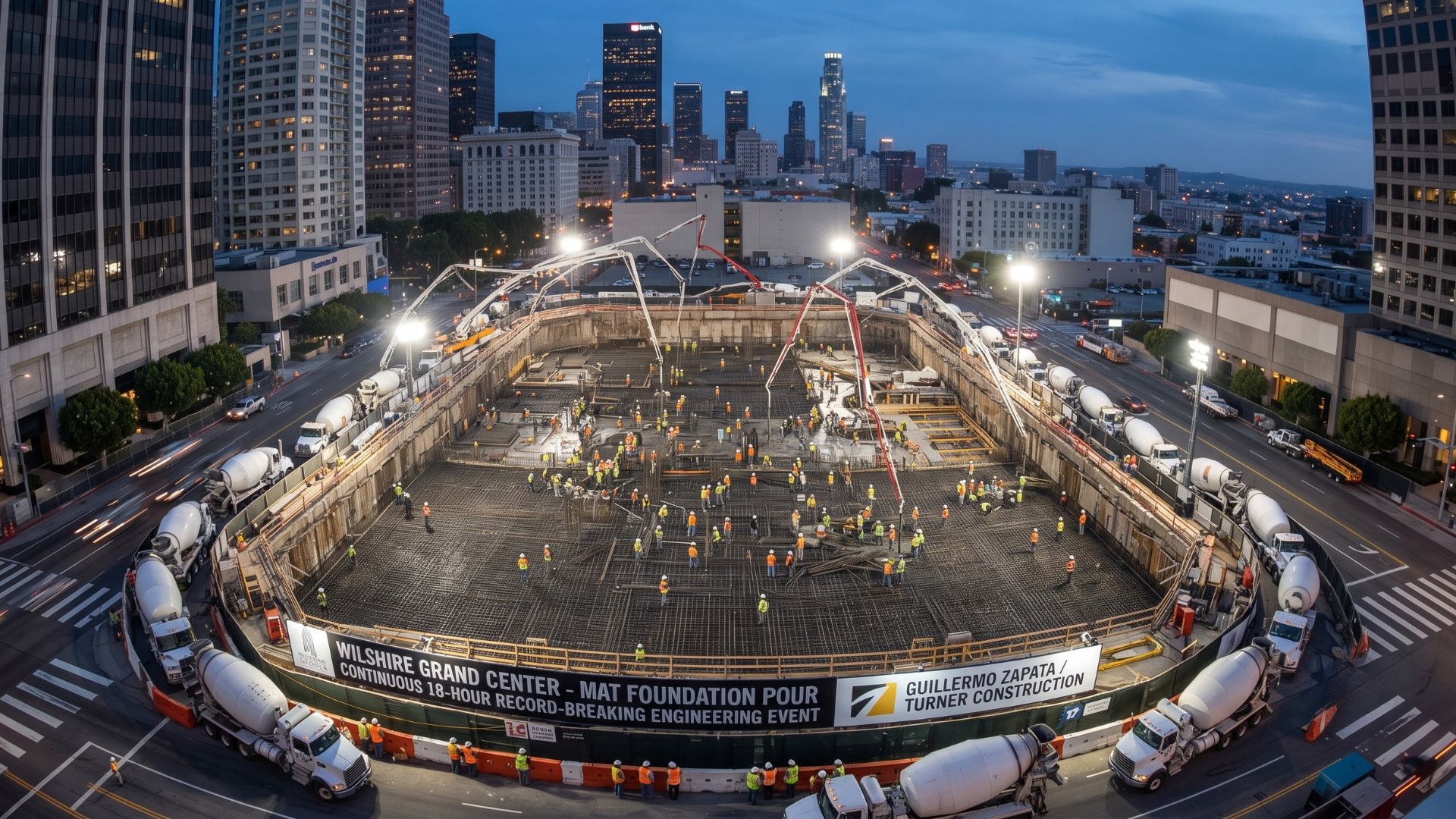
More than 2,100 trucks transported 16,200 cubic meters of concrete without interruption to create the foundation of the tallest skyscraper in the western United States and break a world record.

-
The man who started in construction with his own house founded a company in 1957, went through a banking crisis in 1987, and ended up connected to 16,500 houses in Houston.

-
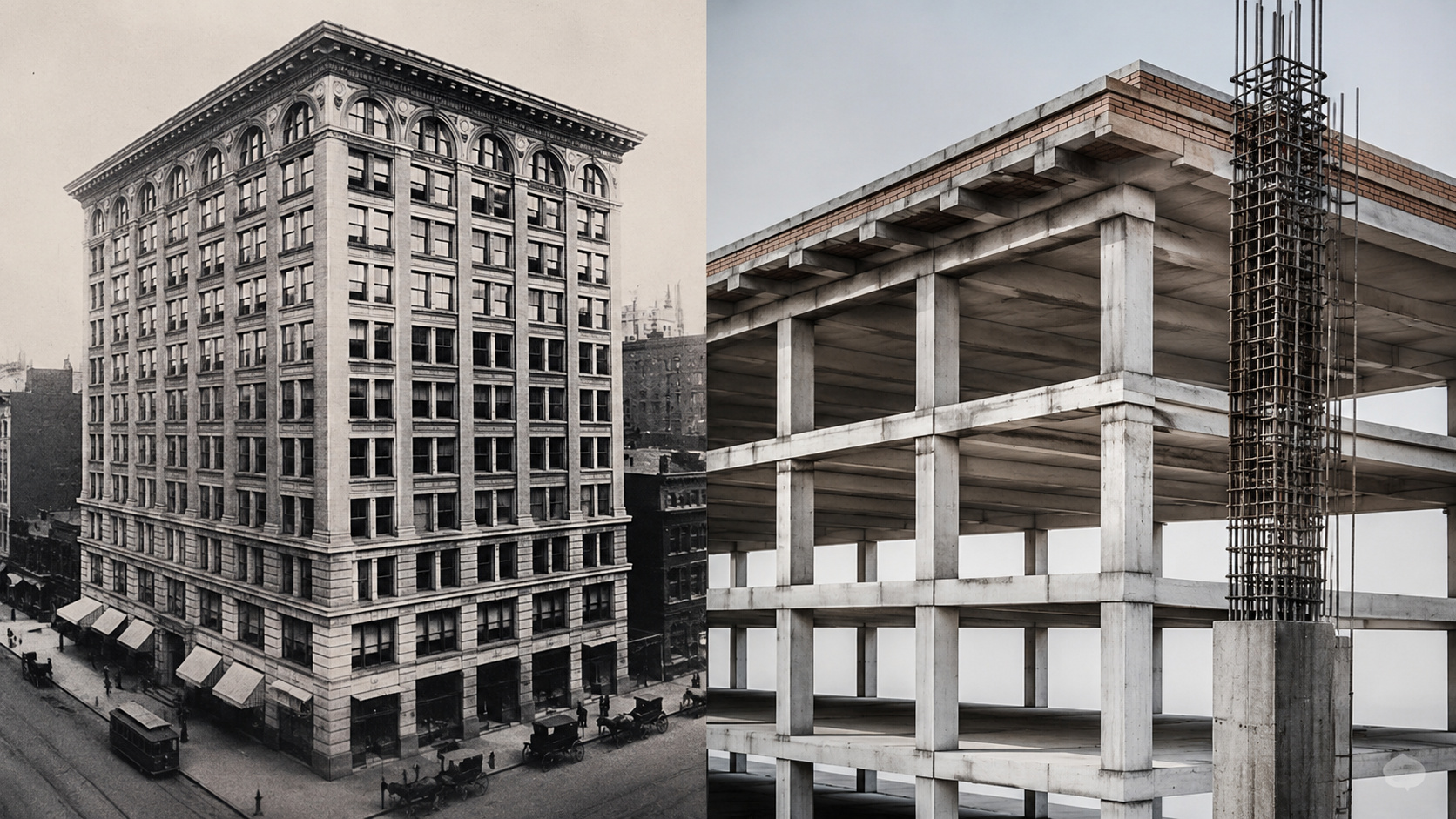
Builders challenged experts, erected a 16-story building using only reinforced concrete when the known limit was six floors, and proved that skyscrapers would never be the same again.
-
Up to 60 concrete mixer trucks pour 380 m³ of concrete onto the “big slab” of Niemeyer’s first work in Amazonas, in a decisive stage of the construction of the monumental oca that will mark the Parque Encontro das Águas in Manaus.



According to the technical report published on ArchDaily, this facade was developed to:
- Reduce energy consumption with heat and light control
- Adapt the tower’s appearance to the climate and urban landscape
- Create a mutating aesthetic that reflects the passage of time
This feature earned the building the nickname “glass chameleon”, attracting praise from critics and being pointed out as one of the first functional examples of responsive architecture on a large scale.
Strategic Location, But Not So Much
Located in an upscale area of Shenzhen, China — one of the most technological and expensive cities in Asia — the building was conceived as a convergence point between futuristic design and ultra-high-end living.
The problem: The area, although modern, already has an excess of luxury developments targeting an extremely limited audience. According to Bloomberg, the Chinese real estate market is facing saturation at the top of the pyramid, while simultaneously experiencing a credit crisis and lack of investor confidence.
This means that, although the building is visually impressive, its commercial viability never materialized.
The Glass Skyscraper That Became A White Elephant
The building was delivered to the market with high-end residential units, many of which were never occupied. Some were even purchased by foreign investors but remained closed or in a state of speculation.
A report by the South China Morning Post revealed that, in the two years following its inauguration, the building maintained an occupancy rate below 5%, with only three permanent residents confirmed by local administrators. Commercial spaces and leisure common areas — such as a suspended glass pool, spa, and sky lounge — are also inactive or have limited operation.
Despite its potential as an urban symbol, the tower has ultimately become a classic example of the phenomenon known as “phantom architecture”, which affects major urban centers in China, the United Arab Emirates, and rapidly developing regions without real demand.
Smart Tower, Yes — But For Whom?
The project was designed to be a smart tower, with total automation of lighting, climate control, access, and security systems. Residents can control all functions of their home via voice command or app, in addition to facial recognition in elevators and integrated motion sensors.
Other highlights include:
- Solar panels integrated into the facade
- Water recycling systems
- Subterranean parking with automated vehicle recognition
- Ventilation system that automatically adjusts to air quality
In theory, it is the type of infrastructure that represents the future of cities. In practice, it has become an almost empty structure, with extremely high maintenance and operating costs, funded by a private fund that has already indicated difficulty in maintaining the project’s financial sustainability.
Billion-Dollar Empty Building: The Cost Of Luxury Out Of Tune
The total cost of the venture exceeded US$ 800 million, according to reports obtained by Bloomberg. This includes not only the construction and imported materials — many coming from Germany and Japan — but also the acquisition of the land and technological development costs.
With units valued at up to US$ 20 million each, the building was designed for an ultra-wealthy audience, who rarely inhabit the properties they acquire. Many of these properties function as instruments of asset speculation — a trend that collapsed with the slowdown of the Chinese real estate sector beginning in 2021.
Additionally, the high fixed maintenance cost of the tower makes it unfeasible to adapt for more accessible uses, such as shared housing or hybrid developments.
Criticism And Controversies Regarding The Building That Changes Color With The Sun
The architectural proposal of the tower — although revolutionary — has not escaped criticism. Urban planners, journalists, and economists question the functionality of a building with almost nonexistent use, especially in a country with millions of people in housing vulnerability.
Experts point out that, instead of generating urban integration, the building represents a vertical bubble isolated, devoid of collective life. Sociologist Li Zhiguo from Peking University stated in an interview that this type of building is a “celebration of inequality, not architecture.”
There are also concerns about the environmental impact of maintaining such a complex tower energetically active with minimal occupancy levels.
And Now? The Uncertain Future Of The Glass Tower
With its image consolidated as a symbol of waste and speculation, the building that changes color with the sun faces a stalemate. There are proposals to convert it into a cultural center, interactive art gallery, or even a tech boutique hotel — all still under review with no set timeline.
Investors are contemplating reducing the unit prices and changing the business model, perhaps opening the space to the corporate sector, high-end coworking spaces, or seasonal apartments for digital nomads. However, all these plans encounter obstacles rooted in the building’s physical structure, optimized for an extremely specific audience profile.
Meanwhile, the tower remains largely unoccupied, illuminating the city with its mutating reflections, but without real life pulsing through its floors.
The case of the glass skyscraper in Shenzhen is not isolated. It represents a global phenomenon: that of architecture disconnected from socioeconomic reality, driven by speculative capital and sustained by expectations that rarely materialize.
The building that was supposed to be a landmark of innovation has become a clear example of how technology, luxury, and sophisticated design are not enough when the project overlooks the real dynamics of the city and its people.
The future of the mirrored tower remains uncertain, but its impact as a symbol of a crisis-ridden urban model is already undeniable.