Portuguese
  Spanish


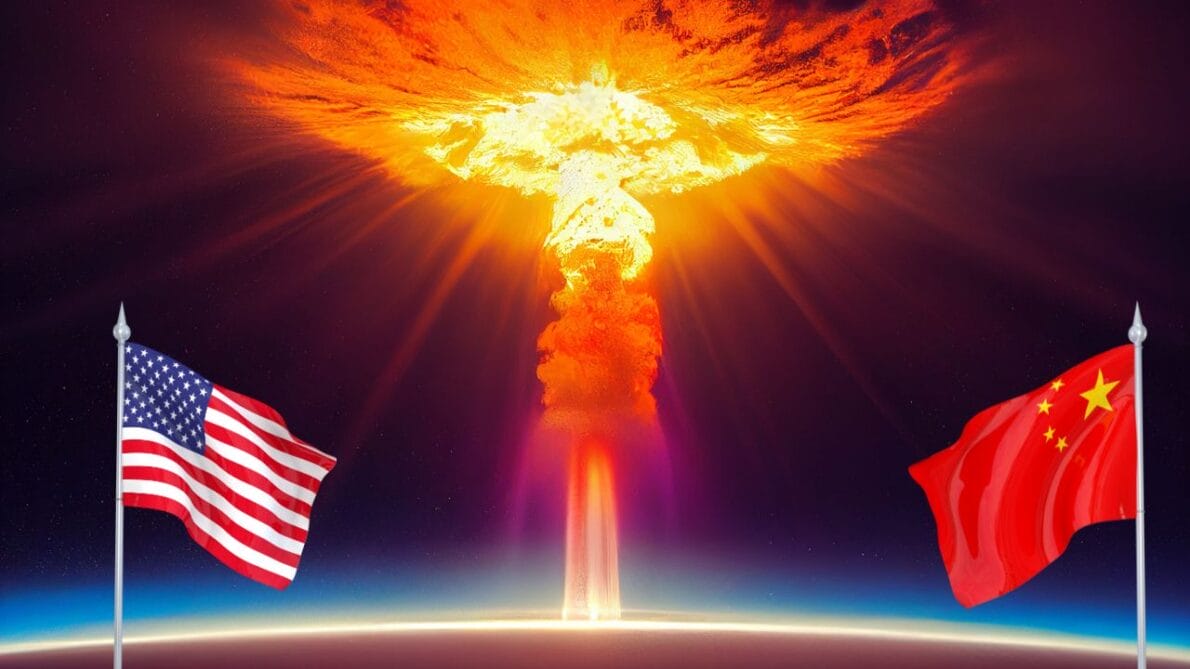

The Pentagon Reveals That China’s Nuclear Arsenal Is Growing Faster Than Expected, With Estimates Indicating That The Country Could Have More Than 1000 Nuclear Warheads By 2030. This Rapid Development Calls Into Question The Nuclear Leadership Of The United States, Which Plans To Invest 750 Billion Dollars In The Modernization Of Its Own Arsenal, While China Also Advances In Hypersonic Technologies And Increases Military Pressure On Taiwan.
The Pentagon, in its latest public assessment, warned that China’s nuclear arsenal is expanding much faster than previous forecasts indicated. This accelerated growth positions China to surpass the projected nuclear capabilities for the coming years, potentially matching or exceeding the arsenal of the United States.
Currently, it is estimated that China possesses more than 500 operational nuclear warheads. Projections indicate that this number could double, reaching over 1000 warheads by 2030. Comparatively, in last year’s report, the estimate was that China would have 400 warheads, with the expectation of expanding to 1500 by 2035.
High-Ranking US Defense Official Who Preferred To Remain Anonymous Shared Insights On Chinese Nuclear Expansion


A high-ranking US defense official, who preferred to remain anonymous, shared insights on Chinese nuclear expansion, highlighting significant investment in land, sea, and air-based nuclear launch platforms. This expansion also includes the development of critical infrastructure to support a considerably expanded nuclear arsenal.
-
The Arctic is no longer just a frozen region and is becoming a new military board with the opening of maritime routes, expansion of bases, nuclear icebreakers, and competition among Russia, NATO, the United States, and China.

-
Angra 3 becomes Brazil’s R$ 24 billion dilemma: finishing the 66% complete plant costs almost the same as abandoning it, right in the race for energy in the AI era.

-
U.S. Dismisses Brazilian Foreign Ministry’s Military Risk Warning as “Absurd,” Cites Brazilian Criminal Gangs Operating in the U.S. Since May 2026
-
Ukraine War Impacts Brazilian Fuel Supply: Russian Diesel Imports Drop 65% in June, Brazil Turns to US and India Amid Market Concerns



Meanwhile, the United States faces the challenge of modernizing an aging nuclear arsenal, where some warheads have been in use for up to 50 years. To address this reality and the growing Chinese threat, the Pentagon plans to invest about 750 billion dollars over the next decade to update and replace nearly all components of its nuclear arsenal.
Report Also Highlights The Development Of Hypersonic Weapons By China That Could Replace Older Short-Range Ballistic Missiles
The report also highlights the development of hypersonic weapons by China, which could replace older short-range ballistic missiles. These new weapons, capable of traveling at speeds exceeding Mach 5 and with high maneuverability, pose a significant threat to US military bases and fleets in the Western Pacific.
In addition to the increase in the nuclear arsenal, China is escalating military pressure on Taiwan. US military and intelligence agencies have warned that China is preparing its forces for a possible military action against Taiwan as early as 2025.
This escalation in Chinese military power not only challenges regional stability, but also poses a direct threat to the strategic positions of the United States, forcing a review of global defense policies and military strategy.